


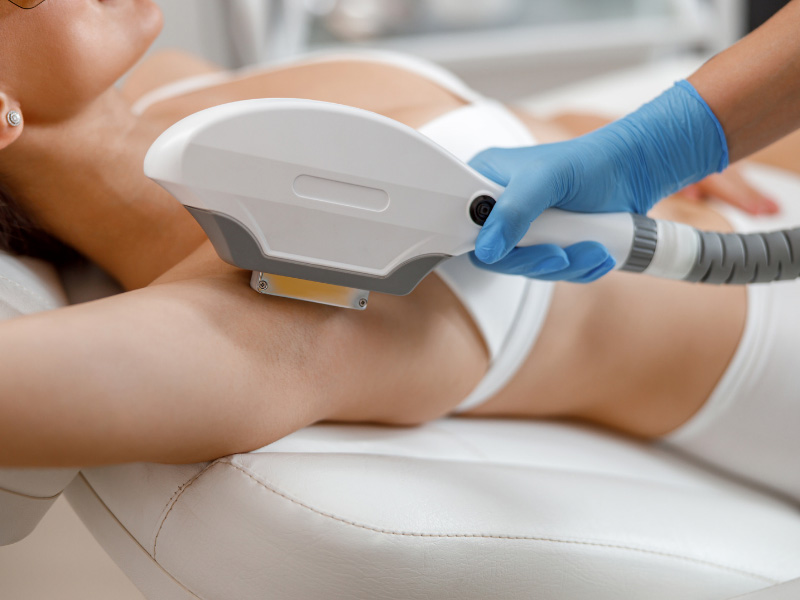

Alexandrite laser is a type of laser frequently used in aesthetic and medical applications. It is especially preferred in laser hair removal procedures. This laser provides effective results by targeting dark-colored hairs on the skin with its short wavelength. One of the most important features of the Alexandrite laser is that it works faster compared to other laser types. This shortens session times and increases comfort during the procedure.
Alexandrite laser is produced from the crystal it is named after, the alexandrite crystal. This crystal determines the wavelength of the laser and makes it effective on the skin. During laser hair removal applications, the laser beams absorbed by the melanin pigment in the skin neutralize the hair follicles. However, it may not be suitable for every skin type, and results may vary from person to person. Therefore, it is important to consult a specialist before the procedure.
This type of laser is used not only in aesthetic applications but also in the treatment of certain medical conditions. For example, it may be effective in treating some skin spots, vascular issues, and pigmentation disorders. However, it may not be suitable for every medical condition and requires individual evaluation.
Why Do Alexandrite Laser Burns Occur?
Alexandrite laser burns are one of the side effects that may occur during or after laser hair removal procedures. These burns are usually caused by the laser not being compatible with the skin type or by incorrect device settings. Skin type and color significantly determine the effect of the laser, so proper settings are critically important.
Another factor contributing to burns is the experience and knowledge level of the practitioner. In large cities such as Ankara, many clinics and polyclinics offer this service. Reliable centers such as Ankara Life Polyclinic aim to prevent such adverse effects by working with experienced specialists. The practitioner’s experience, the techniques used during the procedure, and the quality of the device all play an important role in reducing the risk of burns.
In addition, neglecting proper skin care before and after the procedure can increase the risk of burns. The skin should be clean and free of makeup before the procedure, and after the treatment, it should be protected from the sun and supported with moisturizing products. If these precautions are not taken, the likelihood of unwanted skin damage increases.
Types of Alexandrite Lasers and Their Uses
Different types of Alexandrite lasers and their areas of use directly affect the success of the results obtained during application. These types generally differ in parameters such as wavelength, pulse duration, and energy level. These differences determine how the laser interacts with the skin and its intended use.
Different Alexandrite laser types are optimized for specific applications. For example, some lasers with faster pulse durations allow large areas to be treated in a shorter time. Others operate at lower energy levels to provide safer applications for sensitive skin. Therefore, it is important to conduct a detailed evaluation before deciding which type of laser will be used.
These laser types are used not only for hair removal but also for treating certain skin spots, tattoo removal, and vascular issues. Each application may require a different type of laser or specific settings. Therefore, expert evaluation and personalized planning before the procedure are essential for achieving successful results.
Advantages and Disadvantages of Laser Hair Removal
Laser hair removal is a widely preferred method for long-term hair reduction. One of its most significant advantages is its ability to considerably reduce hair growth over time. However, results may vary from person to person, and complete hair removal cannot be guaranteed.
Another advantage is that the procedure is fast and relatively painless. Alexandrite laser, in particular, is known for its ability to treat large areas quickly. A mild stinging sensation may be felt during the procedure, but this is usually reduced with cooling systems and disappears quickly afterward.
As for disadvantages, laser hair removal may not be suitable for every skin type. It is more effective for individuals with fair skin and dark hair. In individuals with darker skin tones, the risk of burns and pigmentation changes is higher. Additionally, the cost of the procedure and the number of sessions required may vary depending on individual conditions.
Symptoms and Treatment of Alexandrite Laser Burns
Alexandrite laser burns usually appear after the procedure as redness, blisters, or dark spots on the skin. These symptoms generally decrease within a few days, but in some cases, they may leave longer-lasting marks. The severity of the burn depends on skin sensitivity, the type of laser used, and the application technique.
Treatment of burns generally aims to reduce skin damage and accelerate the healing process. The first step is to cool the skin and minimize irritation by applying a cold compress. In addition, antiseptic creams and moisturizers can support the healing process. If there are blisters or open wounds, careful care is required to prevent infection.
In cases of prolonged or severe burns, it is important to seek professional help from a dermatologist or skin specialist. Such cases may require special treatment and a personalized care plan. The healing time of burns varies depending on skin type, severity, and the treatment method applied.
Things to Consider Before and After Laser Hair Removal
To ensure that laser hair removal is performed safely and effectively, certain important points should be considered before and after the procedure. Before the treatment, the skin should be clean and free of makeup. Avoiding sun exposure and protecting the skin with sunscreen before the procedure can help reduce the risk of burns.
After the procedure, proper skin care is very important. The skin may become sensitive and more vulnerable to sunlight. Therefore, direct sun exposure should be avoided for at least 24 hours after the procedure. Using moisturizers can help strengthen the skin barrier and reduce sensitivity.
Finally, maintaining proper care between sessions can help prevent unwanted effects. If any side effects occur on the skin, it is important to consult a specialist to determine the best treatment methods. A professional approach ensures safer and more effective results in the laser hair removal process.
 Call
Call
 Whatsapp