


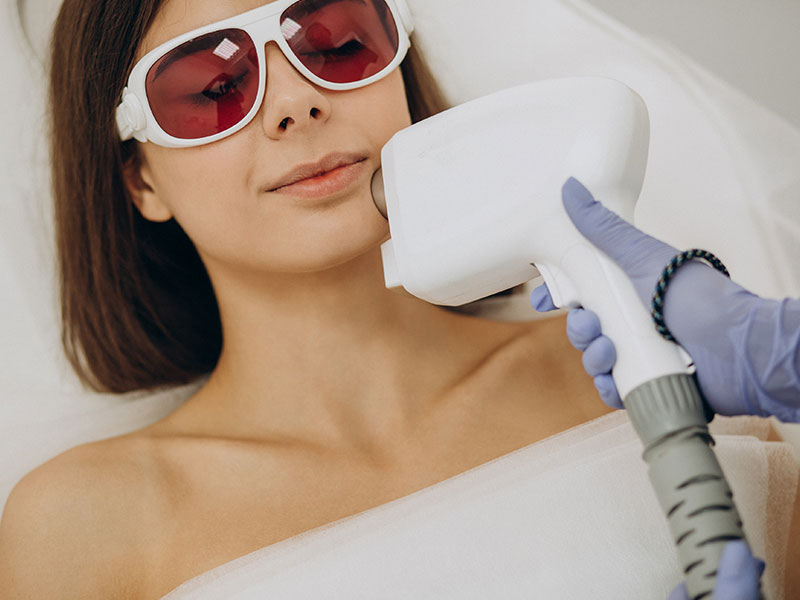

Nd:YAG laser is a widely used laser type in dermatology and aesthetic medicine. Nd:YAG stands for “neodymium-doped yttrium aluminum garnet,” and this laser operates at a wavelength of 1064 nm. This wavelength can penetrate into deeper layers of the skin, which makes it a useful option for various skin treatments.
The popularity of Nd:YAG laser is largely related to its range of applications. It is commonly used for skin rejuvenation, vascular treatments, and hair removal. Its ability to reach deeper layers may provide advantages in treating vascular concerns and in procedures on darker skin tones.
Compared to some other laser types, Nd:YAG laser is often associated with a lower risk of certain side effects when properly used. However, determining whether it is appropriate for a specific skin type or condition requires professional evaluation. It may not be the ideal choice for every patient or every indication.
Suitability of Nd:YAG Laser for the Face
Laser treatments on the face require careful planning due to skin sensitivity. A common question is whether Nd:YAG laser can be used safely on facial areas. It is often used for fine vascular structures and certain pigmentation concerns on the face.
This laser type can be configured for darker skin tones as well, which makes it accessible to a broader patient group. It may also be used for facial laser hair removal in suitable candidates. Since skin structure varies from person to person, consulting a qualified dermatologist before treatment is considered the most appropriate step.
Some temporary side effects may occur after facial Nd:YAG laser sessions, such as redness, mild swelling, or sensitivity. These effects are usually short-term and tend to resolve quickly.
Advantages and Disadvantages of Nd:YAG Laser
Nd:YAG laser offers a broad treatment range. Its ability to reach deeper skin layers makes it useful for vascular treatments and long-term hair reduction. Being usable on darker skin tones is another important advantage.
There are also some limitations. It may be less effective on very light or very fine hair. Temporary redness or sensitivity can occur after treatment. Although these reactions are usually mild, they may cause short-term discomfort for some individuals.
Another consideration is that multiple sessions are typically required. Achieving optimal results often involves a series of treatments, which can extend the total treatment timeline and overall cost.
Nd:YAG Laser Treatment Process
The Nd:YAG laser treatment process begins with a professional assessment. Skin type, target concerns, and expected outcomes are evaluated first. Then an individualized treatment plan is created.
During the procedure, the laser handpiece is applied to the skin and pulses are delivered to the target area. Each session usually lasts around 15–30 minutes, depending on the treatment zone and indication. Most people can return to normal daily activities shortly afterward.
After treatment, certain care instructions are typically recommended. Sun protection, moisturization, and avoiding irritating products are commonly advised. Following aftercare guidance may help support recovery and treatment response.
Laser Hair Removal Applications and Nd:YAG Laser
Laser hair removal is a long-term hair reduction method. Nd:YAG laser is one of the commonly used technologies in this field. Due to its longer wavelength, it can be applied to darker skin tones when appropriate settings are used.
During hair removal procedures, laser energy targets hair follicles and affects growth structures. This can lead to progressive reduction in hair growth. An advantage of Nd:YAG laser is its ability to reach deeper follicles, which may be beneficial for deeply rooted hair.
Even though it is an effective option, results vary between individuals. Total session count, treatment duration, and degree of reduction depend on skin and hair characteristics. Personalized planning is therefore important.
Session Duration and Frequency
With Nd:YAG laser treatments, session duration and frequency vary depending on the area treated and the treatment goal. Sensitive areas such as the face usually require shorter and more precise sessions.
A single session may last from about 15 minutes up to an hour depending on area size. Small facial zones are completed faster, while larger areas like legs or back take longer.
Multiple sessions at set intervals are usually required. Intervals of roughly 4–6 weeks are commonly used. In some cases, maintenance sessions may be recommended to help sustain results over time.
Nd:YAG Laser in Ankara: Ankara Laser Hair Removal Centers
There are many options for Nd:YAG laser treatments in Ankara. Laser hair removal and skin treatment centers in the city commonly use modern devices and trained practitioners. Ankara offers a wide range of services tailored to different needs.
Many centers emphasize individualized treatment planning and hygiene standards. Clinics focusing on laser and skin procedures aim to provide structured and monitored treatment processes.
Before starting laser treatment, reviewing center credentials and having a preliminary consultation is recommended. This helps with informed decision-making and appropriate provider selection.
About Ankara Life Polikliniği
Ankara Life Polikliniği is a clinic in Ankara that provides laser hair removal and skin treatment services. It offers various procedures using contemporary devices and trained staff.
At Ankara Life Polikliniği, treatment plans are organized according to individual needs. Dermatologists and aesthetic practitioners guide patients through evaluation and treatment steps.
Services are delivered in a clinical setting with attention to hygiene and patient comfort. The clinic presents itself as one of the established options in Ankara for laser and skin procedures.
Laser Types and When They Are Preferred
Laser treatments provide different solutions for different skin concerns. Each laser type has distinct wavelengths and characteristics, making them more suitable for certain indications.
Nd:YAG Laser: Often selected for deeper targets, vascular treatments, and hair removal on darker skin tones.
Alexandrite Laser: Commonly used on lighter skin tones with darker hair.
Diode Laser: Frequently used for thicker, darker hair and larger areas.
CO₂ Laser: Typically used in skin resurfacing and scar treatments.
Because suitability varies by skin type and condition, laser selection should be based on individual evaluation. Professional consultation is an important step in choosing the appropriate method.
 Call
Call
 Whatsapp