


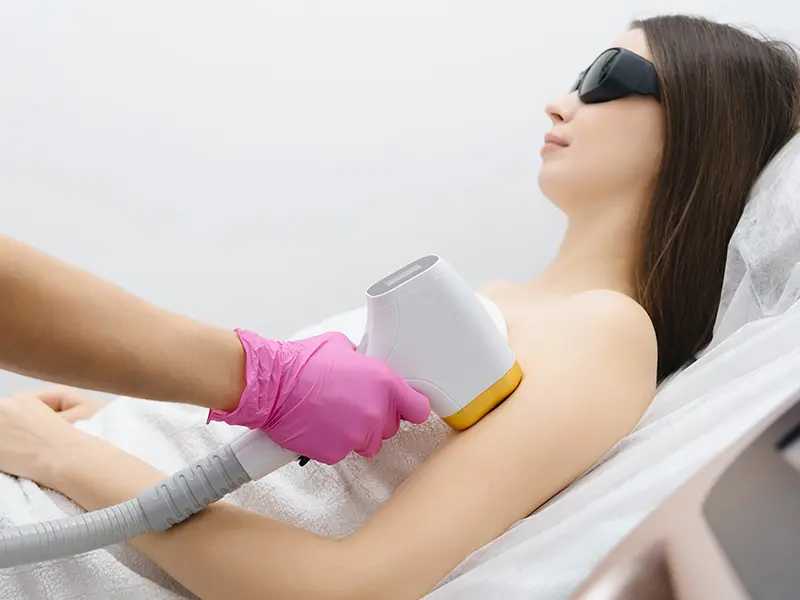

Epilation procedures have become an essential part of personal care routines for many people today. Arm hair epilation is one of these applications and is especially popular among women. In this article, you will find detailed information about arm hair removal methods, their advantages, and important considerations.
What Is Arm Hair Epilation?
Arm hair epilation is a procedure performed to reduce or completely remove unwanted hair on the arms. In addition to traditional methods, more modern and effective techniques such as laser epilation have become widely used with the advancement of technology.
One of the most popular methods among epilation techniques is laser epilation. This method targets hair follicles to prevent regrowth. Compared to traditional methods like shaving or waxing, it offers a longer-lasting solution.
Arm hair epilation helps address aesthetic concerns while also providing a hygienic solution. However, it is important to remember that each individual’s skin and hair structure is different, so the effectiveness of the treatment may vary.
Advantages of Laser Epilation
Laser epilation is widely preferred for several reasons. First, its potential to provide long-lasting results attracts many people. However, the permanence of results may vary depending on skin type and hair structure.
Another advantage is that laser epilation can be applied quickly and effectively. Especially in large cities like Ankara, many clinics and beauty centers offer this service, making it easier for individuals to achieve their desired results in a short time.
Additionally, laser epilation can offer long-term cost efficiency. Although it may seem costly at first, its lasting effects reduce the need for frequent waxing or shaving, saving both time and effort.
How Does Laser Epilation Work for Arm Hair?
Laser epilation works by targeting hair follicles. The laser device directs energy to the melanin pigment in the hair follicles, weakening or destroying them. However, the effectiveness of this process may vary depending on the individual’s skin and hair structure.
Laser epilation for arm hair usually requires multiple sessions. The number of sessions depends on factors such as hair density and skin tone. Sessions are scheduled at specific intervals based on the hair growth cycle.
During the procedure, laser beams target only the hair follicles without damaging the skin surface. This minimizes the risk of side effects. However, since skin sensitivity varies from person to person, it is important to consult a specialist before the procedure.
Laser Epilation Applications and Process
The laser epilation process consists of several stages. First, the individual’s skin and hair structure are evaluated. This evaluation is important for selecting the appropriate laser device and wavelength.
Before the procedure, the skin is cleaned and the hair is adjusted to an appropriate length. Then, laser energy is applied to the targeted area. During the procedure, a slight warming sensation may be felt, but it is generally not uncomfortable.
After each session, the hair is expected to weaken and shed. However, multiple sessions may be required for optimal results. Sessions are spaced out to allow the skin to recover. During this period, keeping the skin moisturized and protected from the sun is important.
Things to Consider in Arm Hair Epilation
Although laser epilation is an effective method, there are some important considerations. First, proper skin care before and after the procedure is essential. Keeping the skin moisturized and protected from the sun can improve the effectiveness of the treatment.
Additionally, choosing a reliable clinic or beauty center is crucial. Ankara Life Polyclinic is a well-known center that provides services with an expert team in this field. Procedures performed by experienced professionals help minimize unwanted side effects.
Finally, since each individual’s skin and hair structure is different, the results of laser epilation may vary. It is important to consider expert recommendations and set realistic expectations before starting the procedure.
 Call
Call
 Whatsapp