


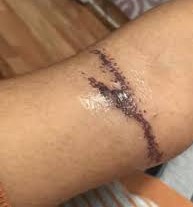

Burn After Tattoo Removal: Why Does It Occur, What Should Be Done?
Tattoo removal procedures are currently applied with highly advanced laser technologies and successful results are achieved. However, in some cases, sensitivity, redness or rarely burn-like effects may be observed on the skin after the procedure. One of the issues that my patients are most concerned about in this regard is the question of "will there be a burn mark?"
Heat Effect in Laser Application
In laser tattoo removal, high-frequency and short-term energy is applied to the skin. This energy breaks down the tattoo ink and allows it to be removed by the body over time. However, a temporary increase in temperature occurs on the surface of the skin during this process. This heat can cause a slight burning sensation or superficial crusting in some skin types. This is usually a temporary condition and the skin repairs itself in a short time.
Difference Between Real Burn and Temporary Reaction
Redness, slight swelling, tenderness or small crusts that occur after tattoo removal are usually normal. However, in some cases, if the laser energy is too much or the skin structure is very sensitive, blisters, painful open wounds or long-lasting dark scars may occur in the area. Such symptoms may be a sign of a real skin burn and definitely require a doctor's check-up.
What to Consider to Reduce the Risk of Burns?
First of all, the tattoo removal process must be performed by an experienced physician with a reliable device. The same laser setting is not used for every skin type and every tattoo. A personalized plan must be made. While the laser is more effective especially on light-skinned individuals, the risk of burns may be higher on dark skin.
Post-laser care is also of great importance. The skin must be kept moist, the creams recommended by the doctor must be used regularly and it must be protected from the sun. Not scratching the area after the application, not picking the crusts and paying attention to hygiene will accelerate healing and reduce the risk of scarring.
What to Do If a Burn Occurs?
If there is serious redness, blisters, a burning sensation or an open wound in the area after the procedure, you should consult your doctor without delay. In this case, the area may need to be moisturized properly, sometimes with antibiotic creams. Applying creams randomly at home or trying natural methods recommended by the public may worsen the situation.
Conclusion
Mild burn-like effects may be seen after tattoo removal, but these are usually temporary and expected reactions. The risk of serious burns is quite low when the procedure is performed with the right device, the right dose and by a specialist physician. For the safety of your skin, I definitely recommend that you plan such procedures in a medical environment with an experienced specialist.
Wishing you a healthy and conscious process
 Call
Call
 Whatsapp