


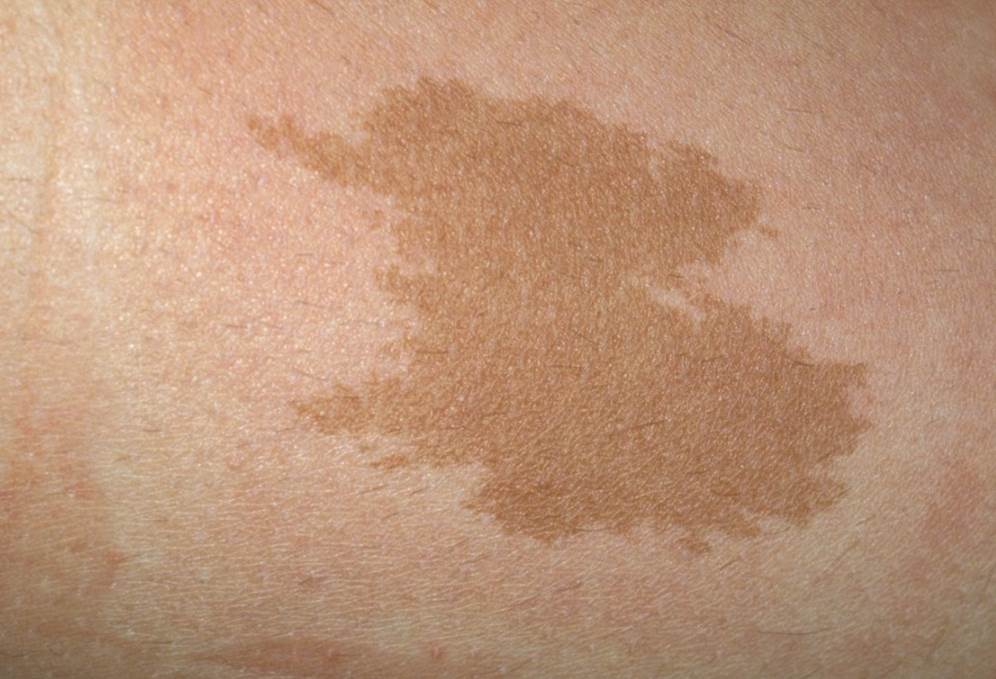

What is a Caffeola Stain?
A caféola stain is a skin stain that is called “café au lait macule” in medicine, and is a milky coffee-colored blemish that is present at birth or noticed during childhood. These spots, which are usually oval-shaped and have straight borders, can be in shades ranging from light brown to dark brown. Although they may seem harmless, they can sometimes be a sign of other underlying diseases.
Why Does a Caffeola Stain Occur?
These types of spots usually occur as a result of excessive accumulation of melanin pigment in a certain area of the skin. A single caféola stain usually does not indicate a disease and does not cause any problems other than aesthetics. However, if there are more than one on the body, it can be a sign of some genetically transmitted diseases. The most important of these is “Neurofibromatosis Type 1”.
When Should You Worry?
If a caféola stain is single and small in size, it is usually not dangerous. However, if there are the following conditions, it is necessary to consult a dermatologist:
If the number of spots is more than six
If spots larger than 5 mm are seen in children and spots larger than 15 mm in adults
If there is a family history of genetic diseases
If other masses or swellings occur on the skin
These symptoms can sometimes be early signs of serious skin or nervous system diseases.
How is the diagnosis made?
Diagnosis is usually made through a dermatological examination. Your doctor evaluates the structure, color and size of the spot. If there are multiple spots or other accompanying findings, further tests may be requested. There may also be cases where genetic counseling may be recommended.
Is Treatment Possible?
Cafeola spots are not expected to go away on their own. Treatment is usually preferred for aesthetic concerns. The following methods can be applied:
Laser Treatment: Q-Switched lasers in particular can be successful in such pigment spots. More than one session may usually be required.
Cosmetic Products: Although they do not remove the spots, it is possible to cover them with make-up.
Surgical Methods: Very rarely, surgical removal may be considered for large or disturbing lesions.
Is It Normal to See in Children?
Yes, cafeola spots are common in children. However, the presence of more than one spot in childhood should be evaluated by a pediatric neurologist or genetic specialist. It may be seen with developmental disorders or some syndromes.
Conclusion
Cafeola spots are generally a harmless pigmentation disorder. However, as they increase in number and size, an evaluation should be made in terms of underlying genetic or systemic diseases. For those that are aesthetically disturbing, solutions such as laser treatment are possible. In any case, the opinion of a dermatologist is important for correct guidance.
 Call
Call
 Whatsapp