


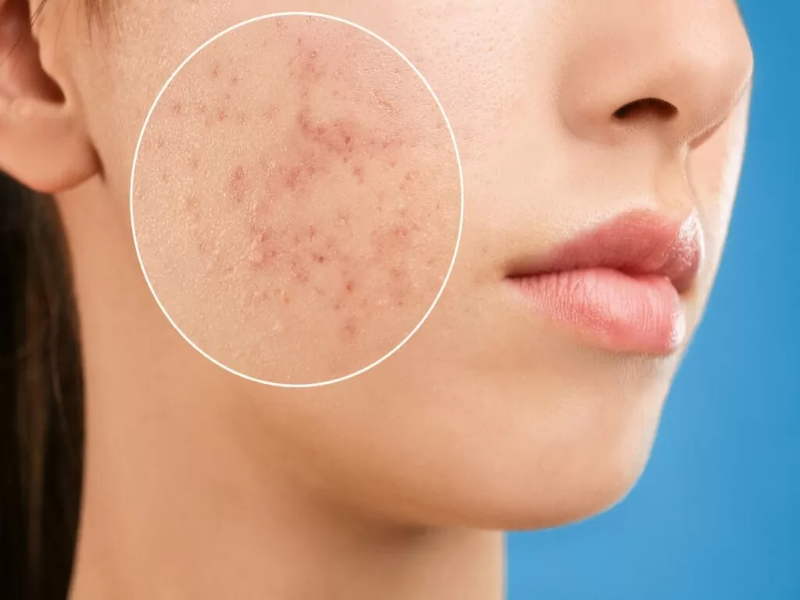

Acne scars are persistent marks that may remain on the skin after acne lesions have healed. These marks commonly appear as depressions, raised scars or areas of discolouration. Acne scar treatment aims to reduce their visibility and help the skin develop a smoother appearance.
Acne scars often result from acne that begins during adolescence and may continue into adulthood when it is not managed appropriately. These scars can significantly affect self-confidence. When damage in the deeper layers of the skin does not heal evenly, visible texture irregularities may remain.
Genetic factors, skin type, the severity of inflammation and the way acne lesions are managed may all influence scar formation. A personalised treatment plan is therefore required to reduce their appearance. Complete removal may not always be possible, but suitable procedures can provide noticeable improvement.
Causes of Uneven Skin Texture
Acne and the scars left behind are among the main causes of uneven skin texture. However, several other factors can affect the skin’s general structure. Acne scar treatment in Ankara may focus on these causes to support a healthier and smoother-looking complexion.
Genetic Characteristics
Skin structure varies according to genetic factors. Some individuals have thicker and oilier skin, while others have thinner, drier or more sensitive skin. These differences may influence how the skin responds to inflammation, environmental exposure and treatment.
Environmental Factors
Air pollution, sunlight, wind and changes in humidity may affect the skin barrier. These factors may contribute to dryness, irritation, pigmentation and a rough-looking skin surface.
Unsuitable Skincare
Using products that are not appropriate for the skin type or failing to cleanse the skin correctly may contribute to blocked pores and acne. Picking or squeezing acne lesions may also increase inflammation and the likelihood of scarring. Professional technologies such as Ankara Laser applications may be included in a personalised treatment plan for these concerns.
Acne Scar Treatment Options in Ankara
Several options are available for acne scar treatment in Ankara. The selected approach should be personalised according to the individual’s skin needs, scar type and treatment goals. Commonly used methods include laser treatment, chemical peeling and microdermabrasion.
Laser Treatment
Laser treatment uses controlled energy to target selected layers of the skin. Depending on the technology used, it may stimulate collagen production and support skin renewal. Ankara Laser applications may help reduce the visibility of certain acne scars and improve uneven texture over time.
Chemical Peeling
Chemical peeling uses specially selected solutions to exfoliate the upper layers of the skin in a controlled manner. It may help reveal fresher-looking skin and reduce superficial pigmentation, mild acne marks and uneven skin tone.
Different types and strengths of peeling solutions may be used according to the individual’s skin characteristics. Chemical peeling is not suitable for every scar type and should be planned after a professional assessment.
Microdermabrasion
Microdermabrasion gently exfoliates the outer layer of the skin. It may help improve mild surface irregularities and support a smoother-looking texture. It is generally more suitable for superficial concerns than for deep acne scars.
Medical Aesthetic Procedures
Medical aesthetic procedures may play a role in the management of acne scars. These treatments should be personalised according to the type and depth of the scars. Acne scar treatment in Ankara may include different procedures or a combination of methods.
Mesotherapy
Mesotherapy involves delivering selected ingredients into the skin through small injections. Depending on the formulation used, it may support hydration and the skin’s general appearance. However, it is not usually considered a primary treatment for deep structural acne scars.
Dermal Fillers
Dermal fillers may be used to temporarily elevate selected depressed acne scars. The suitability of this method depends on the type, depth and location of the scars. Results and duration vary according to the filler material and the individual’s skin structure.
Needle-Free Mesotherapy
Needle-free mesotherapy uses specialised devices to support the delivery of selected skincare ingredients without injections. It may contribute to hydration and general skin quality, but its effect on deep acne scars may be limited.
Technologies Used in Acne Scar Treatment
Developments in technology have increased the number of procedures available for acne scar treatment. Treatment options in Ankara may use different technologies to improve texture while minimising unnecessary damage to the surrounding skin.
Laser Technology
Laser technology is commonly used for selected acne scar types. Controlled energy targets damaged or irregular tissue and stimulates the skin’s repair response. Different laser wavelengths and treatment settings may be selected according to the individual’s skin tone and scar characteristics.
Radiofrequency Technology
Radiofrequency energy heats selected layers of the skin in a controlled manner and may stimulate collagen production. This can contribute to improved firmness and a reduction in the visibility of certain scars.
Radiofrequency microneedling combines fine needles with radiofrequency energy. It may be considered for selected depressed scars and uneven skin texture.
Microneedling
Microneedling creates controlled microchannels in the skin and stimulates its natural repair process. Increased collagen production may gradually reduce the appearance of certain acne scars and improve overall texture.
Microneedling may sometimes be combined with other procedures. The timing and suitability of combined treatments should be determined by a qualified specialist.
Can Uneven Skin Texture Be Reduced?
Acne scar treatment in Ankara may help reduce uneven skin texture, particularly when the treatment method is selected according to the scar type. Depressed, raised and pigmented acne marks do not respond to the same procedures.
Superficial irregularities may improve with chemical peeling or microdermabrasion, while deeper depressed scars may require fractional laser, microneedling, radiofrequency or selected filler treatments. Raised scars may require a different medical approach.
The results develop gradually as the skin renews and collagen remodelling continues. Although treatment may significantly improve texture, achieving completely smooth or scar-free skin cannot be guaranteed.
Points to Consider During Treatment
Acne scar treatment requires careful assessment, planning and follow-up. Several factors should be considered throughout the process.
Choosing a Qualified Specialist
One of the most important steps is selecting a qualified and experienced specialist. The practitioner should evaluate the skin type, scar characteristics and medical history before recommending treatment.
Post-Treatment Care
Appropriate skincare after treatment is essential for supporting recovery and protecting the results. Sunscreen, gentle cleansing and suitable moisturising products should be used according to professional recommendations.
Harsh exfoliants, irritating active ingredients and procedures that may damage the skin barrier should be avoided during the recovery period.
Remaining Patient
Results may develop over different periods depending on the skin structure and treatment method. Collagen renewal can continue for weeks or months after certain procedures. It is therefore important to remain patient and follow the treatment plan consistently.
Every individual’s skin responds differently. Regular follow-up appointments help assess progress and allow the treatment plan to be adjusted when necessary.
 Call
Call
 Whatsapp