


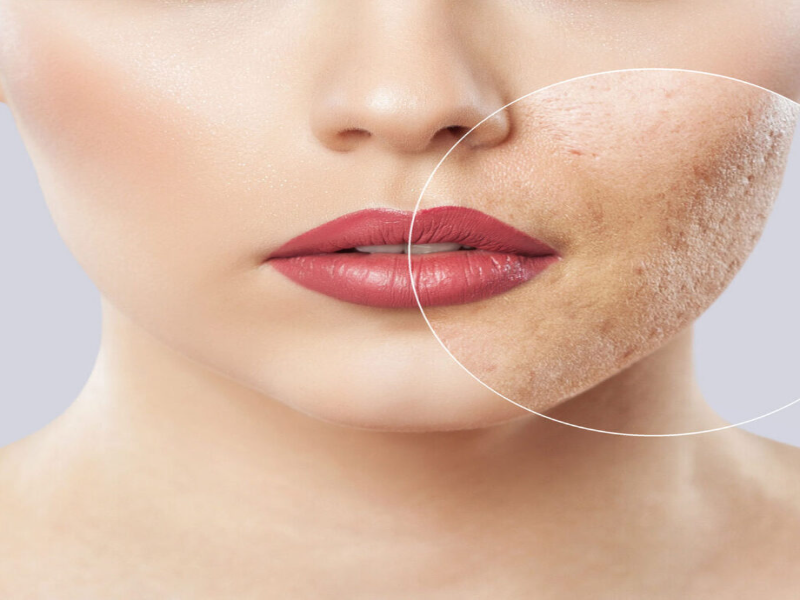

Acne is a common skin condition that often begins during adolescence and involves several factors, including increased sebum production, blockage of hair follicles, inflammation, and changes in the skin microbiome. It commonly affects the face, back, shoulders, and chest. Acne and acne scars may affect both physical appearance and emotional well-being for some individuals.
Depressed acne scars are persistent changes in skin texture that may remain after inflammatory acne. They can develop when the normal healing process is disrupted and insufficient collagen is produced in affected areas of the dermis.
These scars may vary in depth, shape, and appearance. Common types of depressed acne scars include ice-pick, boxcar, and rolling scars.
Genetic factors, acne severity, inflammation, and individual healing characteristics can influence the likelihood of scarring. Early and appropriate management of active acne may help reduce the risk of developing new scars.
Different treatment methods can be considered to reduce the appearance of existing depressed scars.
Reducing Depressed Scars with Acne Treatment
Acne treatment and acne scar treatment are related but are not exactly the same.
The first priority is generally to control active acne because ongoing inflammatory lesions can contribute to the development of new scars.
Topical or oral acne treatments may help manage active acne, but established depressed scars often require separate scar-focused procedures.
Retinoids may support skin cell turnover and are commonly used in acne management. However, deeper atrophic scars usually require additional procedures if visible improvement in texture is the goal.
Chemical peeling, microneedling, laser procedures, subcision, fillers, and other methods may be considered depending on the type and depth of the scars.
Acne and pimple scar treatments may reduce the appearance of scars, but the degree of improvement varies and complete removal cannot be guaranteed.
Acne Treatment Methods
Different acne treatment methods may be selected according to acne severity, skin characteristics, and medical history.
Topical treatments may include benzoyl peroxide, salicylic acid, retinoids, or topical antibiotics in selected cases.
These treatments work through different mechanisms, such as reducing follicular blockage, inflammation, or acne-related bacterial activity.
Oral treatments may also be considered for moderate or severe acne. Depending on the individual's condition, these may include oral antibiotics, hormonal treatments, or other prescription medications.
Treatment should be planned under professional supervision because the suitability, duration, and possible side effects of each medication vary.
Some plant-derived ingredients such as aloe vera, tea tree oil, or green tea extracts are also used in cosmetic products. However, they should not be considered substitutes for established medical acne treatment, and some may cause irritation or sensitivity.
Medical and Aesthetic Procedures
Selected Ankara Laser procedures and other dermatological treatments may be considered for acne scars.
Laser Treatment
Different laser technologies can create controlled effects in the skin and may stimulate remodeling in selected types of atrophic acne scars.
The response varies according to the laser system, scar type, treatment settings, skin tone, and individual healing process.
A visible difference may require more than one session, and improvement may continue gradually over several weeks or months.
Microneedling
Microneedling creates controlled micro-injuries in the skin and may stimulate a wound-healing response associated with collagen remodeling.
It may be considered for selected atrophic acne scars, although suitability depends on scar type, skin characteristics, and individual risk factors.
Dermal Fillers
Dermal fillers may be used for certain depressed acne scars.
They add temporary volume beneath selected scars and may reduce their visible depth.
The duration of improvement varies according to the filler material and individual response, and repeat treatment may sometimes be required.
Treatment Options for Depressed Acne Scars
Several approaches may be considered for depressed acne scars.
1. Chemical Peeling
Chemical peeling involves controlled exfoliation of selected layers of the skin.
Superficial or medium-depth peels may help improve certain pigmentation changes and mild textural irregularities, but they may not be sufficient for all deep scars.
2. Laser Treatment
Selected laser technologies may support skin remodeling and improve certain acne scars.
The most appropriate laser depends on scar type, skin tone, recovery expectations, and individual risk factors.
3. Dermabrasion
Dermabrasion mechanically resurfaces the skin and may be considered for selected scars.
It is a more intensive procedure than microdermabrasion and may require anesthesia and a longer recovery period.
4. Other Approaches
Depending on the scar pattern, treatments such as subcision, microneedling, punch techniques, or dermal fillers may also be considered.
The most appropriate method is usually determined after evaluating the scar type, depth, skin characteristics, and previous treatments.
Long-Term Effects of Acne Treatment
Long-term acne management focuses primarily on controlling active acne and reducing the likelihood of new inflammatory lesions.
When active acne is controlled, the risk of developing additional scars may also decrease.
Existing acne scars may require separate treatment, and improvement achieved with scar-focused procedures may be long-lasting in some cases. However, outcomes vary according to the treatment and individual skin response.
A gentle skin care routine that includes appropriate cleansing, moisturizing, and sun protection may support overall skin health.
Sun exposure may make post-acne pigmentation more noticeable, so broad-spectrum sunscreen may be recommended.
Balanced nutrition, adequate hydration, and sufficient sleep can support general health but should not be considered direct treatments for established depressed acne scars.
Frequently Asked Questions About Depressed Acne Scars
Can depressed acne scars disappear completely?
Complete removal cannot always be achieved.
However, the appearance and depth of selected scars may be reduced with an appropriately planned treatment or combination of treatments.
How long does treatment take?
Treatment duration varies according to scar type, treatment method, number of sessions, and individual healing response.
Some treatment plans may extend over several months.
What side effects may occur?
Possible side effects depend on the procedure.
Temporary redness, swelling, sensitivity, dryness, peeling, or pigmentation changes may occur after some treatments.
A professional assessment can help determine which approach may be more appropriate for the individual's scar type, skin tone, medical history, and treatment expectations.
 Call
Call
 Whatsapp