


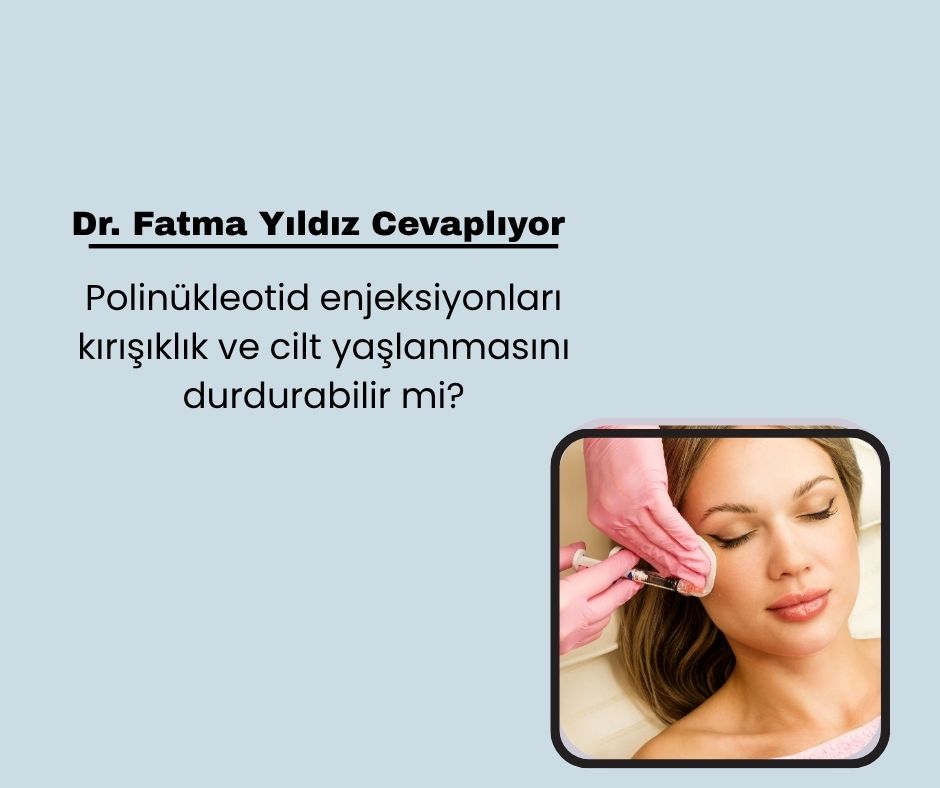

Can polynucleotide injections stop wrinkles and skin aging?
Aesthetic medicine is constantly offering more effective and natural solutions to combat the signs of aging. One of the most prominent applications in this field in recent years is polynucleotide (PN) injections. But does scientific data show that this method actually works?
In this article, we evaluate the effectiveness of polynucleotide injections based on criteria such as wrinkle reduction, skin texture improvement, increased elasticity, melanin balance, and patient satisfaction.
How do polynucleotides affect the skin?
Polynucleotides are naturally occurring molecules with regenerative properties, similar to DNA. These molecules, derived primarily from fish like salmon, promote cell renewal, stimulate collagen production, and increase the skin's moisture capacity.
Thanks to these effects, PN injections are used in the treatment of many aesthetic problems, such as crow's feet, acne scars, nasolabial folds, and uneven skin tone.
What does scientific research say? According to a systematic analysis of nine different studies conducted between 2014 and 2022, involving a total of 219 patients, PN injections provide effective results in many areas. Most of these studies were conducted in Korea and Italy. The majority of the participants were women.
1. Wrinkle Reduction
Six different studies examined the effectiveness of PN injections in wrinkle reduction, with all showing improvement, and half achieving statistical significance. For example:
A 95.7% improvement was demonstrated in the crow's feet area.
A significant reduction in wrinkle severity was observed at 6 weeks after PN application (p < 0.05).
2. Skin Texture and Elasticity
Effects such as thickening of skin texture, shrinking of pores, and improvement in tone have been reported. The most significant changes were generally observed between 12 weeks and 3 months.
One study observed a nearly 40% improvement in skin texture after treatment (p < 0.05). Additionally, effects such as increased hydration and a reduction in roughness have been noted.
3. Hemoglobin and Melanin Balance
Some studies have also observed improvements in melanin and hemoglobin levels, with visible improvements reported for up to 12 weeks, particularly in conditions such as post-inflammatory hyperpigmentation.
Which areas are they used in?
Polynucleotide injections are used in a wide range of aesthetic medicine applications:
Crow's feet and eye contour rejuvenation
Smoothing of nasolabial folds
Acne scar treatment
Post-inflammatory pigmentation
Increasing cheek and forehead fullness
Treatment of female pattern hair loss
What is the treatment process and injection technique?
While there are some differences in the techniques used in studies, serial injections with fine 30G-34G needles, spaced 1 cm apart, are generally preferred. Application protocols are 2-6 sessions, spaced 2 to 4 weeks apart.
The recovery period after the procedure is very short, and patients can quickly return to their daily lives.
Side Effects and Safety Profile
Studies show that polynucleotide injections generally cause mild and temporary side effects. These include:
Local redness
Mild edema
Itching
Temporary tenderness
No serious side effects were observed. Two studies reported no side effects at all.
How satisfied are patients?
Satisfaction levels were reported to be moderate to high based on surveys and self-assessment scales. Patients who were treated for acne scars and nasolabial folds, in particular, expressed a desire to have PN repeated.
How long do PN injections last?
Studies have shown that results can be maintained for up to 6 months, but the most significant effects occur between 2 and 3 months. Therefore, periodic repeat treatment is recommended.
Conclusion: Could polynucleotide injections revolutionize skin rejuvenation?
Scientific data demonstrates that polynucleotide injections are an effective and safe method for many areas, including reducing wrinkles, improving skin texture, and increasing elasticity. Their natural structure, rapid healing process, and low side effect profile make them a promising alternative in aesthetic medicine.
However, the success of the treatment depends on the quality of the product used and the experience of the physician performing it. Therefore, it is important to have PN injections performed by a dermatologist who is an expert in the field.
Dermatologist Fatma Yıldız
Ankara Life Polyclinic
 Call
Call
 Whatsapp