


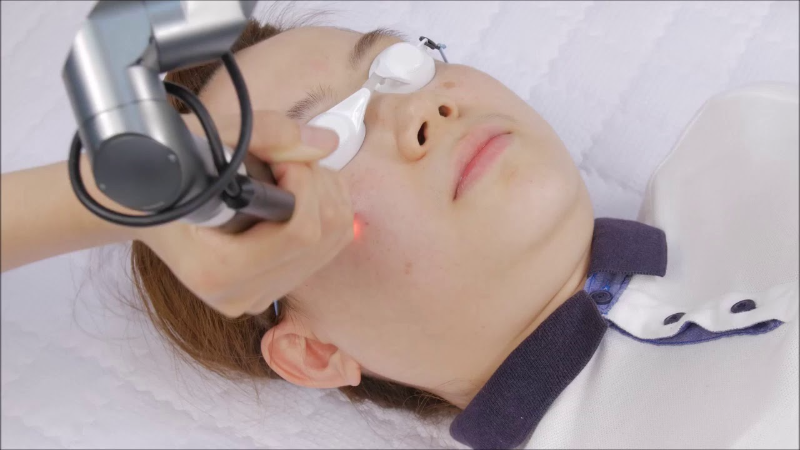

Q-Switch laser is a laser technology used to target selected pigmentation concerns and may help improve the appearance of uneven skin tone. These lasers deliver high-energy light pulses to the skin over very short durations. The energy is absorbed by pigment in the targeted area and may help break it into smaller particles, which can gradually reduce the visible appearance of certain spots and areas of discoloration.
Q-Switch laser treatment can be used for selected pigmentation concerns such as dark spots, sun-related pigmentation, and age-related spots. The treatment is designed to target pigment while limiting unnecessary exposure to surrounding tissue, although temporary skin reactions may still occur.
One of the advantages of Q-Switch technology is that different wavelengths and treatment settings can be used according to the pigmentation concern and individual skin characteristics. This allows treatment planning to be adjusted according to the person's needs.
Advantages of Q-Switch Laser for Pigmentation Treatment
Q-Switch laser pigmentation treatment may offer several advantages.
First, it is a non-surgical treatment that delivers controlled laser energy to selected areas of pigmentation. Depending on treatment intensity, recovery may be relatively limited compared with more invasive procedures.
Second, Q-Switch laser energy targets pigment in the skin and may help reduce the visible contrast between darker areas and the surrounding skin. This can contribute to a more even-looking skin tone over time.
The treatment may also be used for different pigmentation concerns depending on the wavelength and device selected. However, its effects on skin texture, fine lines, or pore appearance may vary and should not be assumed for every treatment protocol.
At centers providing Ankara Laser applications, Q-Switch systems may be selected according to skin type, pigmentation characteristics, and individual treatment goals.
The Role of Q-Switch Laser in Evening Out Skin Tone
Uneven skin tone is a common aesthetic concern.
Q-Switch laser pigmentation treatment may help improve tone irregularities by targeting excess pigment in selected areas of the skin. As the appearance of darker pigmentation decreases, the skin tone may appear more uniform.
The main purpose of Q-Switch treatment in this context is pigment targeting. Any additional changes in skin texture or overall appearance depend on the specific device, wavelength, treatment settings, and individual skin response.
Results develop gradually and may vary considerably between individuals.
How Is Q-Switch Laser Pigmentation Treatment Performed?
Q-Switch laser pigmentation treatment should begin with an assessment of the skin and pigmentation concern by an appropriately qualified professional.
Before treatment, the type, depth, distribution, and possible cause of the pigmentation should be evaluated. An individualized treatment plan can then be prepared.
During treatment, controlled laser pulses are directed toward selected pigmented areas. The pigment absorbs the laser energy, which may help break it into smaller particles that are gradually processed by the body.
Session duration varies according to the size and number of areas being treated. A session may sometimes take approximately 20–30 minutes, although this is not a fixed duration.
Temporary redness, warmth, mild swelling, or sensitivity may occur after treatment. Recovery time varies depending on the procedure and individual skin response.
Effects and Results of Q-Switch Laser Treatment
The response to Q-Switch laser treatment varies according to the type and depth of pigmentation, skin characteristics, device settings, and number of sessions.
Some individuals may notice gradual improvement after early sessions, while others may require several treatments before a visible change develops.
A treatment plan of approximately 3–6 sessions may be considered in some cases, but the number of sessions should not be regarded as a fixed standard.
Results may be long-lasting when the underlying cause of the pigmentation is controlled, but new or recurrent pigmentation can develop due to sun exposure, hormonal changes, skin characteristics, or other factors.
For this reason, Q-Switch laser should be described as a treatment that may reduce the appearance of pigmentation rather than as a permanent solution for every individual.
What Should Be Considered Before and After Treatment?
Before Q-Switch laser treatment, the skin should generally be clean and free from makeup or cosmetic products according to professional instructions.
Recent tanning and excessive sun exposure may affect treatment planning and should be discussed before the procedure.
After treatment, the skin may temporarily become more sensitive to sunlight. Appropriate sun protection is therefore important.
Broad-spectrum sunscreen may be recommended, and potentially irritating products such as strong exfoliants, acids, retinoids, or harsh cosmetic products may need to be temporarily avoided.
Gentle moisturizers or soothing products may be recommended if temporary dryness or sensitivity develops.
A consistent skin care routine and sun protection can help maintain the improvement achieved with treatment, but they cannot guarantee that pigmentation will never return.
Q-Switch laser pigmentation treatment may be an effective option for selected pigmentation concerns when performed with appropriate device settings and professional assessment.
 Call
Call
 Whatsapp