


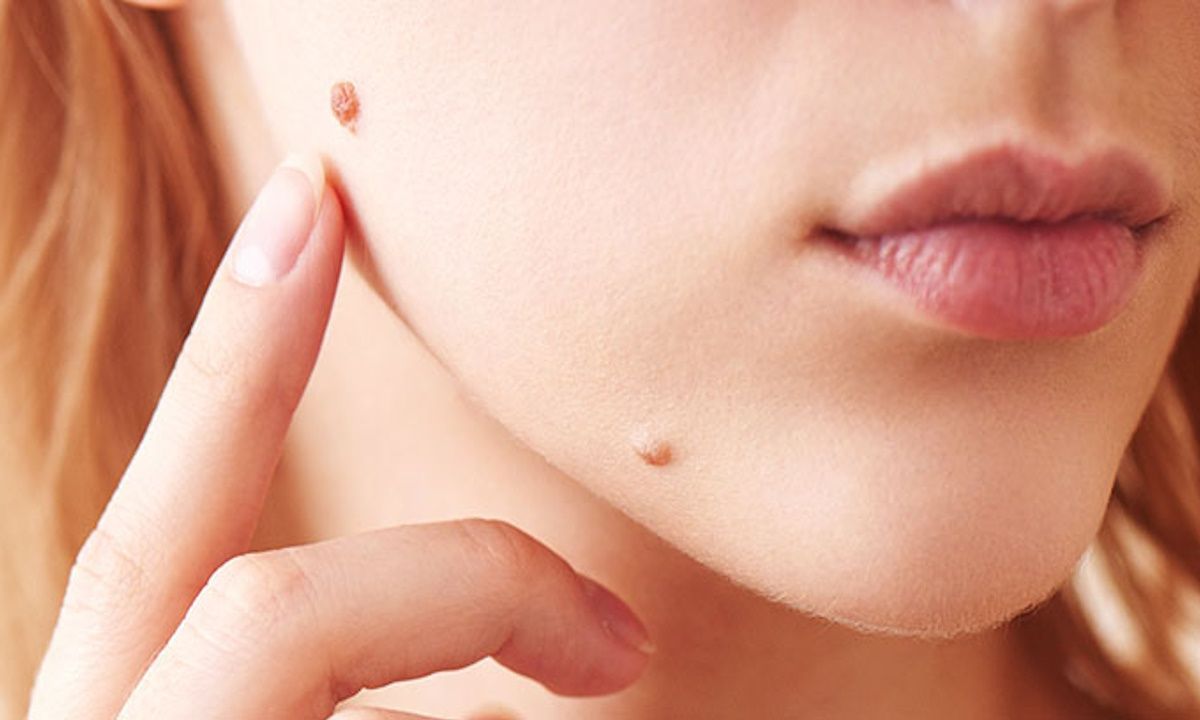

Small skin tags can appear on any part of the body, but they are most common in areas that are exposed to the sun, such as the face, trunk, back, and hands. These moles usually range in size from a few millimeters to a centimeter and can be rough, crusty, or sticky in appearance.
Small skin tags do not usually bother the person and do not cause any health problems. However, in some cases, there may be concerns that they may develop into a malignant tumor. Therefore, as with any skin lesion, it is recommended that small skin tags be checked regularly and evaluated by a dermatologist if necessary.
Causes of Small Skin Tags
The formation of small skin tags can be explained by a combination of several factors. The main causes include:
Age: Small skin tags become more common with age. They are especially common in people over the age of 50.
Exposure to Sunlight: Prolonged exposure to sunlight can trigger the formation of small skin tags. UV rays contribute to the development of such lesions by causing cells to overgrow.
Genetic Predisposition: Some people may have genetic factors that predispose them to the formation of small skin tags. The incidence is higher in people with a family history.
Immune System Problems: A weakened immune system can increase the formation of small skin tags. It is more common in people who have had an organ transplant or in people who use immunosuppressive drugs.
Skin Diseases: Some skin diseases can pave the way for the development of small skin tags. For example, they can be seen more frequently in diseases such as seborrheic dermatitis.
In short, age, exposure to sunlight, genetic predisposition, immune system problems and other skin diseases are the main factors that play a role in the formation of small skin tags.
Symptoms of Small Skin Tags
Small skin tags usually present themselves with the following symptoms:
Color: Small skin tags are usually brown, yellowish or whitish in color.
Size: Their size can vary from a few millimeters to a centimeter.
Surface Structure: The surface of the mole can be rough, crusty or sticky.
Location: The areas where they are most frequently seen are areas that are more exposed to the sun, such as the face, trunk, back and hands.
Multiple: There may be a single mole, or multiple moles may form on the body.
Small skin tags usually do not cause any pain, itching or other disturbing symptoms. However, complications such as bleeding, infection or malignant transformation can rarely occur. Therefore, it is recommended to consult a dermatologist immediately if any changes are noticed.
Formation of Small Skin Tags
The formation of small skin tags occurs as a result of excessive proliferation of cells in the epidermis, the uppermost layer of our skin. Normally, the cells in the uppermost layer of the epidermis are regularly renewed and shed. However, under the influence of various factors, these cells begin to proliferate uncontrollably and lead to the formation of a mole.
The main mechanisms that play a role in the formation of small skin tags are as follows:
Sun Rays: UV rays cause excessive proliferation of epidermal cells.
Aging: With age, irregularities in cell renewal increase and mole formation becomes easier.
Genetic Factors: In some people, changes in the genes that control cell proliferation create a predisposition to mole formation.
Immune System Problems: Weaknesses in the immune system can allow cells to multiply uncontrollably.
Other Skin Diseases: Some skin diseases, such as seborrheic dermatitis, can trigger mole formation.
The formation of small skin tags usually occurs as a slow and gradual process. Initially, one or a few cells begin to multiply uncontrollably and over time, a mole forms. This process can continue for years, and more moles may form depending on the person's age.
Treatment of Small Skin Tags
The treatment of small skin tags is shaped according to the characteristics of the lesions and the person's preferences. In general, the following treatment methods can be applied:
Observation: If the appearance and characteristics of the moles are normal, regular check-ups and the monitoring method can be preferred.
Cryotherapy (Freezing): It is the process of freezing and destroying moles using liquid nitrogen. This method is effective for small and limited moles.
Electrocotherapy: It is the process of destroying moles using electric current. It can be applied to larger or multiple moles.
Laser Treatment: It is an effective method used in the treatment of moles especially in sensitive areas such as the face and body.
Surgical Excision: It is the surgical removal of moles. It is preferred for large or thick moles.
Topical Medications: The use of special medication creams applied to moles can be effective for small and shallow moles.
When choosing the treatment method, the characteristics of the moles, their location, number and the patient's preferences are taken into consideration.
 Call
Call
 Whatsapp