


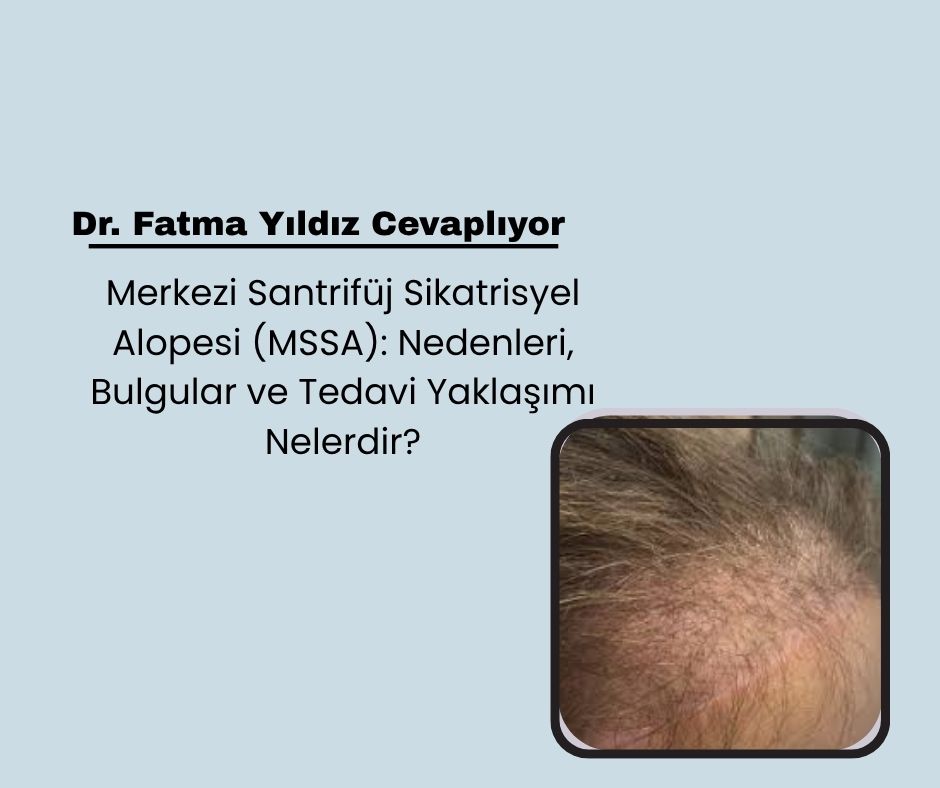

Central Centrifugal Cicatricial Alopecia (MSSA): Causes, Symptoms and Treatment Approach
Central centrifugal cicatricial alopecia (MSSA) is a hair loss disease that progresses from the center to the periphery of the scalp and progresses with permanent scarring, especially in women of African origin. MSSA is the most common form of cicatricial alopecia and can have significant effects on patients both aesthetically and psychosocially. In this blog post, all clinical, histopathological and therapeutic aspects of MSSA are presented based on scientific data.
Clinical Features and Diagnosis of MSSA
MSSA usually begins in the vertex and progresses by spreading in a centrifugal manner. Lesions are symmetrical and the frontal hairline is often preserved. While flaking, erythema and brittle hair can be seen on the scalp in the early stages of the disease, permanent scarring is noted in later stages.
Histopathologically, MSSA shows perifollicular fibrosis, inflammatory infiltration and degeneration of the follicular epithelium. The diagnosis of MSSA is usually based on clinical examination and dermoscopic findings; however, biopsy is recommended for definitive diagnosis.
Etiopathogenesis of MSSA
Although the etiopathogenesis is not clearly known, it is thought that various factors play a role in the development of MSSA:
Genetic predisposition
Trauma (rigorous hair styling methods, hot comb, perm, relaxant chemicals)
Inflammatory processes
Disruption of proliferative signaling pathways (e.g. JAK-STAT and PPAR-γ signaling)
MSSA is more common in populations where hair styling practices are common. This situation can be explained by the exposure of hair follicles to chronic inflammation due to traumatic hair practices.
Treatment Approaches
The aim of MSSA treatment is to stop the progression of the disease by suppressing the inflammatory process and to alleviate the symptoms. However, since it is not possible to reverse the scar tissue once it has formed, early intervention is of great importance.
1. Topical Treatments
Topical corticosteroids: This is the most commonly used first-line treatment. It can stop the progression of the disease by suppressing inflammation.
Topical antibiotics and antiseptics: Can be used to prevent secondary infections.
Topical minoxidil: Used to support hair growth, but its effect on scar tissue is limited.
2. Systemic Treatments
Oral antibiotics (tetracycline group): Recommended in the early stages of MSSA due to their anti-inflammatory effects.
Antimalarial drugs (hydroxychloroquine): Can be used to suppress the immune-mediated aspects of MSSA.
Corticosteroids (systemic): Effective in suppressing active inflammation. Short-term and careful use is recommended.
3. Immunomodulators and New Generation Agents
PPAR-γ agonists (pioglitazone): May be effective by suppressing the fibrosis process.
JAK inhibitors: It has been shown that the JAK-STAT pathway is activated in MSSA. Therefore, it has the potential for targeted treatment.
Methotrexate: Low doses can be used in refractory cases.
4. Supportive and Protective Approaches
Changing hair styling habits: Traumatic procedures such as tight braids, chemical straighteners, and high heat applications should be avoided.
Using the right hair care products: Products that are pH balanced, allergen-free, and do not harm the scalp should be preferred.
5. Surgical Methods
Hair transplantation: It can be considered after the active phase of the disease is over. However, the success rate is low and provides limited effect due to scar tissue.
Follow-up and Prognosis in MSSA
Although the prognosis of the disease varies from person to person, its progression can be stopped with early diagnosis and treatment. Long-term follow-up is important due to the chronic course of MSSA. Psychosocial effects should also be considered, and supportive treatments should be provided when necessary.
 Call
Call
 Whatsapp