


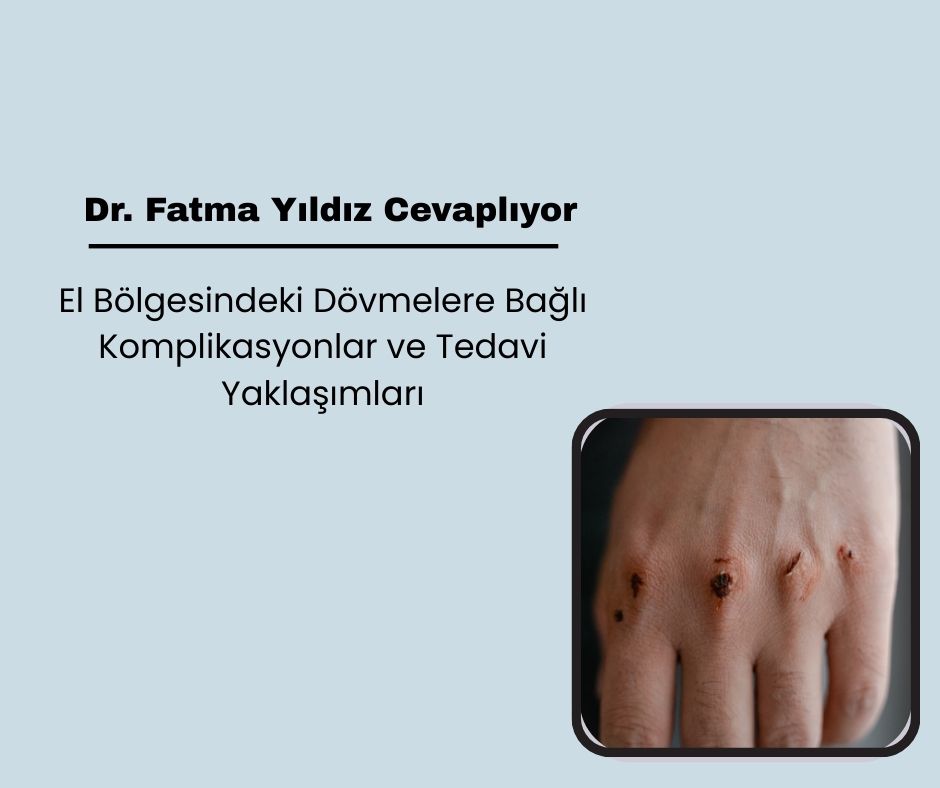

Complications and Treatment Approaches Related to Tattoos on the Hand Area
Tattoos have been prominent applications throughout human history as a cultural and individual form of expression that carry different meanings. Today, they remain popular, especially among young individuals, for aesthetic and personal expression. However, tattoo applications are not always innocent; they can lead to various complications, especially in areas open to external effects such as the hand.
Chemicals Used in Tattoo Applications
Tattoo inks contain many chemicals such as not only pigments but also solvents, emulsifiers and preservatives. Heavy metals such as cadmium, lead, chromium, mercury and cobalt can be included among the dyes used, especially in red, green, blue and black colors. These substances can cause toxic, allergic or carcinogenic effects on the skin.
Complications That May Develop After Tattooing
1. Early Period Complications
Redness, edema, crust (scabbing) and swelling: They can develop due to microtraumas applied during tattooing and the substances used. They usually heal spontaneously.
Delayed wound healing: May develop due to inflammation caused by the damage done during tattooing and substances in the ink content.
2. Late-Term Complications
Development of malignancy
Autoimmune disease exacerbations
Foreign body reactions and granuloma formation
Sarcoidosis
Regret from tattooing and psychological effects
Types of Complications
A. Inflammatory Reactions
Aseptic inflammation: Usually seen during the natural healing process of the tattoo.
Allergic reactions: Due to delayed-type hypersensitivity. Most commonly develops against red-colored dyes.
Clinical picture: Itching, papulovesicular rash, sometimes generalized spread.
Treatment: Topical corticosteroids, oral antihistamines, systemic steroids; laser or surgical excision in resistant cases.
B. Lichenoid Reactions
Generally develops against red dyes.
Histologically, lymphocytic infiltration is seen at the dermoepidermal junction.
Treatment: Topical/intralesional corticosteroids, sun protection.
C. Infectious Complications
Bacterial: Staphylococcus aureus, Streptococci.
Viral: Herpes simplex, HPV.
Fungal: Dermatophyte infections.
Treatment: Antibiotic, antiviral or antifungal therapy is directed.
D. Neoplastic Reactions
Benign lesions: Dermatofibroma
Malignant lesions: Keratoacanthoma, basal cell carcinoma, squamous cell carcinoma, rarely malignant melanoma
In such cases, biopsy diagnosis and oncological treatment process are required.
Conclusion and Management Recommendations
Complications related to tattooing are usually recognized early and can be controlled with correct management. However, especially considering late-term reactions and systemic effects, individuals should be informed in detail before getting a tattoo. In those with an allergic history, it may be appropriate to apply preliminary tests in areas where a tattoo is planned.
The following are prominent in treatment approaches:
Topical and systemic anti-inflammatory treatments
Allergy management
Surgery and laser removal (if necessary)
Regular dermatological follow-up
 Call
Call
 Whatsapp