


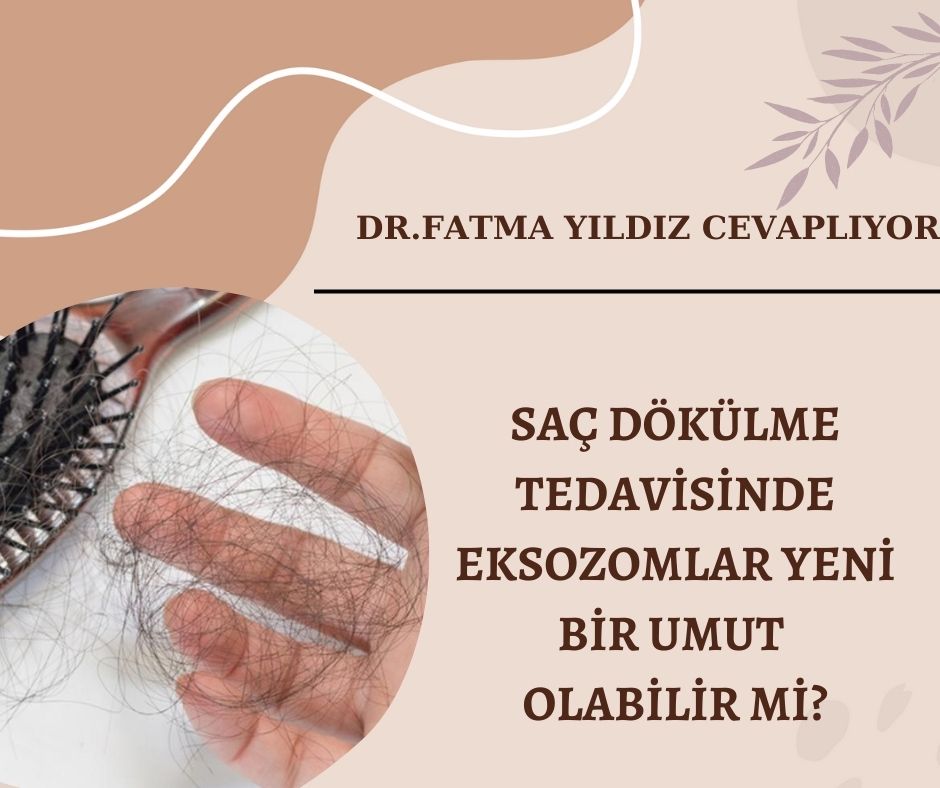

Could Exosomes Be A Nw Hope İn Hair Loss Treatment?
Hair loss (alopecia) is one of the most common reasons for consulting dermatologists, and androgenic alopecia (AGA), which is especially seen in men, is the most common type. However, it is still difficult to develop effective treatment methods. Current treatments include topical minoxidil and oral/topical finasteride. These treatments can slow hair loss, but they cannot fully support hair growth. In addition, side effects and difficulties in regular use limit the effectiveness of these drugs.
In recent years, exosome therapy has become a remarkable area in the fight against hair loss. Exosomes are small building blocks that provide communication between cells. In hair follicles, these structures are thought to play important roles in supporting hair growth. It has been shown that they support the hair growth cycle (anagen phase) by activating a protein called β-catenin, especially in hair root cells (dermal papilla).
Preclinical Studies: From Laboratory to Clinics Laboratory studies have shown that exosomes increase hair growth. For example, exosomes derived from stem cells derived from fat tissue have been shown to support hair follicle cells, thickening and thickening hair strands. These effects occur by activating protein and gene pathways (such as IGF-1 and β-catenin) that accelerate the natural hair growth cycle.
Additionally, effects on hair growth have been linked to miRNAs, gene-regulating molecules contained in exosomes. While some miRNAs support hair growth, others may inhibit this process.
Clinical Studies: Promising Results Limited human studies have shown that exosomes support hair growth. In one study of people with mild to moderate hair loss, applying an exosome-containing solution once a week resulted in significant increases in hair density and thickness. However, more extensive and controlled studies are needed to confirm these results.
Safety: How Safe is Exosome Treatment? Current studies suggest that exosome treatment is generally safe. No serious side effects have been reported with topical applications. However, the effects of different exosome sources and production methods on safety and efficacy are still being investigated.
Conclusion and Future Perspective Exosomes offer a promising approach to hair loss treatment. However, there are some technical and regulatory hurdles that limit their clinical use. More research is needed to reach clear conclusions about the safety and efficacy of exosomes. In the future, exosome therapy may become an important option in cosmetic dermatology for people experiencing hair loss.
 Call
Call
 Whatsapp