


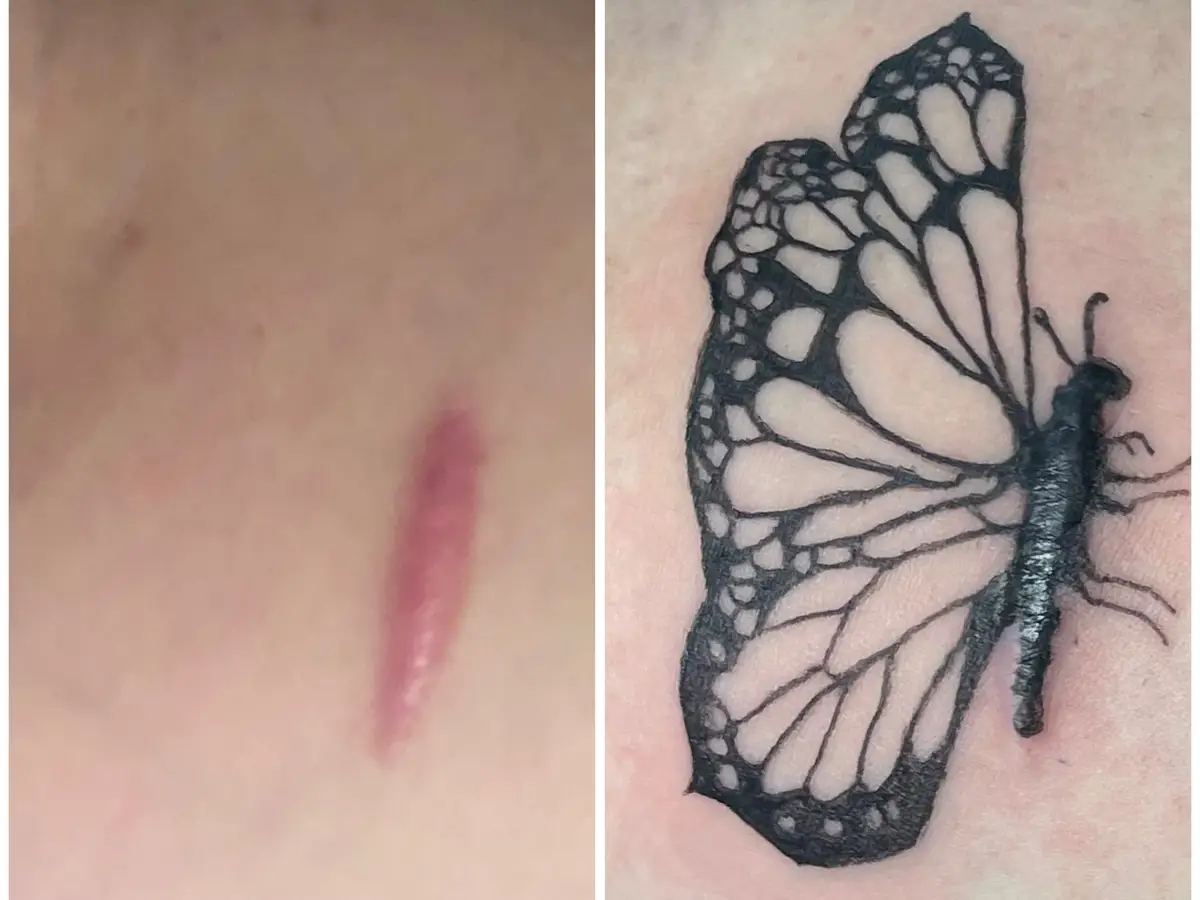

Tattoos can be a powerful tool for personal expression and may seem like an attractive option for covering up scars on the skin. However, covering up scars with tattoos is generally not recommended by experts. The most important reason for this is that tattooing prevents the scars on the skin from being treated. Healthy healing of scars can be made more difficult with a tattoo applied on the skin and can cause scars to become more visible.
Treating scars is of great importance to support the skin's natural healing process. While the skin tries to renew and repair itself during the healing process, external interventions (such as tattooing) can disrupt this process. Tattoo needles penetrate deep into the skin and allow the pigment to settle under the skin. However, since scars are usually located in deeper layers of the skin, this process can cause additional trauma to the scars. In addition, the ink applied during tattooing can interfere with the natural structure of healing skin cells and increase the risk of discoloration, inflammation or infection.
Scar treatment should be prioritized over tattooing. Treating scars requires the application of the right methods to lighten the appearance of scars, restructure the skin and ensure that scars heal healthily. Treatment methods such as gold needle, laser treatment and chemical peeling help improve the depth and shape of scars while supporting natural renewal in the skin. Such treatments affect the lower layers of the skin without applying direct pressure on the scars and provide more natural and healthy results in the long term.
Tattooing is not a solution that can replace scar treatment. Tattooing a scar can provide a temporary mask, but this prevents the scars from healing completely and can cause the scars to become more visible over time. Treating the scar allows the skin to complete the healing process properly, while tattooing can interfere with the healing of the scars. Therefore, treating scars will provide healthier and more aesthetic long-term results.
 Call
Call
 Whatsapp