


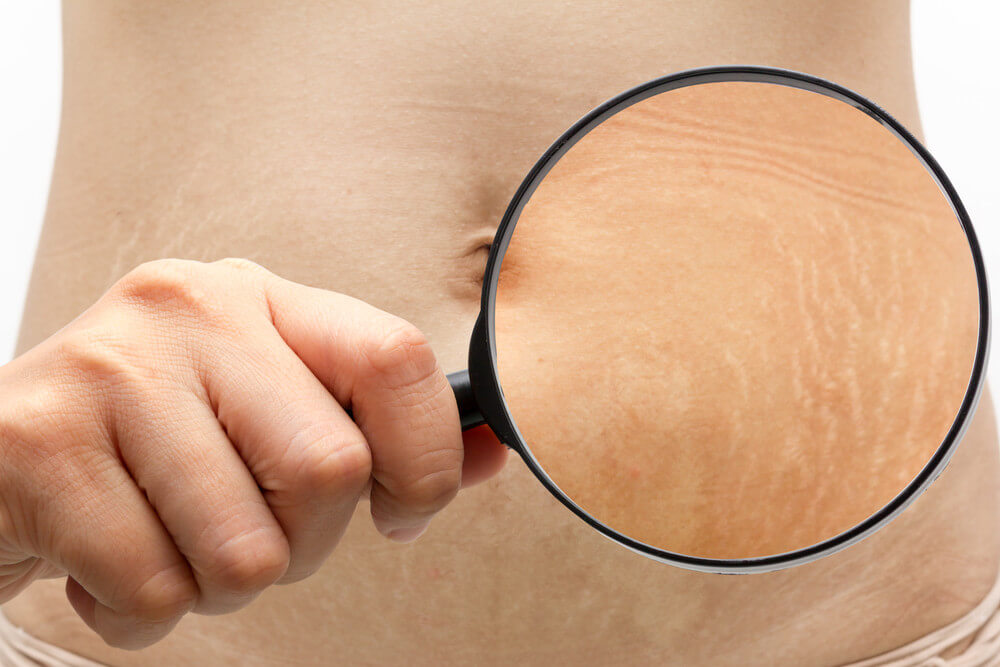

Stretch mark removal laser prices may vary depending on the person's skin structure and stretch mark condition. When the skin barrier is compromised, cracks may occur. There may be many reasons for this condition, which occurs more frequently in irritated and dry skin. Hands, feet and lips are especially prone to cracking. Skin stretch marks may also appear frequently on other body areas. Some treatments applied may be insufficient in the treatment of stretch marks on the legs, hips and arms. Tearing in the lower skin and thinning of the upper skin can cause stretch marks. As a result of laser stretch mark treatments, elastic fiber and collagen production under the skin is triggered.
How to Apply Stretch Mark Removal Laser Treatments?
Stretch mark removal laser prices may also vary on a clinic basis. Treatments can be completed within 3 to 5 sessions. Session intervals in treatments are planned to be approximately 4 weeks. The success rate of the applied treatments is 90 percent. Although the cracks do not disappear completely, their visibility decreases significantly. In order to understand how laser stretch mark treatment is applied in this area, it is necessary to know the skin layers accurately. Our skin consists of three layers. While there are pigment cells in the upper part that give the skin its color, there are collagen and elastin fibers in the middle layer. When skin deformations progress to the middle layer, they appear as skin crack problems. With the thinning of the top layer, the skin structure becomes vulnerable to various deformations.
Stretch Mark Removal Laser Treatment Application Stages
Stretch mark removal laser prices vary depending on individual treatment plans. Evaluations before treatment are very important. Problematic areas are identified and a treatment model is applied by targeting the areas to be corrected. For individuals with dark skin or pigmentation problems, chemical peeling procedures can be applied before stretch mark removal treatment. The treatment should be applied to clean and make-up-free skin. Anesthetic creams are applied to the application area. It takes between 45 and 60 minutes for the cream to be fully effective. Slip gel can be used during the application phase. Crack treatment is applied much more comfortably with this gel, which acts as contact oil for the robotic handpiece. The treatment is completed in approximately 30 minutes. After the application, pain and discomfort may be minimal. These are temporary situations.
 Call
Call
 Whatsapp