


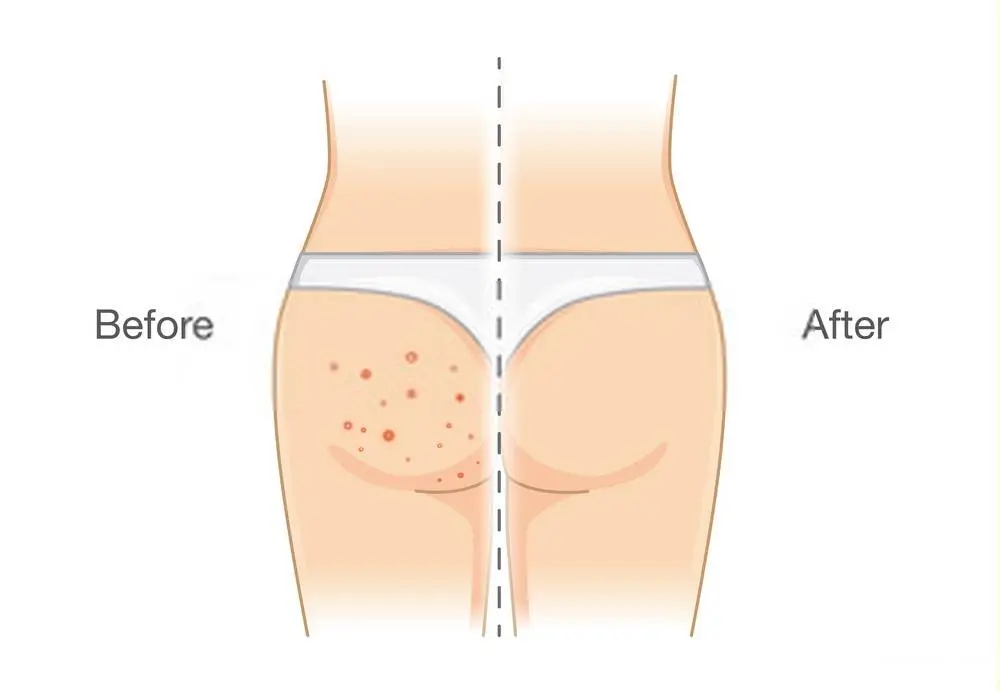

Buttock acne is a type of skin problem commonly referred to as acne. Acne is an inflammatory and non-inflammatory lesion that occurs as a result of the blockage of hair follicles (pores). Buttock acne is usually seen in the upper legs, in the buttock area.
Although buttock acne is seen in most people during adolescence, it can continue into adulthood. It can occur due to reasons such as hormonal changes, stress, improper skin care and genetic factors. If regular and correct care is not provided, buttock acne can become chronic and cause problems in terms of appearance.
Causes of Buttock Acne
The main reasons behind buttock acne are as follows:
Hormonal Imbalances: During adolescence or during periods of hormonal changes, androgen hormones produced in excess in the body can cause pores to become clogged and cause inflammation.
Clogged Pores: Excessive oil production, dead skin cells and bacteria accumulation lead to pore blockage. This causes acne to form.
Stress: Stress increases the release of hormones such as cortisol in the body. This contributes to the overactivity of the sebaceous glands and the formation of acne.
Genetic Predisposition: It is known that some people are more prone to acne on their skin. Those whose parents have acne problems are at risk of developing acne on their buttocks.
Wrong Skin Care: Excessive washing, using inappropriate products or not taking enough care of the skin can also trigger acne formation.
Underwear Friction: Friction and pressure in the buttock area can also encourage acne formation.
Treatment of Pimples on the Buttocks
In the treatment of pimples on the buttocks, the cause must first be eliminated. To do this, you can follow the steps below:
Skin Cleansing: Gently cleanse the area daily with a mild face wash or cleanser. Excessive washing or scrubbing can make the situation worse.
Moisturizers: Moisturizing the acne-affected area strengthens the skin barrier and reduces inflammation. Choose oil-free, noncomedogenic (non-pore-clogging) moisturizers.
Topical Treatments: Use topical (external) medications and creams that contain active ingredients such as benzoyl peroxide, salicylic acid or retinoids, as recommended by your doctor.
Oral Treatments: Oral (internal) medications prescribed by your doctor to correct hormonal imbalances that cause acne may also be effective.
Professional Treatments: In severe cases, professional skin care methods such as chemical peels, laser treatment or light therapy applied by your dermatologist are also recommended.
It is important to take a personalized approach in the treatment of acne on the buttocks. Determine the most appropriate treatment method for you by meeting with your doctor regularly.
Choice of Cream for Acne on the Buttocks
Topical creams are of great importance in the treatment of acne on the buttocks. However, choosing the right cream is also very critical. Creams with the following properties can be effective in the treatment of acne on the buttocks:
Creams Containing Benzoyl Peroxide: Benzoyl peroxide helps heal acne by killing bacteria and opening pores.
Creams Containing Salicylic Acid: Salicylic acid prevents acne by exfoliating dead skin cells and reducing oil production.
Creams Containing Retinoids: Retinoids prevent pore clogging and reduce inflammation.
Oil-free and Noncomedogenic Creams: In the treatment of acne on the buttocks, oil-free and noncomedogenic creams should be preferred.
Moisturizing Creams: Creams that moisturize the acne area strengthen the skin barrier and reduce inflammation.
The most suitable creams for acne on the buttocks are usually recommended by dermatologists. Consult your doctor, choose the cream that is most suitable for you and follow the instructions for use carefully.
 Call
Call
 Whatsapp