


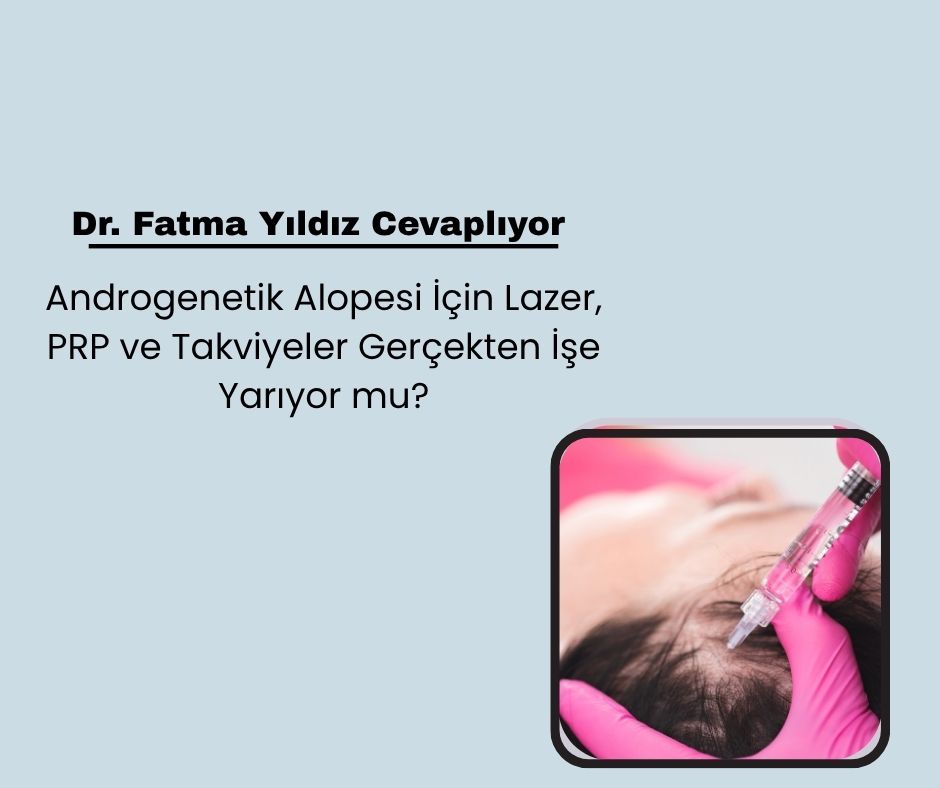

Do Laser, PRP, and Supplements Really Work for Androgenetic Alopecia?
Many people experiencing hair loss want to move beyond traditional pharmaceutical treatments when seeking an effective and permanent solution. This is where new-generation treatments like laser light therapy, PRP injections, stem cell-derived exosomes, and natural supplements come into play. But do these methods really work?
Can light therapy stop hair loss?
Yes, low-level laser therapy (LLLT) and LED-based devices can positively affect the hair cycle by stimulating hair follicles. Light wavelengths of 620nm and 660nm, in particular, have been shown to increase blood flow to the scalp, reduce inflammation, and suppress DHT production.
For example, in a study using a fully LED device called the Revian Red, men in the active device group grew an average of 26.3 more hairs per cm² after 16 weeks. The devices can be used at home, and patients can continue treatment with daily 10-minute treatments.
Ease of use: High
Side effects: Virtually none
Cost: Moderate, one-time device investment
Can PRP injections reverse hair loss?
PRP (Platelet Rich Plasma) is a natural treatment method that involves injecting plasma, derived from the patient's own blood and rich in growth factors, into the scalp. It is particularly effective for early-stage androgenetic alopecia.
Many studies have observed significant increases in hair count, thickness, and patient satisfaction after 3-4 sessions of PRP treatment. An important aspect of PRP treatment is that the procedure is performed by an experienced specialist. You can return to your daily life immediately after the procedure.
Session frequency: Monthly for the first 3 months, then every 3-6 months
Ease of use: In-office
Side effects: Mild pain, temporary tenderness
Cost: Moderate-high
How does exosome therapy affect hair follicles?
Exosomes are small particles derived from stem cells that enable communication between cells. When injected into the hair follicles, it carries growth factors and antioxidants, revitalizing the hair follicles. Because they are cell-free, they do not strain the immune system and carry no risk of tumors.
Recent studies have reported significant increases in both hair density and thickness following exosome treatment. The mechanism of action is shown to be acceleration of the anagen (growth) phase and delay of the catagen (cessation) phase.
Session Interval: Recommended monthly
Side Effects: Mild pain at the injection site
Ease of Use: Performed in-office
Cost: High
Does microneedling cause hair growth or is it supportive?
Microneedling is a minimally invasive procedure that encourages hair follicles to regenerate by making very small punctures in the skin. It also enhances the absorption of topical products (e.g., minoxidil or PRP), improving the results of combined treatments.
The combination of microneedling and minoxidil, applied once a week, has been shown to increase hair density more than minoxidil alone. However, the procedure can be painful and requires regular follow-up.
Side effects: Pain, mild scabbing, and occasionally infection.
Ease of use: Performed in-office with a specialist.
Cost: Moderate.
Do herbal and vitamin supplements work?
New-generation nutraceutical supplements help support hair loss internally. Formulas containing ingredients such as saw palmetto, ashwagandha, biotin, and marine collagen can suppress DHT production, reduce stress, and nourish hair follicles.
For example, clinical studies with Nutrafol® showed a 32% reduction in hair loss and a significant increase in new hair growth after 6 months. No serious side effects were reported.
Ease of use: 4 capsules daily.
Side effects: None.
Cost: Low-moderate.
Who are these treatments suitable for?
These methods offer an alternative, especially for patients who do not respond to medication or who do not wish to use systemic medications. However, for effective results:
The hair follicle must still be alive.
Treatment must be continued regularly.
It should be applied under the supervision of a physician.
Which should I choose?
Each individual's hair loss type, expectations, and budget are different. While some people achieve excellent results with PRP, others may be better suited to LED therapy or supplements. The best decision is made after a dermatological examination and a personalized plan.
 Call
Call
 Whatsapp