


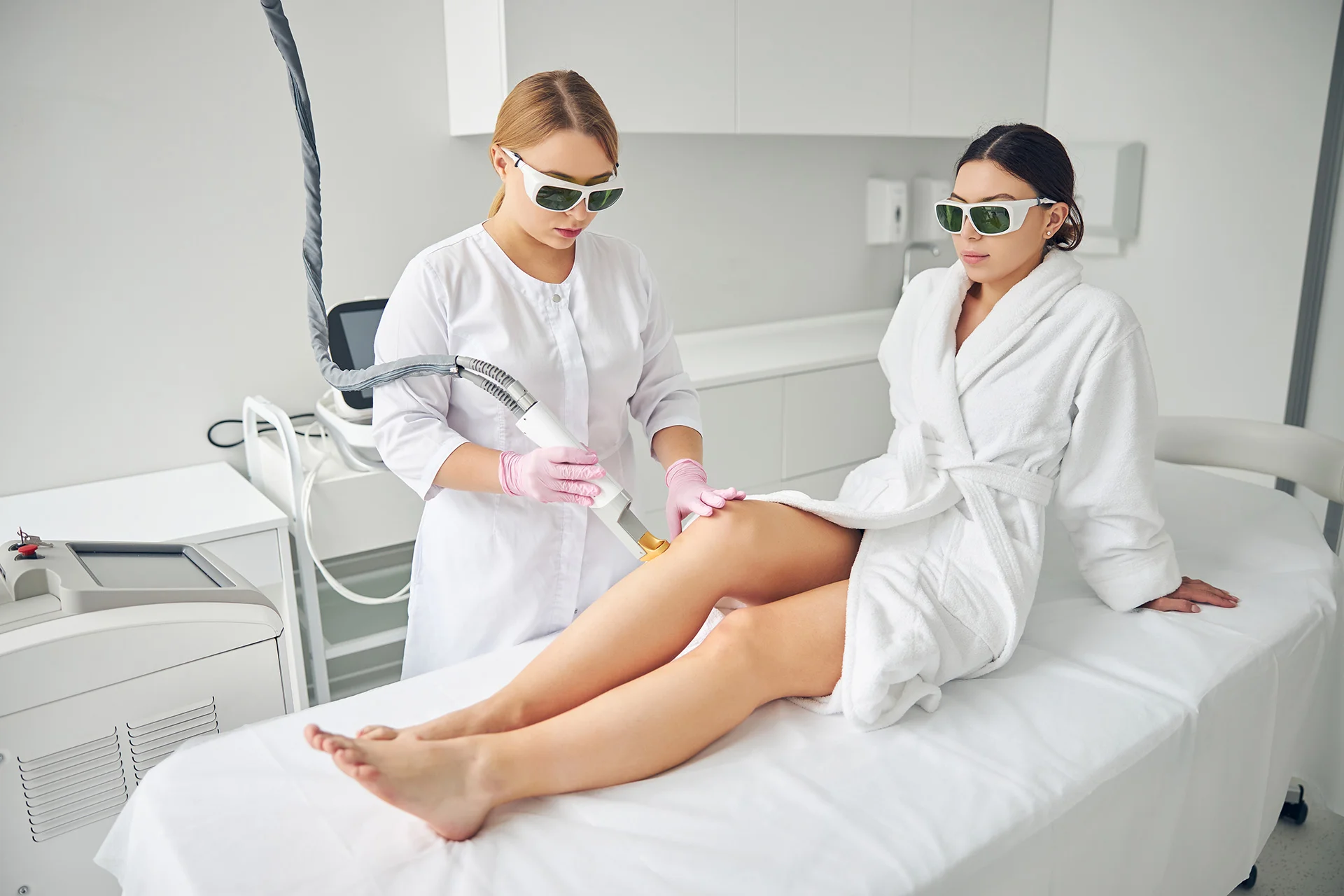

Laser hair removal uses high-energy light beams that target the hair follicles. These light beams focus on the melanin pigment in the hair follicles and create heat. This heat causes damage to the hair follicles and hair loss.
During the procedure, the skin is cooled with a cooling gel or spray. In this way, any burns or damage to the skin is prevented. In addition, the pain felt during the procedure is minimized.
Laser hair removal usually takes between 15-30 minutes. Depending on the degree of damage to the hair follicles, it can take 1-2 weeks for the hair to fall out after the procedure. With regular applications, you can get rid of unwanted hair for a long time.
Is Laser Hair Removal Painful?
Laser hair removal offers a less painful process compared to other hair removal methods. However, it can still be painful for some people. The degree of this pain may vary depending on the person's pain threshold, the epilation area and skin sensitivity.
In general, the pain felt during laser hair removal is described as a fine needle prick or a slight burning sensation. While this pain may be more severe for some people, others may feel almost no pain at all.
A skin cooling gel or spray is used during the procedure to reduce the pain. In addition, applying a numbing cream before the procedure can also help reduce the pain. Depending on the person's pain threshold, using painkillers during the procedure may also be an option.
Thanks to regular laser hair removal applications, the hair follicles are weakened and the feeling of pain decreases. The pain, which is more severe in the first applications, gradually decreases in the following sessions.
Side Effects of Laser Hair Removal
Laser hair removal is generally a safe method. However, in some cases, various side effects may be seen:
Redness and Swelling: After the procedure, temporary redness and swelling may occur in the epilation area. This usually goes away within 1-2 days.
Burn: If the skin cooling process is not done sufficiently, laser beams can cause burns on the skin. This is rare and usually temporary.
Pigment Changes: In some people, light or dark color changes may occur in the epilation area as a result of laser beams affecting the skin pigment. This is usually temporary.
Infection: There is a risk of infection in the epilation area. Therefore, care should be taken to clean and care for the area after the procedure.
Sensitivity: Laser epilation may cause temporary sensitivity, especially when applied to sensitive areas.
These side effects are usually temporary and can be minimized with correct application and care. Laser epilation performed by an experienced specialist is a safe and effective method.
Laser Epilation Process
The laser epilation process usually consists of the following steps:
Preliminary Preparation: Before the procedure, the area must be shaved and cleaned. In addition, a numbing cream may be applied.
Skin Cooling: During the procedure, the skin is cooled with a cooling gel or spray. In this way, pain and burning sensations are minimized.
Laser Application: High-energy laser beams focus on the hair follicles and create heat. This heat causes damage to the hair follicles and hair loss.
Aftercare: After the procedure, cleaning and care of the epilation area is very important. Antiseptic products can be applied to the area to reduce the risk of infection.
The laser epilation process may vary from person to person. While 3-4 sessions are sufficient for some people, more sessions may be required for others. With regular and planned applications, you can get rid of unwanted hair for a long time.
You can answer all your questions about the pain and side effects of laser epilation by consulting an experienced specialist. Make an appointment now and get smooth skin!
 Call
Call
 Whatsapp