


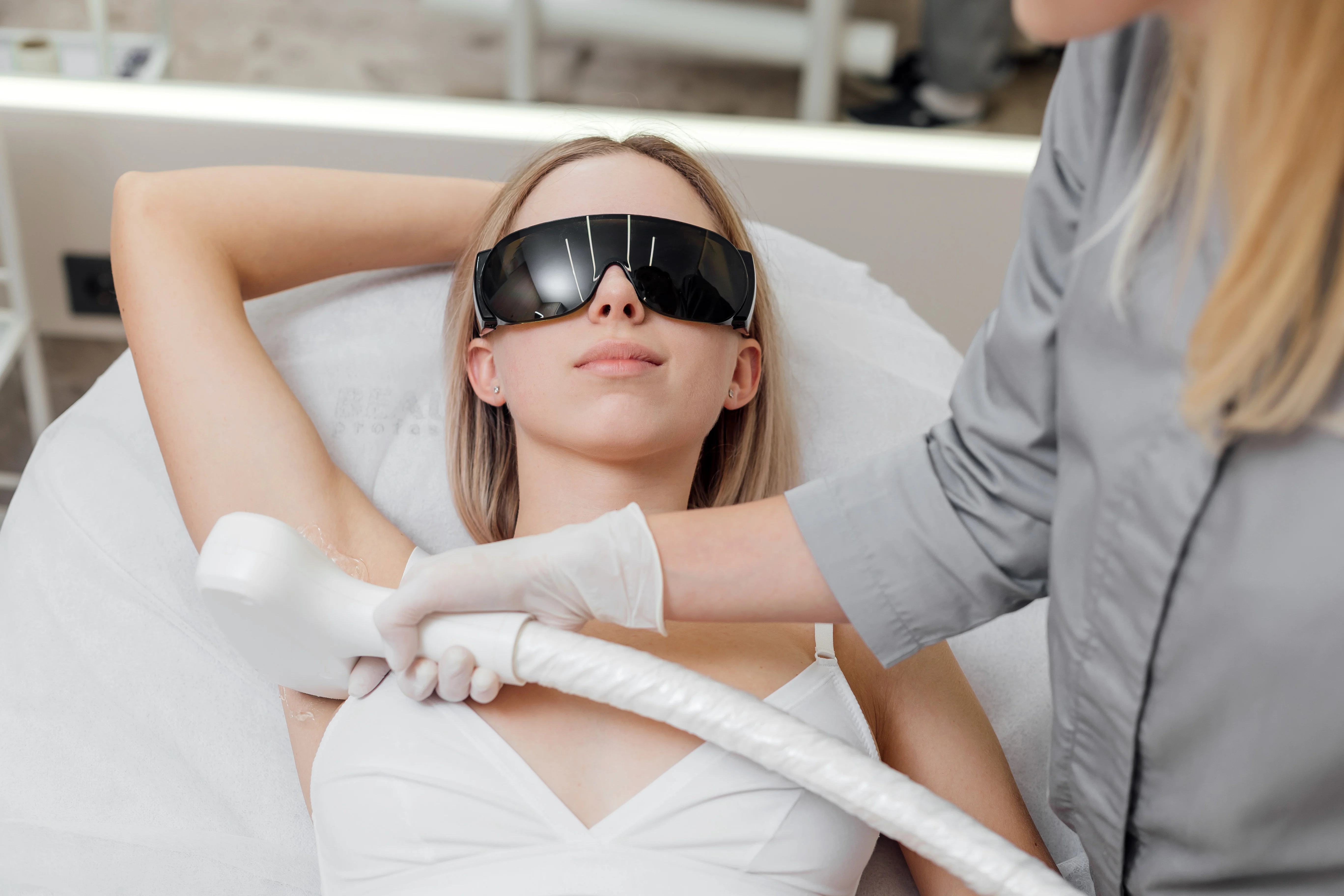

Laser hair bleaching is a cosmetic procedure that may be considered to make fine and light hair appear less noticeable. Planning the procedure during winter may offer certain advantages for some people because sun exposure may be easier to limit and aftercare may be managed more consistently.
However, the season alone is not sufficient for deciding whether the procedure is suitable. Skin type, hair colour, treatment area, device, recent sun exposure and existing skin sensitivity should be assessed together.
What Is Laser Hair Bleaching?
Laser hair bleaching aims to target pigment in the hair with laser energy and make the hair appear lighter and less visible. It does not remove the hair from the root and does not aim to achieve the same result as laser hair removal.
The procedure may be considered particularly for fine hair on areas such as the face, sideburns, chin, neck and arms. Hair structure and colour directly affect the possible response.
The effect of laser hair bleaching may not be permanent. Newly growing hairs may return in their natural colour, and the procedure may need to be repeated at certain intervals.
Very light, white or grey hair contains limited pigment and may respond less effectively. Dark hair may absorb more laser energy, which requires the treatment settings to be selected carefully.
Difference Between Laser Hair Bleaching and Laser Hair Removal
Laser hair bleaching and laser hair removal do not have the same purpose. Laser hair removal aims to target follicles and achieve a long-term reduction in hair density. Hair bleaching aims to reduce visibility by lightening the colour of the hair.
Laser hair bleaching may be considered as a different option for very fine hair that is not suitable for laser hair removal. However, not every type of fine hair is automatically suitable for bleaching.
Hair thickness, colour, density and treatment area should be assessed before the procedure. Individual evaluation is especially important for fine facial hair.
Advantages of Laser Hair Bleaching During Winter
Easier Limitation of Sun Exposure
Laser hair bleaching during winter may offer an advantage because the treatment area can be exposed to less direct sunlight. Areas other than the face may also be easier to cover with clothing.
However, sunlight still affects the skin during winter. Sun protection should continue on exposed areas such as the face, neck and hands.
Lower Likelihood of Tanning
Sunbathing, holidays and tanning beds may change skin tone during summer. Tanned skin may absorb more laser energy at the surface.
The lower likelihood of tanning during winter may make treatment settings easier to manage in some people. However, recent tanning-bed use or intense sun exposure should be disclosed regardless of the season.
Easier Aftercare Planning
Activities such as intense sunbathing, swimming and frequent sauna use may be less common during winter. This may make it easier for some people to follow aftercare recommendations.
Loose clothing may protect the treatment area from external factors. Tight, synthetic or friction-causing clothing may increase sensitivity and should be selected carefully.
More Regular Session Planning
Holidays and outdoor activities may interrupt treatment plans during summer. Fewer interruptions during winter may make it easier to continue sessions at recommended intervals.
Session intervals are not determined solely by the season. Hair regrowth, treatment area and individual response should also be considered.
Is Winter More Suitable for Everyone?
Laser hair bleaching during winter may be easier to plan for some people, but it is not required or automatically more suitable for everyone.
The following factors should be assessed when selecting the timing:
-
Skin type
-
Hair colour and thickness
-
Treatment area
-
Recent sun exposure or tanning-bed use
-
Current medication
-
Active skin conditions
-
Ability to protect the skin from the sun
-
Planned holidays or outdoor activities
The procedure may also be planned during other seasons when sun protection and aftercare can be followed.
Devices Used for Laser Hair Bleaching
Devices used for laser hair bleaching may vary according to the purpose of the procedure and the person’s skin and hair characteristics. Not every laser hair removal device should be assumed to be used for hair bleaching in the same way.
The wavelength, energy setting, pulse duration and cooling features of the device are important. Device selection should consider skin tone and hair pigment rather than the device name alone.
The use of Alexandrite, Nd:YAG or other laser systems may vary according to the treatment protocol. A device used for laser hair removal is not necessarily suitable for hair bleaching in every person.
In device-based laser procedures, settings should be personalised. Using standard energy settings for everyone may increase the risk of unwanted skin reactions.
How Does the Laser Hair Bleaching Process Work?
Initial Assessment
Skin tone, hair colour, hair thickness and the treatment area are assessed. Information is collected about previous laser procedures, current medication and skincare products.
Recent sun exposure, tanning-bed use and skin irritation should also be discussed.
Preparation Before Treatment
The treatment area should be clean and dry. Perfume, creams, oils, makeup and deodorant may need to be removed.
Exfoliation, scrubbing, retinoids and strong acids may increase sensitivity and should be disclosed.
Application
The laser device is applied to the selected area. Mild warmth, stinging or temporary discomfort may occur.
The sensation varies according to pain threshold, treatment area, hair density and device settings.
After the Procedure
Temporary redness, warmth or sensitivity may occur. These effects often decrease within a short period.
The treatment centre should be contacted if severe burning, blistering, crusting or prolonged changes in skin colour occur.
How Many Sessions Does Laser Hair Bleaching Require?
The number of laser hair bleaching sessions varies from person to person. Hair colour, hair thickness, treatment area and device may affect the response.
Some people may notice visible lightening after the first procedure, while others may need more than one session.
Newly growing hairs may return in their natural colour, and the procedure may need to be repeated. Intervals should be determined according to hair growth and skin sensitivity.
An exact number of sessions or duration of effect should not be guaranteed.
Points to Consider Before Treatment During Winter
The following points should still be considered during winter:
-
Recent tanning-bed use should be disclosed
-
Intense sun exposure during winter holidays or skiing should be reported
-
Dryness, cracking and irritation should be assessed
-
Current medications should be disclosed
-
Retinoids and acidic products should be discussed
-
The treatment area should be free from active infection and open wounds
Cold weather and low humidity may increase skin dryness. Very dry or irritated skin may require assessment before the procedure.
Sun Protection After Laser Hair Bleaching
Sun protection after laser hair bleaching is important regardless of the season. Ultraviolet radiation can still affect the skin during winter.
A broad-spectrum sunscreen may be applied to exposed areas such as the face, neck and hands. It should be suitable for the person’s skin type and reapplied when necessary.
Snow can reflect sunlight and increase exposure during skiing or high-altitude travel. Winter holiday plans should therefore be considered when scheduling the procedure.
Skin Care After Laser Hair Bleaching
Procedures and products that may irritate the skin should be avoided. The following measures may be considered:
-
Using a fragrance-free moisturiser
-
Postponing very hot showers, saunas and Turkish baths
-
Avoiding scrubs, exfoliation and rough washcloths
-
Avoiding alcohol-based products on the treatment area
-
Not scratching or rubbing the skin
-
Following sun-protection measures
-
Following the practitioner’s aftercare plan
Moisturiser should be selected according to skin type. Even products labelled “hypoallergenic” may not produce the same response in every person.
Who May Not Be Suitable for Laser Hair Bleaching?
Treatment may need to be postponed or assessed carefully in the following situations:
-
Active skin infection
-
Open wounds or severe irritation
-
Recent sunburn
-
Medication that may increase light sensitivity
-
Active cold sores or similar skin lesions
-
Pregnancy or breastfeeding
-
Pigment disorders or significant skin sensitivity
Pregnancy, breastfeeding and existing skin diseases require individual assessment.
Planning Laser Hair Bleaching in Ankara
When planning laser hair bleaching in Ankara, the decision should not be based solely on the season. Skin tone, hair structure, treatment area, current products and sun exposure should be assessed together.
The device, hygiene conditions, practitioner qualifications and the quality of the initial assessment should be considered when selecting a centre.
An initial assessment at Ankara Lazer may help determine the appropriate device, treatment intervals and aftercare plan according to individual skin and hair characteristics.
 Call
Call
 Whatsapp