


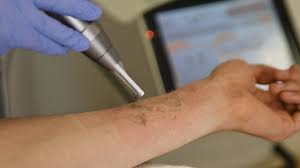

Lasers used during tattoo removal usually aim to break down tattoo ink without leaving a mark on the skin. However, in some cases, temporary marks or changes may occur on the skin after the procedure. Here is what you need to know about the possibility of scarring during and after laser tattoo removal:
Laser Tattoo Removal and Scar Formation:
Laser Effect:
Modern laser technologies such as Pico Laser and Q-Switched Lasers act very precisely on the upper layers of the skin to break down tattoo ink. These lasers usually provide effective results without leaving a mark.
However, deeper tattoo pigments may require more sessions and a careful healing process. This may lead to the formation of slight marks or color changes after the procedure.
Temporary Skin Changes:
Redness and Swelling: There may be slight redness, swelling or tenderness on the skin after the session. This is usually temporary and passes within a few hours to a few days.
Crusting and Peeling: There may be crusting on the skin after the tattoo removal procedure. This is part of the skin's healing process, and the skin usually returns to its original state after the scabs fall off.
Possibility of Scarring:
Possibility of Scarring: In very rare cases, permanent scarring may occur during the tattoo removal process. The main reasons for this are:
Sensitive skin type
Incorrect healing process between sessions (e.g. sun exposure, lack of proper care)
Incorrect laser settings or excessive use of laser energy can cause further damage to the skin and cause scarring.
Methods to Reduce Scarring:
Proper Care: It is very important to pay attention to skin care after laser tattoo removal. In order to accelerate the healing process of the skin and prevent scarring, it is necessary to follow the care instructions recommended by your specialist. In particular, sun protection and the use of moisturizers play a critical role in this process.
Cooling and Anesthesia: The effect on the skin can be minimized by using cooling devices or anesthetic creams during the procedure, thus reducing the risk of possible scarring.
Preventing Permanent Scarring:
Modern lasers have been developed to minimize the possibility of scarring. However, each individual's skin type is different and some people may be more likely to have scarring than others.
 Call
Call
 Whatsapp