


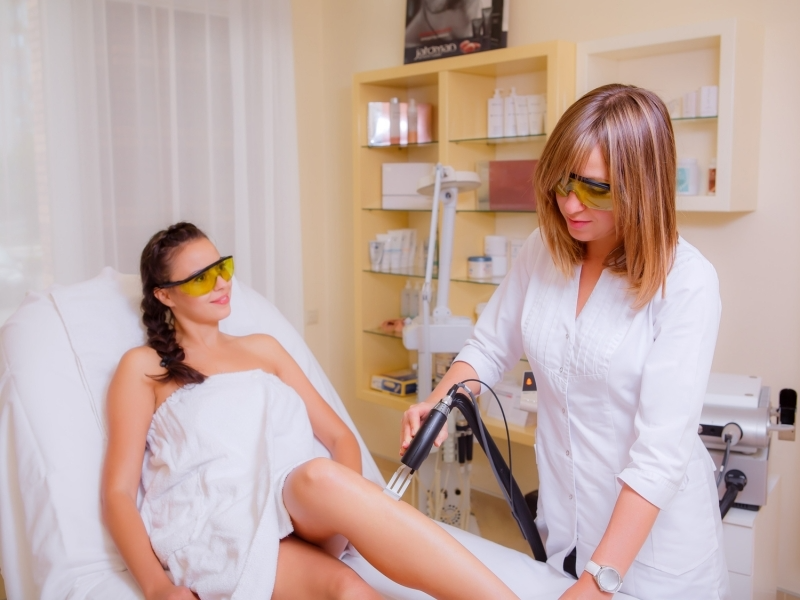

Nd-YAG laser hair removal is a procedure in which a long-wavelength laser is used to target hair follicles. Nd:YAG laser systems generally operate at a wavelength of 1064 nm. The relatively limited absorption of this wavelength by melanin at the skin surface may make it an option when evaluating treatment for darker skin tones.
During the procedure, the laser energy is absorbed by pigment in the hair follicle and creates a controlled heating effect. This effect aims to weaken the follicle’s ability to produce new hair over time. Results may vary according to skin tone, hair colour, hair thickness, treatment area and hormonal characteristics.
Nd-YAG laser may be used on areas such as the face, arms, legs, back, chest and bikini area. Dark, thick hair may respond more noticeably, while white, grey, red or very light-coloured hair may respond less effectively because it contains limited melanin.
The skin and hair structure should be assessed before deciding whether the procedure is suitable. Recent sun exposure, tanning-bed use, current medications and existing skin conditions may affect the treatment plan.
What Are the Advantages of Nd-YAG Laser Hair Removal?
The advantages of Nd-YAG laser hair removal include its potential use across different skin tones. Its longer wavelength may reach deeper areas of the skin and help target thick, deeply rooted hair follicles.
Since darker skin tones contain more melanin at the skin surface, the device and energy settings should be selected carefully. The characteristics of the Nd-YAG laser may make it one of the options considered for darker skin. However, it should not be assumed to be automatically suitable for every person with dark or tanned skin.
Another advantage is its use on larger treatment areas. Areas such as the back, legs and chest may be treated according to the handpiece size and operating speed of the device.
Cooling systems may help reduce warmth and stinging during the procedure. However, the degree of discomfort varies according to the person’s pain threshold, hair density, treatment area and energy level.
Following regular sessions, hair may become sparser, finer and slower to grow. The same speed or level of reduction should not be expected in every person.
How Does Nd-YAG Laser Hair Removal Work?
Nd-YAG laser hair removal is based on the absorption of laser light by pigment in the hair follicle. This absorption creates controlled heat and aims to weaken the follicle’s ability to produce new hair.
Not all hairs are in the active growth phase at the same time. Since laser energy may have a more noticeable effect on actively growing hairs, the procedure cannot be completed in one session. This is one reason sessions are repeated at planned intervals.
Depending on the device, contact or non-contact cooling systems may be used. Cooling can help reduce heat and stinging during the procedure.
Device settings should be selected according to skin tone, hair thickness, hair density and treatment area. The same energy setting should not be used for every person.
Differences Between Nd-YAG Laser and Other Laser Systems
Different laser systems, including Alexandrite, Diode and Nd:YAG, may be used for hair removal. The expression device-based laser describes the general use of laser technologies through devices; it is not a separate type of laser.
Wavelength
Nd-YAG laser operates at approximately 1064 nm. Alexandrite laser operates at about 755 nm, while Diode systems often use wavelengths around 800–810 nm.
Skin-Type Compatibility
Alexandrite laser may be considered for light skin combined with dark hair. Nd-YAG laser may be one of the options for darker skin tones. Diode systems can be adjusted for different skin and hair structures.
However, device selection should not be based on skin colour alone. Hair colour, thickness, density and treatment area should also be considered.
Hair Structure
Nd-YAG laser may be considered for dark, thick and deeply rooted hair. The response may be more limited in very fine or light-coloured hair.
Treatment Sensation
The warmth and stinging experienced during treatment vary according to the cooling system, energy setting, hair density and pain threshold. No laser system can be described as completely painless for everyone.
How Does the Nd-YAG Laser Hair Removal Process Progress?
Initial Assessment
Skin tone, hair colour, hair thickness and treatment areas are assessed first. Information is collected about current medication, active skin conditions and recent sun exposure.
Preparation Before Treatment
Hair should not be removed from the root with waxing, tweezers or an epilator. The hair follicle must remain in place so that it can be targeted by laser energy. Shaving may be performed at the time recommended by the practitioner.
The treatment area should be clean and dry on the day of the procedure. Creams, oils, deodorants, perfumes and makeup may need to be removed.
Laser Application
The device handpiece is moved across the selected area and laser pulses are delivered. Mild warmth, stinging or a sensation similar to a rubber band snapping against the skin may occur.
The duration depends on the size of the area. Small areas may be completed quickly, while the legs, back or chest may take longer.
After the Procedure
Temporary redness, mild swelling or warmth may occur. These effects usually decrease within a short period. The treatment centre should be contacted if reactions persist longer than expected or become severe.
Who May Be Suitable for Nd-YAG Laser Hair Removal?
Nd-YAG laser hair removal may be considered particularly for people with dark, thick hair. Its wavelength may also be evaluated as an option when selecting a device for darker skin tones.
However, it is not suitable for everyone. A detailed assessment is important in the following situations:
-
Active skin infection
-
Open wounds or severe irritation in the treatment area
-
Recent intense sun exposure or sunburn
-
Use of medication that may increase light sensitivity
-
Existing skin disease
-
Pregnancy or breastfeeding
-
Hormonal hair-growth concerns
Age alone is not a sufficient assessment criterion. Hormonal changes during adolescence may affect hair structure and session planning. Parental consent and appropriate professional assessment may be required for minors.
How Many Sessions Does Nd-YAG Laser Hair Removal Require?
The number of Nd-YAG laser hair removal sessions is not the same for everyone. Skin tone, hair thickness, hair density, hormonal condition and treatment area may affect the required number.
The hair-growth cycle on the face differs from that on the legs or back. Session intervals may therefore vary according to the area. An estimated plan may be created initially and updated according to the response.
Some shedding and reduction may be observed after the first sessions. However, all hair should not be expected to disappear after the first treatment.
Regular attendance is important, but sessions should not be performed unnecessarily early. Intervals should be determined through individual assessment.
Is Nd-YAG Laser Hair Removal Permanent?
Nd-YAG laser hair removal aims to provide a long-term reduction in hair density. Some hair may regrow after treatment. Regrowing hair may be finer, lighter or sparser.
Hormonal changes, age, medications and individual characteristics may affect new hair growth over time. Some people may therefore require maintenance sessions.
A definite promise of complete and permanent removal of all hair should not be made. Results vary according to individual characteristics.
Does Nd-YAG Laser Hair Removal Hurt?
The degree of discomfort varies from person to person. Some people feel mild warmth, while others may experience stinging or a sensation similar to a rubber band snapping against the skin.
Areas with dark, dense hair may feel warmer because more laser energy can be absorbed. Sensitive areas such as the face, bikini area and underarms may also feel different.
The device’s cooling system may support treatment comfort. People with a low pain threshold should disclose this before the procedure.
Aftercare Following Nd-YAG Laser Hair Removal
Sun Protection
The skin may become more sensitive to sunlight after treatment. A broad-spectrum sunscreen should be used on exposed areas and reapplied as necessary.
Intense sun exposure and tanning beds should be avoided for the period specified by the practitioner.
Moisturising
Fragrance-free moisturisers without irritating ingredients may support the skin barrier. Products should be suitable for the person’s skin type.
Avoiding Heat
Very hot showers, saunas, Turkish baths, steam rooms and intense exercise may need to be avoided for the recommended period.
Postponing Irritating Products
Exfoliation, scrubbing, rough washcloths, alcohol-based products, retinoids and strong acids should not be used until sensitivity has resolved.
Avoiding Root Hair Removal
Waxing, epilators and tweezers should not be used between sessions. Shaving may be performed when necessary without irritating the skin.
Frequently Asked Questions About Nd-YAG Laser Hair Removal
Which skin types can be treated with Nd-YAG laser?
It may be evaluated for different skin types and can be one of the options for darker skin tones. Skin tone, hair structure and tanning status should be assessed together before treatment.
Is it effective on light-coloured hair?
White, grey, red and very light-coloured hair contains limited melanin and may therefore respond less effectively. Dark, thick hair may show a more noticeable response.
Can daily activities be resumed after treatment?
Most people can return to their daily activities after the procedure. Temporary redness or sensitivity may occur. Recommendations regarding hot environments, intense exercise and sun exposure should be followed.
Can waxing be used between sessions?
No. Waxing, tweezers and epilators remove hair from the root and may eliminate the laser’s target. Shaving may be preferred when necessary.
Can it be used on tanned skin?
Tanning status must be assessed before treatment. Although Nd-YAG laser may be considered for darker skin tones, treatment on recently tanned or sunburned skin may carry additional risk.
An initial assessment at Ankara Lazer may help determine the appropriate laser system and session plan according to skin tone, hair structure, current medication and the treatment area.
 Call
Call
 Whatsapp