


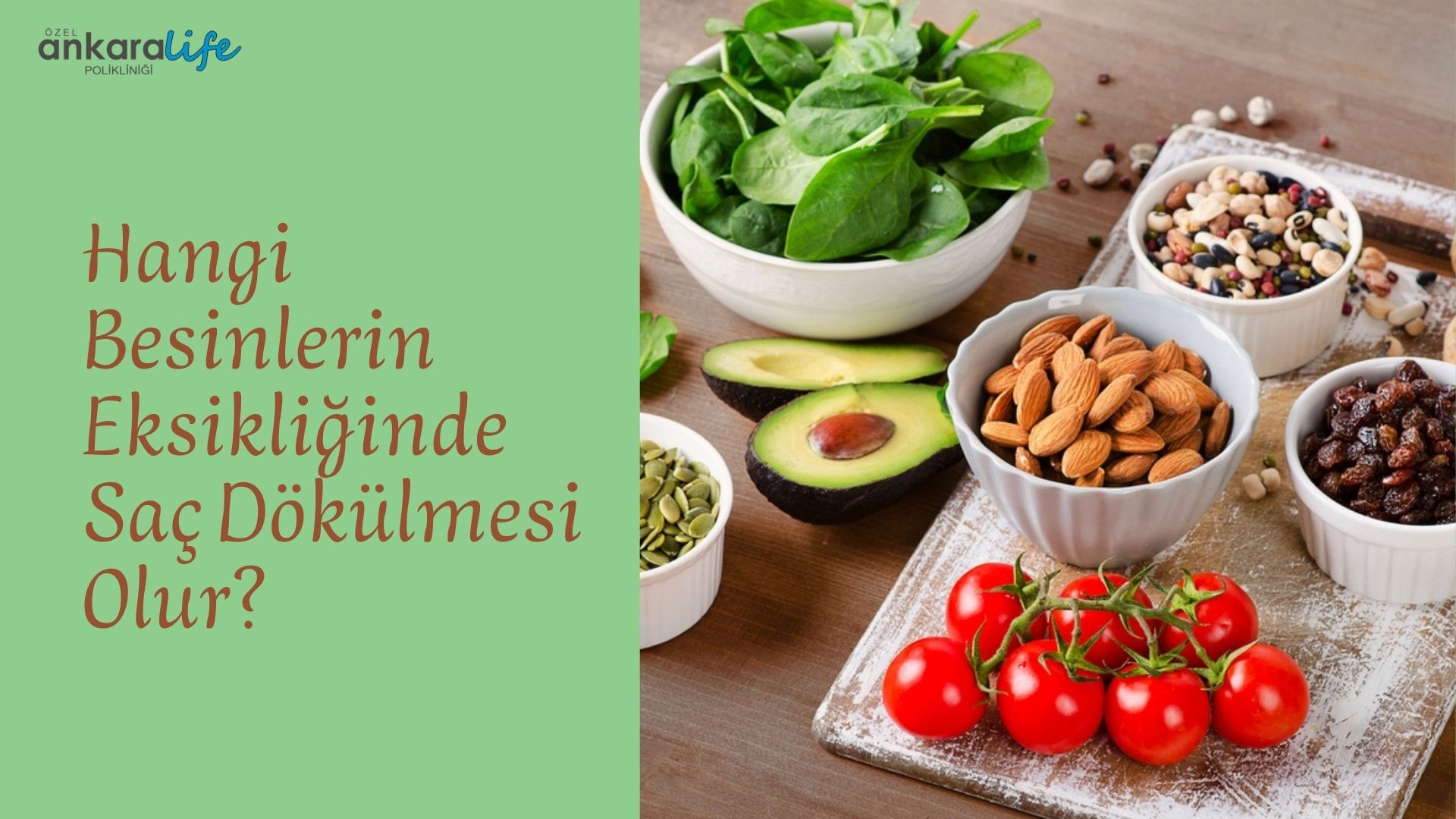

Our hair grows an average of 0.35 mm per day. It is the fastest growing tissue in our body after bone marrow. Therefore, the hair root needs calories, proteins, trace elements and vitamins. Deficiency of protein, minerals and vitamins causes hair loss of the patient. In addition, these deficiencies negatively affect the results of the treatment given to prevent hair loss. Therefore, both the quality and quantity of hair growth are closely related to the nutrition of the individual. However, when talking about the role of nutrients in the development of hair, we encounter intense misinformation and misconceptions. Some support products can be harmful and toxic by unnecessarily consumed, not only do they not provide benefits, but also disrupt the balance. In addition, replacing the deficiencies will ensure successful treatment of hair loss. Deficiencies that cause hair loss are encountered in malnutrition or absorption disorders, in the presence of chronic diseases such as alcoholism, cancer, cirrhosis, and chronic kidney failure.
lack of calories; Hair root needs energy to produce hair continuously. It provides this energy mainly from carbohydrates. When taking a low-calorie diet; Hair becomes thinner, easily broken, and appears to be less dense. It is also seen in those who follow a low-calorie diet, especially when the daily calorie intake falls below 1000 kcal.
Protein deficiency; 80% of the chemical structure of the hair is made up of a protein called keratin. Therefore, in the incomplete intake of proteins, the hair is affected without the loss of blood albumin. Hair becomes dull, easily handled and falls out.
Iron deficiency; Although the necessity of iron is indisputable, the role of iron in hair loss has not been fully clarified. The sensitivity of the method used to detect iron deficiency is particularly important in hair diseases. As the patient's iron decreases, anemia develops at the end point. Therefore, hair loss can be seen long before anemia is seen in the blood. Serum ferritin level is the most sensitive and specific laboratory test to show iron deficiency. In the studies, it was determined that 41 ng/ml level showed iron deficiency with 98% sensitivity when evaluating ferritin levels. For ideal hair growth, the ferritin level should be 70 ng/ml. Although hair loss is not seen in every person with iron deficiency, it is accepted that the emptying of iron stores causes hair loss in genetically predisposed individuals. Therefore, it is recommended to bring the iron stores to the desired levels in hair loss.
Zinc Deficiency; Although zinc deficiency is the first cause of hair loss among the public, no convincing data has been found between zinc and hair loss so far. Zinc deficiency is not suspected when there is hair loss alone without any other symptoms in a person who is eating normally. In addition, it should be considered that there may be an underlying zinc deficiency in treatment-resistant, long-term alopecia areata cases. In zinc deficiency, the hairs are thinned. Zinc deficiency can be seen during breastfeeding, the elderly, alcoholics, anorexics, nephropathies, gastrointestinal bypass surgeries, and those using ACE inhibitors. If the decision to give zinc supplementation is taken, it should not be exceeded 30 mg/day and should be taken 2 hours after iron preparations, as it impairs the absorption of zinc, iron, calcium and copper. In the presence of normal zinc level, supplemental zinc does not contribute to hair growth.
Lack of amino acids; The characteristic feature of keratin, which makes up 80% of the hair, is the high amount of sulfur it contains. The idea that L-cystine might be beneficial for hair growth was first born with the observation that the fur of sheep fed cystine-rich was denser. When cystine is given together with B-complex vitamins, an increase in trichogram and phototrichogram results, hair quality, and hair strength has been reported. In a 6-month study in which the preparation consisting of cystine, B-complex vitamin, and medical mold was used orally, a significant increase in anagen hair ratio was observed compared to placebo. It is thought that in the deficient consumption of foods such as meat, fish and eggs (eg vegetarians), there may be a problem in hair growth, and lysine stores in the hair will be transferred to other organs. Although the role of these amino acids in hair growth is not fully known, it is accepted that lysine is necessary for the use of zinc and iron.
Vitamin deficiency; Although vitamin B12 is often associated with hair loss, it has no known role in hair growth. The positive effects of biotin and niacin on hair growth are known. In animal experiments, biotin deficiency has been shown to cause hair loss. However, biotin supplementation is not found to be significant in individuals without deficiency. Acquired biotin deficiency is rare, as gut bacteria also produce biotin. It can be seen in those who frequently consume raw eggs. Avidin in the egg binds biotin. Avidin is denatured in cooked eggs. In addition, biotin deficiency can be seen in pregnancy and alcoholism. The most common finding of biotin deficiency is not hair loss but deterioration in hair structure. Vitamin C; Vitamin C must be taken externally, it is not made in the body. It is important in collagen synthesis and cross-linking of keratin fibers. Deficiency can be seen in malnourished, elderly and alcoholics. Vitamin D; Vitamin D is known to play a role in hair growth. Although this relationship has not been clarified yet, it is recommended to check the serum vitamin D 25OH level in hair loss.
Lack of essential fatty acids;
Essential fatty acids (such as linoleic acid and alpha-linoleic acid) are not deficient in people who are fed a normal diet. It has been observed that the support made with these products, without deficiencies, does not provide any benefit. In people with malnutrition, they may decrease in patients after surgery and cause shedding and depigmentation in hair and eyebrows.
What should we take as a nutritional supplement for hair loss?
Yellow millet (millet) extract;
Yellow millet is a natural product containing silicic acid, amino acids, vitamins and minerals. It was observed that anagen ratios increased in female patients with the supplement containing yellow millet extract, cysteine, and calcium pantothenate.
Soy; It has been suggested that protein-rich soybeans have positive effects on hair growth.
Selenium; Selenium is an essential trace element that is an important component of glutathione peroxidase. Under normal conditions, its deficiency is not observed. However, selenium deficiency can be seen in advanced malnutrition and in areas where the soil is poor in selenium. It should be remembered that high doses of selenium can cause intoxication, and excess of it can cause hair loss.
 Call
Call
 Whatsapp