


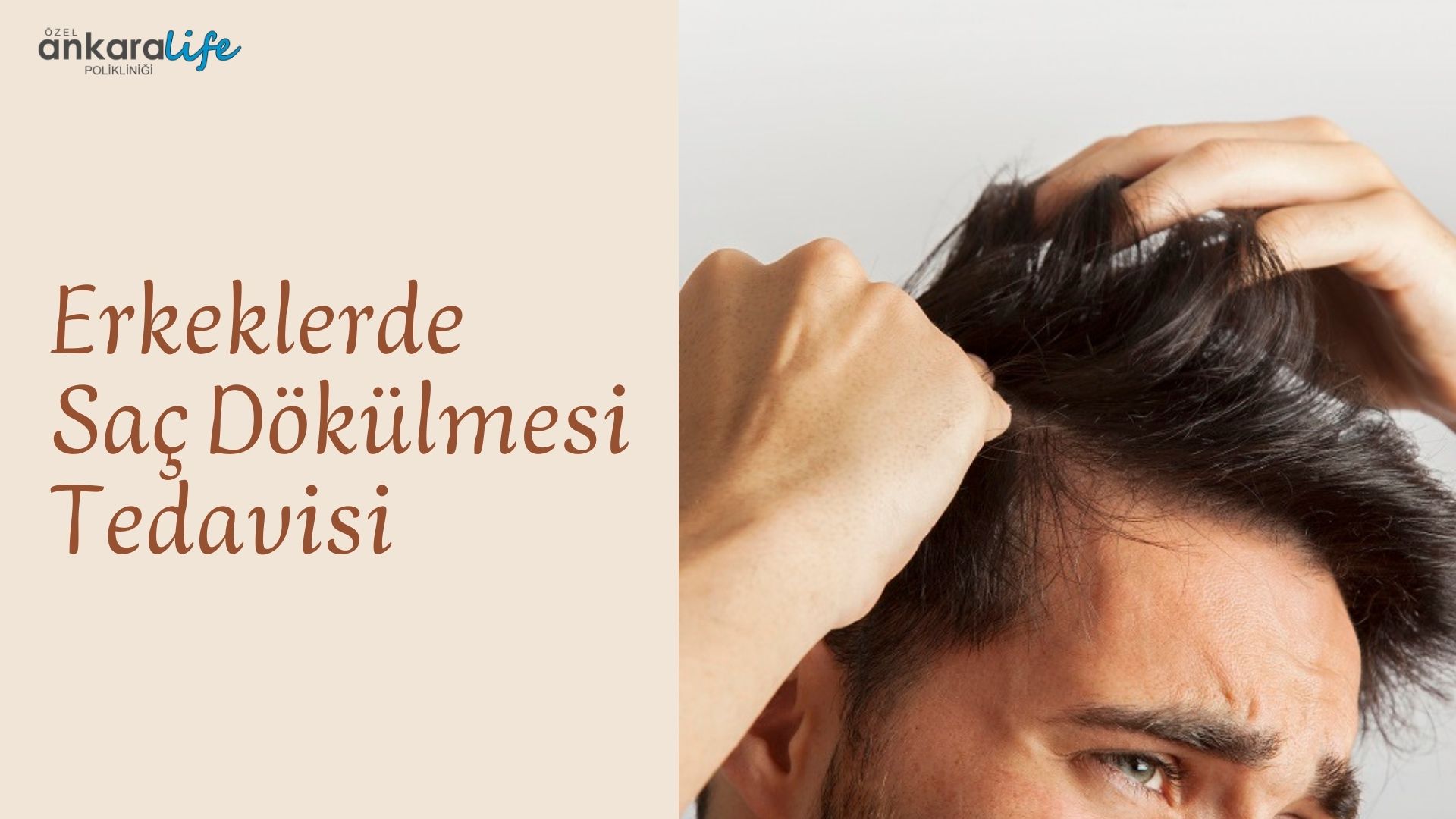

The most common cause of hair loss in men is androgenic alopecia, that is, male pattern hair loss. Androgenic alopecia; It is genetic, that is, it shows familial predisposition. Male pattern hair loss can be seen in both men and women. This is in the genetic predisposition and it happens; The activity of the 5-alpha reductase enzyme in the scalp changes. Due to the hormones activated by this enzyme; Thick, black hairs are replaced by light-colored and fine-type hairs. Then there is hair loss.
The age of onset of male pattern hair loss and how much hair loss will vary from person to person. It usually correlates with when it started in the person's relatives and with the rate of progression. Its incidence increases with advancing age. 80% of white men have hair loss by the age of 70. In fact, this event should not be perceived as a disease, but as a physiological event that is very common with age. Because it is a genetic trait. However, it negatively affects the quality of life and pushes people to seek a medical remedy. Today, there is a search for different methods for hair loss and its treatment. The main purpose in the treatment of hair loss is to stop the thinning of the hair, increase the thickness of the hair and ensure the regrowth of the hair. In this way, it reduces the psychosocial effects caused by hair loss. When deciding on treatment, the person should first be informed about the natural progression of the condition.
Treatments used in hair loss;
MEDICAL TREATMENTS;
There are 2 FDA-approved agents for the treatment of hair loss in men; Topical minoxidil and oral finasteride treatments. Both treatments stimulate hair growth and prevent hair loss. The hair loss-stopping effect of medical treatments occurs 3-6 months after the start of the treatment, and the visible new hair growth-providing effect occurs 6-12 months later. Continuous treatment is required to achieve maximum effectiveness. People should be informed that the hair density before the hair loss can never be reached with the treatment and that the main purpose of the treatment is to prevent the progression of hair loss.
SURGICAL TREATMENTS;
Hair Transplantation is taking the hair from the occipital (nape) region and transplanting it into the balding vertex (hill) or frontal (front) area. With modern techniques, graft survival rates exceeding 90% are provided. Modern hair transplantation started in Japan in the 1930s, and the grafts taken in the form of punch were used in the loss of eyebrows and eyelashes. In 1995, Bernstein and Rassman found follicular unit transplantation and hair follicles began to be transplanted in units containing 1-4 hairs. In follicular unit transplantation, donor hairs can be removed in 2 ways;
1) Follicular Unit Transplantation (FUT) Hair follicles taken in the form of strips from the nape area, where there are genetically resistant hair follicles, are divided into clusters of 1-4 to accommodate hair and hair follicles, using appropriate techniques under microscopic instruments, without disturbing their natural structure. or it is planted in the area that has been completely spilled. The area where the hair is taken from the nape is stitched in accordance with aesthetic surgery methods. The disadvantage of this method is the scar in the form of lines in the nape area.
2) Follicular Unit Extraction (FUE) The method of follicular unit extraction is to take the hair follicles one by one from the nape area in the form of a 1 mm punch with special fine-tipped needles and transfer them to the thinned or completely spilled area. Since there are no stitches, there is no scar formation. It provides recovery in a shorter time than the FUT method.
 Call
Call
 Whatsapp