


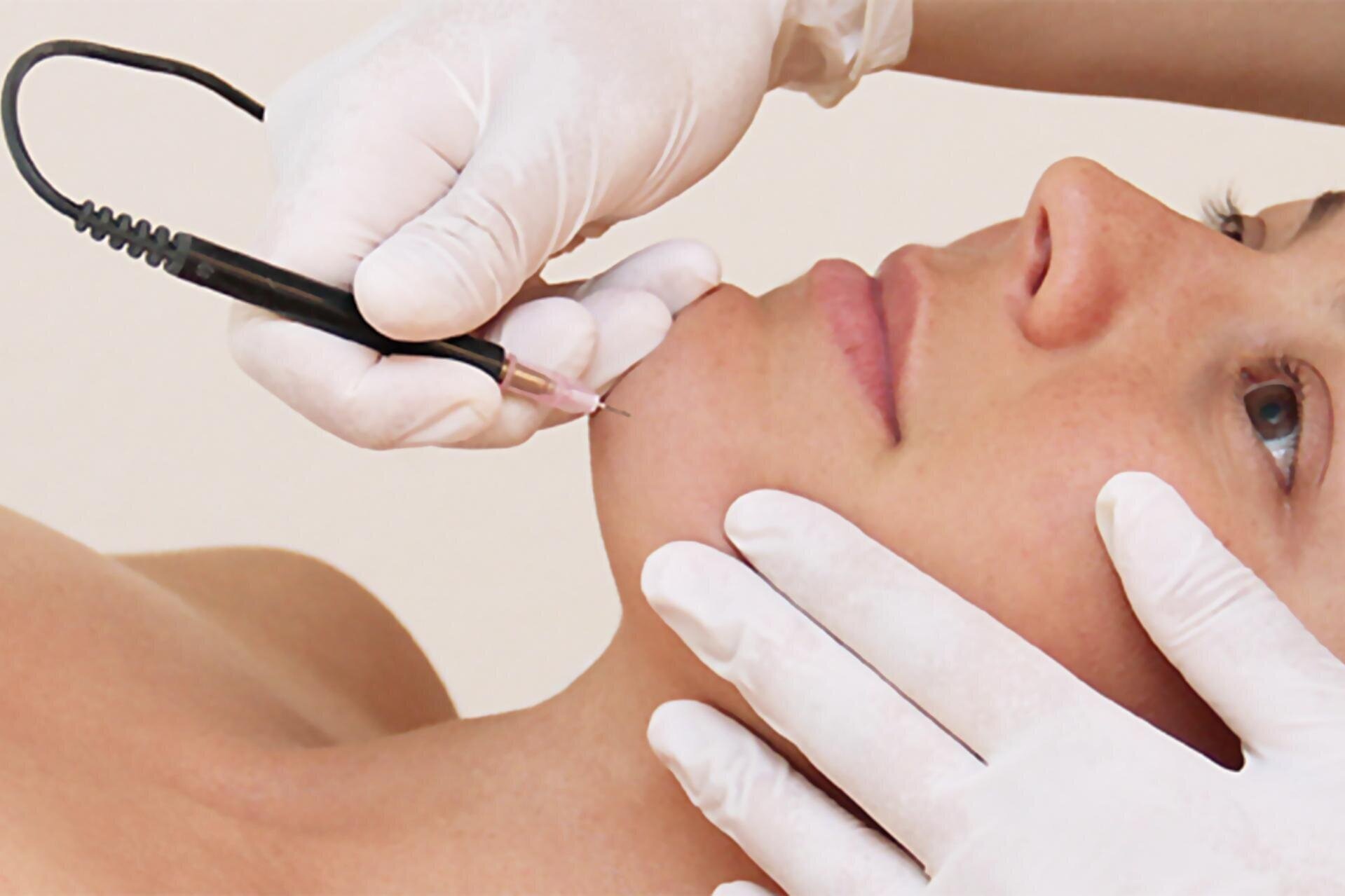

Facial needle epilation is based on the principle of destroying hair follicles by placing many small needles under the skin. This procedure is usually performed by a specialist and an electric current is applied by inserting a thin needle under the skin. The current destroys the hair follicles by burning them. It is common practice to apply local anesthesia during the procedure.
Potential Harms and Risks of Facial Needle Epilation
Facial needle epilation method may bring some potential harms and risks. These damages and risks may vary depending on the skills of the person performing the procedure, the quality of the equipment used and post-procedure care. Here are the possible harms and risks of facial needle epilation:
Risk of infection: The risk of infection may arise when needles enter the skin. Therefore, it is extremely important to comply with sterilization and hygiene rules.
Skin irritation: Skin irritation may occur when the needles come into contact with the skin. This can manifest as irritation, redness, swelling, and even blisters.
Burns: Burns may occur during the needle epilation process. These burns may vary depending on the skill of the person performing the procedure and the sensitivity of the skin.
Common Side Effects of Facial Needle Epilation
There are common side effects after facial needle epilation. These side effects are usually short-term and disappear on their own after the procedure. However, in some cases, permanent effects may occur. Here are the common side effects of facial needle epilation:
Redness and swelling: Redness and swelling may occur on the skin after the procedure. This condition usually passes within a few hours.
Blisters: Blisters may form when the needles come into contact with the skin. These blisters usually burst and heal on their own.
Temporary pigmentation changes: Temporary pigmentation changes may occur on the skin after the needle epilation process. These changes usually resolve within a few weeks.
Long-Term Results of Facial Needle Epilation
The long-term results of facial needle epilation may vary depending on the person's skin type and hair structure. While this method is effective for some people, it may not produce the desired results for others. In addition, the facial needle epilation method does not ensure complete hair removal. There is always the possibility of new hairs growing.
Alternatives to Needle Epilation Method
The facial needle epilation method may not be suitable for everyone. Therefore, it is important to look at alternative methods. As an alternative to the needle epilation method, the following methods can be preferred:
Laser epilation: Laser epilation reduces hair by destroying hair follicles with laser light. This method may be faster and less painful.
Waxing: Waxing is a method used to remove hair from the root. This method may not be as effective as facial needle epilation, but it is a less risky and cheaper option.
Epilation creams: Epilation creams delay hair growth by chemically dissolving the hair. This method can be a quick and painless option.
Tips for Safe and Effective Hair Removal
Before applying facial needle epilation or other epilation methods, it is important to consider the following tips:
Get expert advice: It is important to consult an expert before applying hair removal methods. The specialist can determine the most suitable method and procedure for you.
Pay attention to hygiene rules: It is important to pay attention to hygiene rules during and after the epilation process. The person performing the procedure must use sterile equipment and work in a hygienic environment.
Protect your skin: You can use special creams and lotions to protect your skin after the procedure. You can also protect your skin from the harmful effects of the sun by using sunscreen products.
Get Professional Epilation Service
If you want to get rid of facial hair permanently, it is important to get a professional epilation service. A professional epilation center will offer you the safest and most effective methods with its expert staff and modern equipment. Experts will recommend the most suitable method for you, taking into account your skin type and hair structure.
 Call
Call
 Whatsapp