



The formation of birthmarks occurs during the development process in the womb. In some cases, spots may appear on the baby's skin due to differences in the distribution of pigment cells or disorders in the blood vessels. These spots also become visible after birth.
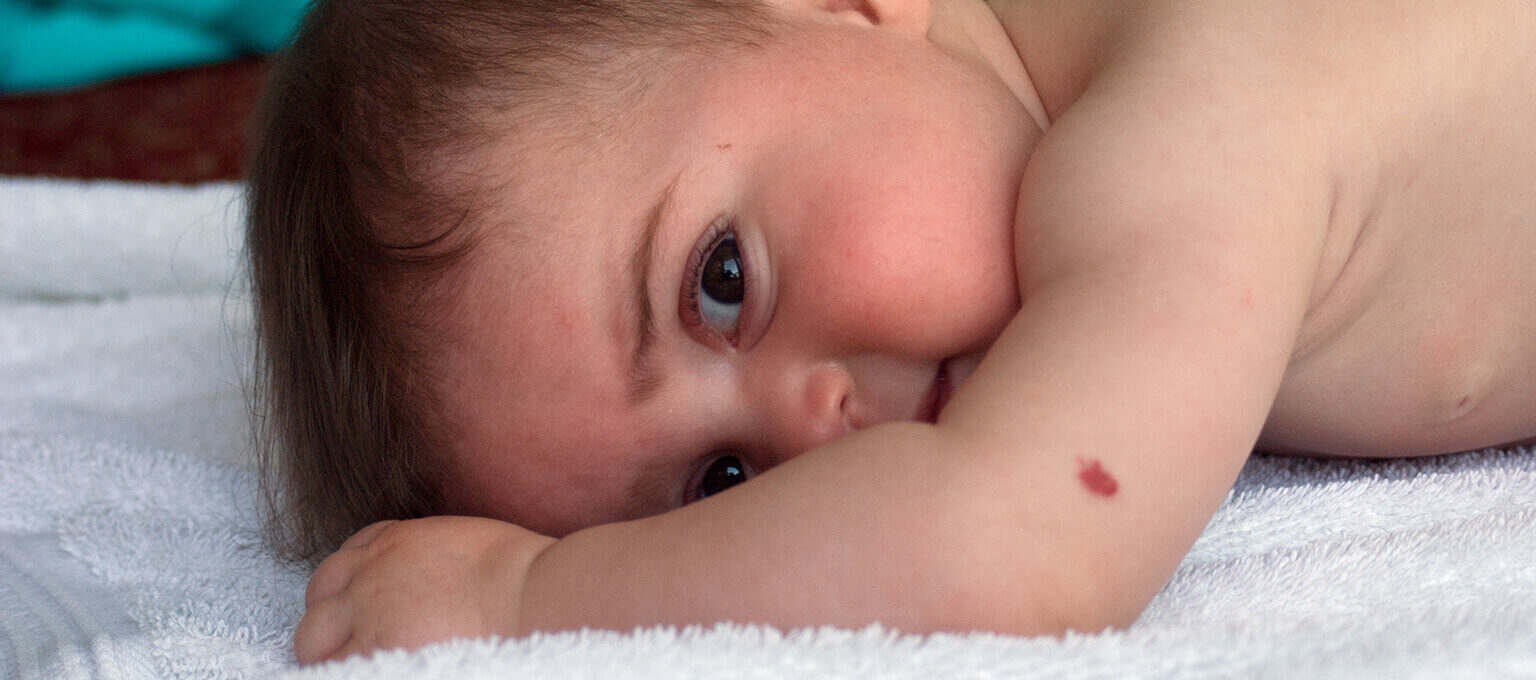
The color, structure and size of birthmarks are quite diverse. Some spots may be dark brown or red, while others may be lighter in color. Some spots are small and round, while others may be larger and irregularly shaped.
Reasons for Birthmarks to Occur
Many factors may play a role in the formation of birthmarks. The most common among these are:
1. Differences in Pigment Distribution: In some cases, differences in the distribution of pigment cells (melanocytes) during development in the womb can cause birthmarks to form.
2. Disorders in Blood Vessels: During the development of the baby, disorders in the blood vessels can also lead to the formation of birthmarks. For example, dilation or accumulation of blood vessels can create red or purple patches.
3. Genetic Factors: Genetic factors may also have an impact on the formation of birthmarks. Some families may have a pattern where birthmarks occur more frequently.
4. Health Problems Experienced in the Mother: Some health problems experienced by the mother during development in the womb (for example, gestational diabetes, high blood pressure, etc.) may contribute to the formation of birthmarks.
5. Trauma or Infection: Traumas or infections experienced during pregnancy can also cause birthmarks to form.
Types of Birthmarks
There are various types of birthmarks. The most common among these are:
6. Café-au-Lait Stains: These are irregularly shaped spots in brown or beige tones.
7. Nevus Flekkus (Birth Meat): These are irregularly shaped and raised spots that are usually red, purple or brown in color.
8. Hemangioma: These are red or purple, raised and irregularly shaped spots.
9. Mongolian Spot: These are dark blue or gray spots that are usually seen on the back, neck or hips.
10. Eruptive Telangiectasia: These are spots that are red or pink in color and have a vascular appearance.
Birthmark Diagnosis
Diagnosis of birthmarks is usually made by visual inspection. The doctor carefully examines the baby's skin and evaluates the spot. In some cases, more detailed examination (for example, skin biopsy) may be required.
Some important points to consider when diagnosing birthmarks are:
• Characteristics of the stain (color, size, shape, swelling)
• Other symptoms accompanying the stain (pain, itching, infection, etc.)
• Change of the stain over time
• Family history and other risk factors
By evaluating this information, the doctor can make the correct diagnosis and determine the appropriate treatment method.
Birthmark Treatment
Treatment of birthmarks may vary depending on the type of mark, size, location, and the person's preferences. While some birthmarks do not require treatment, there are various treatment options available for others:
11. Observation: Some birthmarks are expected to disappear or fade on their own over time. In this case, monitoring method with regular checks may be preferred.
12. Cosmetic Products: For slight color changes, skin lightening or concealing products can be used.
13. Laser Treatment: For more visible spots, laser treatment can be an effective method. Lasers can improve the color or appearance of the blemish.
14. Surgical Intervention: For large or very prominent spots, surgical methods (excisions, skin grafting, etc.) can be applied.
15. Drug Treatment: In some birthmarks, topical or systemic drug treatments can also be used.
Treatment selection is determined based on spot-specific evaluations and the patient's preferences. The doctor will recommend the most appropriate treatment method.
How a Birthmark Forms
Free Information,
Consultation and Appointment Request
 Call
Call
 Whatsapp