


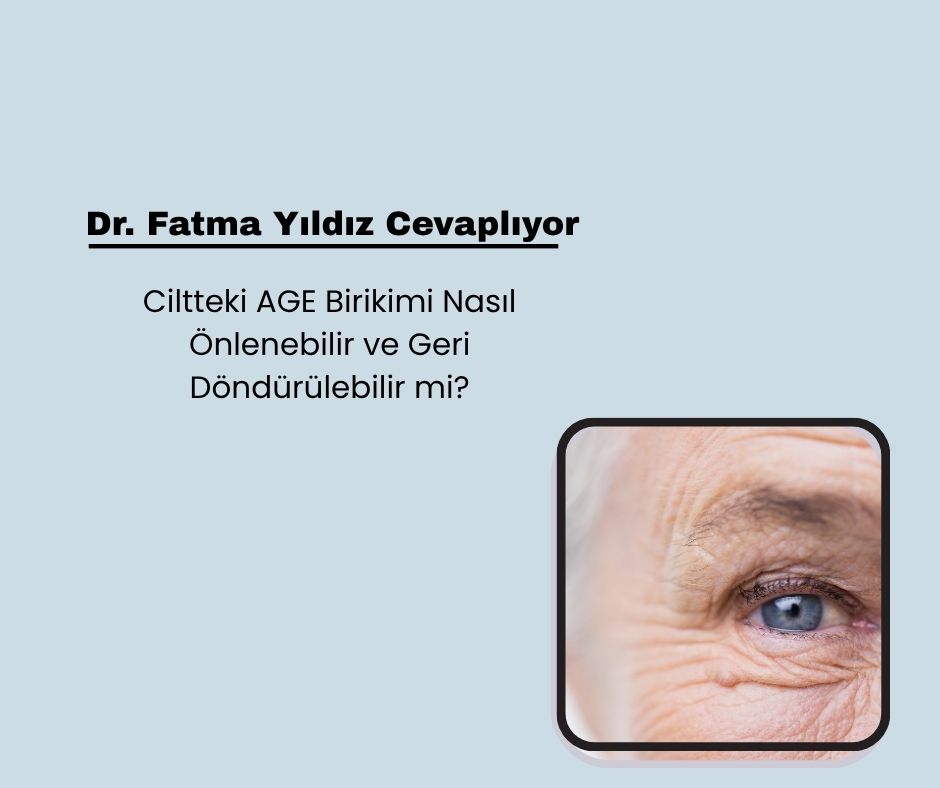

How Can AGE Accumulation in the Skin Be Prevented and Reversed?
The visible signs of skin aging are directly related not only to the passage of time but also to chemical reactions occurring at the cellular level. Chief among these processes are "advanced glycation end products" (AGEs). So, what are AGEs? Why do they accumulate in the skin, and can they truly be reversed?
Why Are AGEs Dangerous to the Skin?
AGEs are irreversibly harmful compounds formed within the cell by the bonding of sugar molecules with proteins, lipids, or DNA. This formation begins with a slow process known as the "Maillard reaction." Factors such as aging, UV exposure, pollution, and smoking accelerate this process.
AGEs accumulated in the skin:
Impair skin elasticity by cross-linking essential proteins such as collagen and elastin,
Create inflammation and oxidative stress by activating RAGE receptors on the cell surface,
Stimulate pigment cells, leading to uneven skin tone.
The result? Wrinkles, sagging, discoloration, and a dull appearance.
Is it possible to fight AGEs?
Scientific research supports two main approaches to combating AGEs:
Preventing AGE formation:
The glycation process can be slowed with antioxidant compounds.
Cleaning up existing AGEs:
Activating cellular cleansing mechanisms (especially autophagy) can reduce AGE accumulation.
What is NdCAT and How Does It Affect the Skin?
Researchers have recently evaluated a new molecule called N-dichloroacetyltryptamine (NdCAT) for its anti-AGE potential. A tryptamine derivative, NdCAT exhibits two key properties:
Antioxidant activity 2.6 times stronger than ascorbic acid
Ability to activate intracellular autophagy mechanisms
In laboratory tests, NdCAT significantly reduced AGE formation in cells exposed to glycation triggers such as glucose and glyoxal.
Can NdCAT Clear Formed AGEs?
Yes. The removal of pre-formed AGEs from skin cells requires proteolytic degradation systems. Autophagy plays a critical role in this process.
NdCAT activates autophagy by increasing the LC3 protein, an autophagy marker. This helps reduce accumulated AGEs in epidermal cells. A significant decrease in AGE levels was observed after NdCAT application in an ex vivo human skin model.
How Does NdCAT Affect RAGE Activation in Skin?
AGE accumulation increases the expression of RAGE receptors in the skin and triggers inflammatory responses. NdCAT application:
Decreases RAGE expression,
Decreases IL-6, an inflammatory marker,
Prevents dermal collagen loss.
Masson trichrome staining analyses have also shown that NdCAT protects collagen structure.
What Do the Clinical Findings Show?
In a clinical study involving 21 healthy women, a product containing NdCAT was applied twice daily for four weeks. The findings were striking:
AGEs on the skin surface decreased by up to 66%.
AGE levels decreased in autofluorescence analysis.
Skin hydration, elasticity, and homogeneity improved.
Immunohistochemical analyses on isolated corneocytes also supported these findings.
What Skin Types Are NdCAT Suitable For?
NdCAT-containing care products may be particularly effective in the following groups:
Individuals aged 40 and over
Those frequently exposed to the sun
Individuals with high sugar consumption
Skin exposed to environmental stressors brought on by urban living
Conclusion: Is a New Era Beginning in the Fight Against AGEs?
Research indicates that NdCAT, with its dual-action structure that both prevents AGE formation and clears existing AGEs, may be a powerful anti-aging agent. These properties make it a multifunctional cosmetic ingredient that can be integrated into cream, serum, and ampoule formulas.
This new approach, targeting glycation processes in the skin, is revolutionary not only for aesthetics but also for cellular health.
 Call
Call
 Whatsapp