


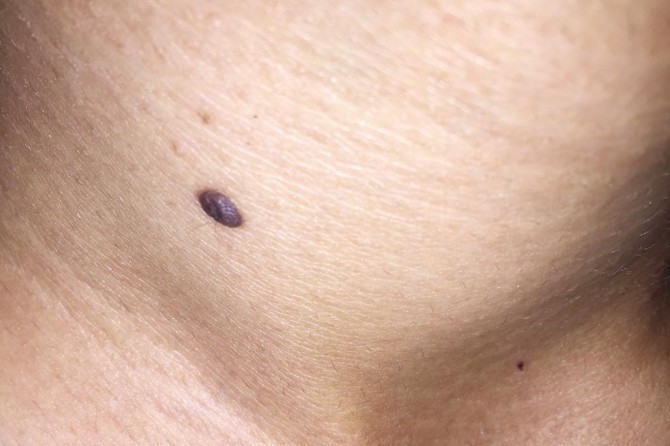

Skin tags originate from fatty tissue located in the lower layer of the skin. They are usually skin-colored, soft and mobile. Their sizes vary and can range from a few millimeters to a few centimeters.
Skin tags are a very common condition on the skin. Most people develop one or more skin tags throughout their lives. While they are usually harmless, some may be more careful types.
Skin tag symptoms
Skin tags can appear in various forms. The main symptoms are:
A skin-colored or slightly darker formation
A soft and mobile structure
A round or oval-shaped appearance
A change in size from a few millimeters to a few centimeters
Some skin tags may also exhibit the following characteristics:
Having irregular edges
Color change (darkening, reddening, blackening)
Size and shape changes
Itching, pain or sensitivity
Such characteristics may indicate that skin tags are types that need to be examined more carefully.
Causes of skin tags
Skin tags are formed by a combination of various factors. The main reasons are as follows:
Genetic predisposition: Some people may be more prone to skin tags.
Sun exposure: Prolonged exposure to sunlight can trigger skin tag formation.
Hormonal changes: Hormonal changes during periods such as pregnancy, puberty or menopause can cause skin tags to form.
Skin structure: Some people's skin structure may be more prone to skin tag formation.
Aging: Skin tag formation may increase with age.
For these reasons, skin tags are a normal condition for most people. However, some skin tags may need to be examined more carefully.
Treatment methods for skin tags
Although skin tags are generally harmless, they may need to be treated in some cases. The main treatment methods are as follows:
Monitoring and follow-up: Regular dermatologist check-ups allow you to follow the changes in skin tags.
Surgery removal: Skin tags that look suspicious or dangerous can be surgically removed.
Cryotherapy: Skin tags can be destroyed with the freezing method.
Laser treatment: Skin tags can be destroyed using laser beams.
Drug therapy: In some cases, drug therapy can be applied to reduce skin tags.
The treatment method to be applied is determined by the characteristics of the mole, its location, and the patient's preferences. The dermatologist will evaluate the appropriate treatment option.
How can skin tags be removed without leaving a scar?
In order to remove skin tags without leaving a scar, it is important to choose the right treatment method. Some methods ensure that the skin tag disappears completely, while others may leave fewer scars.
Surgical removal, cryotherapy, and laser treatment are frequently used methods to remove skin tags without leaving a scar. These methods completely remove the skin tag and usually provide good cosmetic results.
Drug therapy can reduce skin tags in a less invasive way. However, this method may not provide complete removal and may need to be continued for a certain period of time.
The treatment method to be selected should be determined by considering the characteristics of the skin tag, its location, and the patient's preferences. An experienced dermatologist will recommend the most appropriate treatment option.
 Call
Call
 Whatsapp