


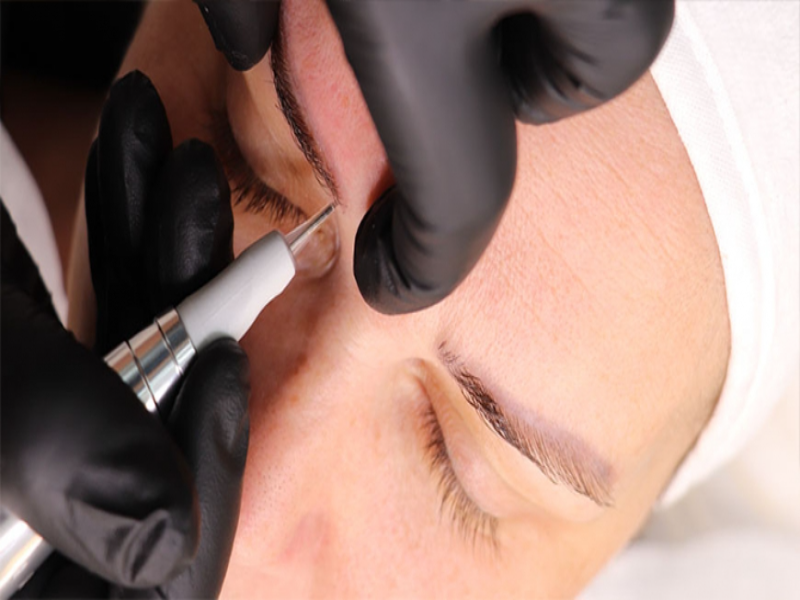

Permanent makeup has become a common cosmetic tattooing procedure, but preferences can change or results may become undesirable over time. In such cases, removal may be considered. The removal process and aftercare depend on the pigment, treatment method, skin area, and individual response.
What Is Permanent Makeup?
Permanent makeup is a form of cosmetic tattooing in which pigments are placed into the skin. It is commonly used on the eyebrows, eyelids, and lips. Pigments are not necessarily “natural,” and their chemical composition can vary.
One advantage is that the cosmetic effect can persist without daily application. However, this persistence can also make unwanted pigment difficult to remove. Selected Ankara Laser technologies may be considered depending on pigment color and composition.
Permanent makeup requires careful planning because correction or removal can be complex. Appropriate consultation before the original procedure may reduce avoidable problems.
Permanent Makeup Removal
Laser treatment is one method used to reduce selected permanent makeup pigments. Laser energy targets pigment particles, which may then be gradually cleared through biological processes. However, some cosmetic pigments can change color or become darker after laser exposure, so pigment assessment is important before treatment.
Sufficient time should be allowed between sessions for skin recovery. Temporary warmth, stinging, redness, or swelling may occur during or after treatment.
Chemical peeling and microdermabrasion should not be considered universally reliable alternatives for removing tattoo pigment. Their role is limited, and aggressive treatment can increase irritation or scarring risk.
The First Day After Permanent Makeup Removal
Temporary redness, swelling, sensitivity, or other changes may occur after removal. The appropriate first-day routine depends on the device and treatment depth.
Crusting can occur after some procedures, and the area should generally not be scratched or picked. However, not every treatment produces crusting, and its presence does not indicate better removal.
Cleaning, moisturizing, wound care, and sun protection should follow the specific instructions given by the treating professional. There is no universal rule that every treated area must remain completely dry for exactly 24 hours.
Aftercare Following Permanent Makeup Removal
Aftercare is intended to support normal recovery and reduce unnecessary irritation. The routine may include gentle cleansing, barrier-supporting products, or specific wound care according to the treatment performed.
Fragrance-free products may sometimes be preferred when the skin is sensitive. However, product selection should depend on individual tolerance rather than one label alone.
Strong acids, retinoids, scrubs, or other irritating products may need to be temporarily avoided. The duration depends on skin recovery and the procedure rather than a universal two-week rule.
Skin-Type-Based Care
Aftercare should primarily be based on the procedure and skin response rather than skin type alone.
- Dry Skin: Suitable moisturization may help reduce dryness and tightness.
- Oily Skin: Lightweight non-comedogenic products may be appropriate where moisturization is needed.
- Sensitive Skin: Simple, low-irritation formulations may be useful, but “hypoallergenic” does not guarantee a reaction-free product.
Professional advice can help determine when normal skin care can safely be resumed.
Possible Problems After Permanent Makeup Removal
Color changes can occur after laser treatment. Some pigments may lighten, persist, change hue, or paradoxically darken depending on their composition.
Temporary redness or irritation may also occur. Severe or worsening reactions should be professionally assessed.
Infection is possible after procedures that disrupt the skin barrier, although it is uncommon with appropriate care. Increasing pain, discharge, spreading redness, or marked swelling should prompt medical evaluation.
Recovery Time After Permanent Makeup Removal
Recovery varies according to the treatment method and intensity. The visible surface may recover relatively quickly after some procedures, while pigment clearance and further treatment planning may take considerably longer.
Follow-up can help assess the skin and pigment response before another session is considered.
Patience is important because complete return to the previous skin appearance cannot always be guaranteed. Residual pigment, color change, texture change, or scarring may remain in some cases.
 Call
Call
 Whatsapp