


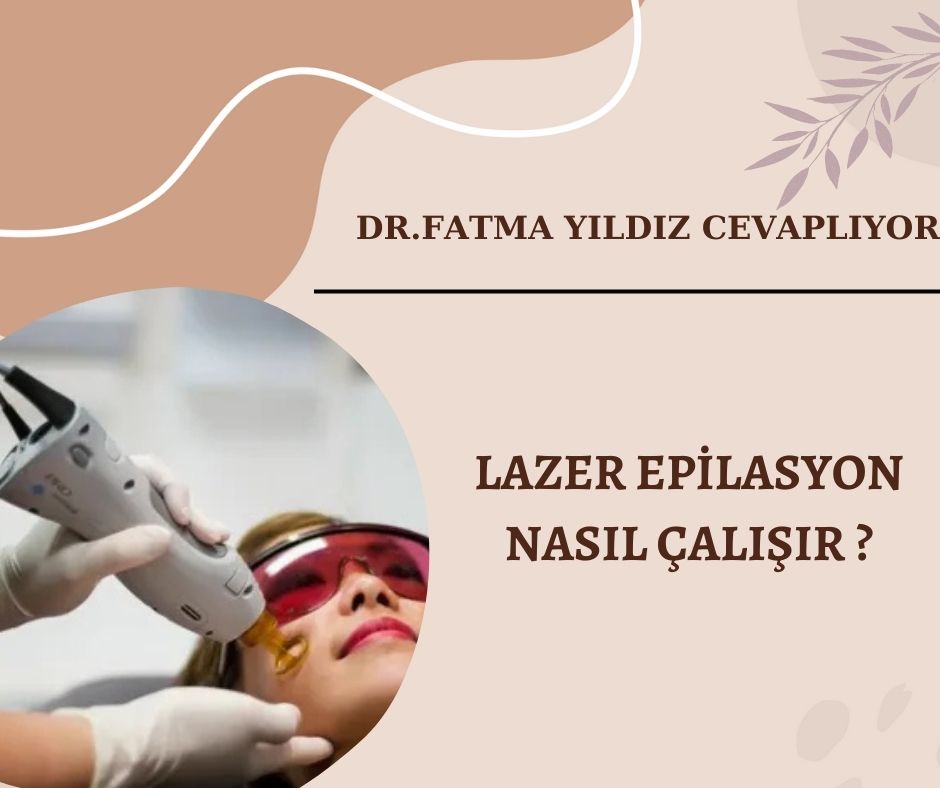

How Does Laser Epilation Work?
The aim of laser epilation is to provide permanent hair reduction by weakening and destroying the hair roots. In this process, the light energy produced by the laser device is absorbed by the substance called "melanin", which gives color to the hairs in the skin. This energy turns into heat, affects the hair roots and damages the stem cells.
Stem cells are the structures responsible for hair production and are generally located deep in the hair follicle (the structure where the hair grows). However, since not all hairs are in the same growth phase at the same time, the effect of the laser may vary depending on the growth phase of the hair. For example:
Hairs in the anagen (growth) phase are more sensitive to the laser beam and are more likely to be affected.
Hairs in the catagen (transition) and telogen (resting) phases may be more resistant.
It is thought that human hair contains enough melanin to absorb laser light in each phase. For this reason, laser epilation may not work the same for every individual and may require several sessions.
In addition, lasers can stop hair growth by damaging not only the hair follicles but also the small blood vessels around the hair. Some studies suggest that lasers change the way stem cells work rather than completely destroying them.
The exact effectiveness of laser hair removal is still being researched. However, it is currently used as a safe and effective method.
 Call
Call
 Whatsapp