


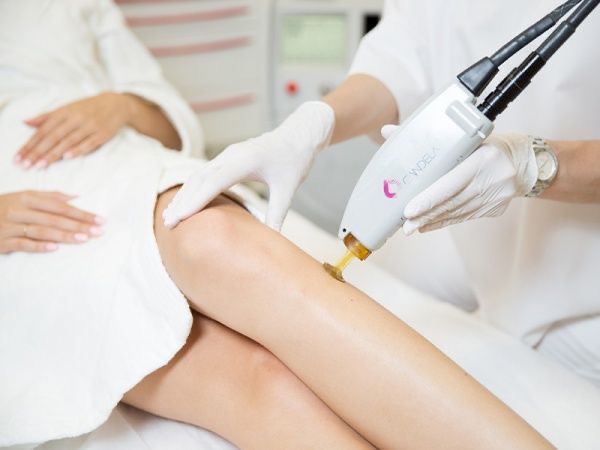

Laser epilation is a method that targets the hair roots and prevents hair growth over time. This process is carried out by using concentrated light energy and basically shows its effect in three main stages:
1. Effect of Laser on Hair
Laser epilation works by emitting light of a certain wavelength. This light passes through the surface of the skin and is absorbed by the melanin pigment in the hair. Melanin is the pigment that gives the hair its color and transmits the light energy directly to the hair root.
2. Conversion to Heat and Damage to Hair Roots
Melanin, which absorbs light, converts the energy into heat and damages the hair root (follicle). This heat destroys the structures that provide nutrition to the hair root and thus prevents the hair from growing again. However, laser epilation cannot destroy all the hairs at the same time. This is because the hairs are in different growth stages.
3. Hair Growth Cycle and the Importance of Sessions
Hair goes through three main growth phases:
Anagen (Active Growth Phase): This is the phase where laser is most effective. Hairs actively grow in this phase and the hair root absorbs the laser light better.
Catagen (Transition Phase): Hair growth slows down, the root begins to shrink and the effect of the laser decreases.
Telogen (Resting Phase): The hair is completely in a resting phase and the laser cannot affect the hairs in this phase.
Several sessions are required for laser hair removal to be successful. Generally, 6-10 sessions are recommended at 4-8 week intervals. Each session targets hairs in different anagen phases and reduces hair density over time.
Advantages of Laser Hair Removal
Provides permanent results in the long term.
Promotes smooth and clean skin.
It is a more effective solution compared to temporary methods such as waxing, razor and depilatory creams.
It prevents ingrown hairs and irritation after shaving or waxing. However, for laser hair removal to be effective, it is important to choose the right device for your skin type and hair structure. For example, while the Alexandrite laser is more effective for people with light skin and dark hair, the Nd:YAG laser should be preferred for dark-skinned individuals.
 Call
Call
 Whatsapp