


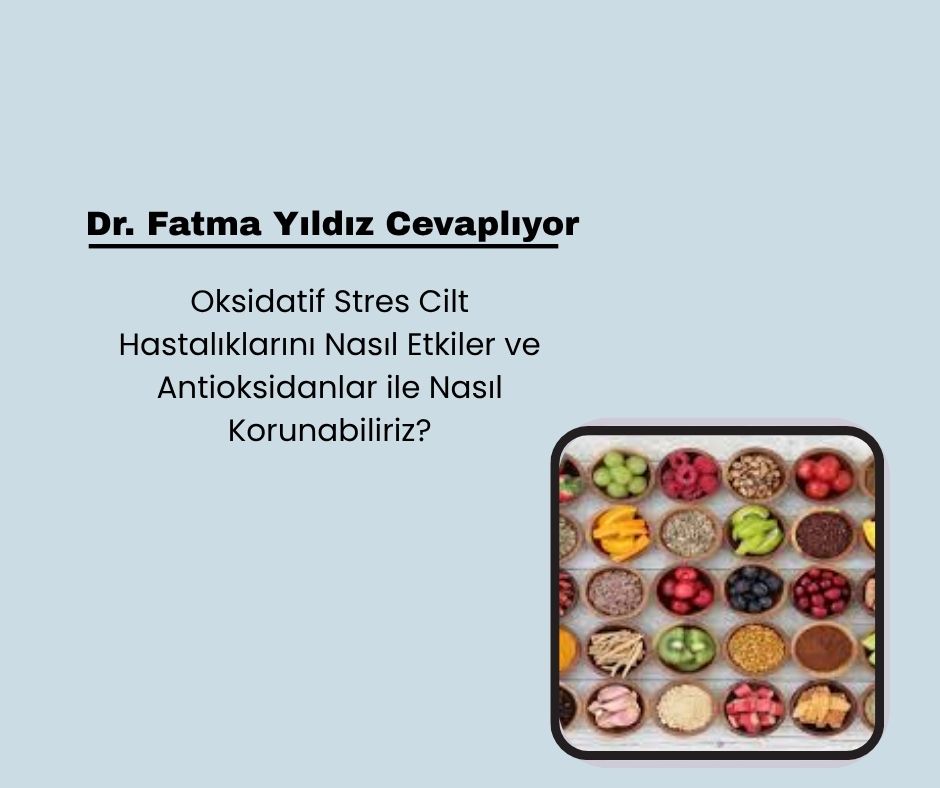

How Does Oxidative Stress Affect Skin Diseases and How Can We Protect Ourself with Antioxidants?
Our skin is our greatest protective barrier against the outside world. However, many factors, from sunlight and air pollution to food additives and stress hormones, lead to the formation of harmful molecules called reactive oxygen species (ROS) in our skin.
These molecules can damage DNA, proteins, cell membranes, and collagen structures. As a result, premature aging, blemishes, wrinkles, delayed wound healing, and even the development of some skin diseases can occur. So, how does oxidative stress play a role in skin diseases, and can it be prevented with antioxidants?
Why Is Oxidative Stress Important in Chronic Venous Ulcers?
Chronic venous ulcers are wounds that take a long time to heal and seriously reduce the patient's quality of life. Research shows that oxidative stress negatively affects wound healing in these wounds.
The allantoin/uric acid ratio and 8-isoprostane levels are elevated.
Levels of antioxidant minerals such as selenium, zinc, and iron, as well as glutathione peroxidase (GPX) activity, are decreased.
Iron accumulation and superoxide levels are increased.
Furthermore, COX-2 enzyme activity increases in macrophages and endothelial cells. This accelerates chronic inflammation and tissue destruction. The activity of tissue-degrading enzymes such as matrix metalloproteinases (MMPs) is also elevated at the wound site. This suggests that antioxidant therapies may support wound healing.
What is the Connection Between UV Rays, Photoaging, and Skin Cancer?
Ultraviolet (UV) rays from the sun increase ROS formation in the skin and can cause DNA mutations. This increases the risk of both photoaging and skin cancer.
UV rays also deplete the skin's natural antioxidants:
Vitamin C
Vitamin E
Coenzyme Q10
Glutathione (GSH)
Superoxide dismutase (SOD)
Catalase
Therefore, using antioxidant-containing products before sun exposure can be effective in protecting the skin. Research shows that natural compounds such as green tea, grape seed extract, resveratrol, curcumin, lycopene, lutein, and zeaxanthin exhibit photoprotective properties against UV-induced damage.
The Role of Oxidative Stress in Psoriasis
Psoriasis is a chronic inflammatory disease in which the immune system targets skin cells. In imiquimod-induced psoriasis models:
Myeloperoxidase (MPO) and the GSH/GSSG ratio increased.
SOD activity decreased.
Some cellular signaling pathways (NF-κB, MAPK, JAK-STAT) involved in disease progression are redox sensitive. In other words, oxidative stress can trigger these pathways and increase inflammation.
Some treatments (e.g., dimethylfumarate) can reduce disease activity by strengthening antioxidant systems. Furthermore, hyperbaric oxygen therapy and phototherapy can have a positive effect on immune balance.
Is Oxidative Stress Always Causal?
Although the role of oxidative stress in skin diseases has been proven, scientists still seek definitive answers to several important questions:
Are ROS truly the cause of the disease or merely a consequence?
Can antioxidant levels in different tissue regions be inherently different?
Do the effects of oxidative stress vary depending on the stage of the disease?
These questions are critical for understanding the effectiveness of antioxidant treatments.
How Can Antioxidant Therapies Be Used in Skin Health?
Currently, antioxidant treatments can be administered in two ways:
Topical (applied externally) products
Oral (taken orally) supplements
Topical antioxidants: Vitamin C serum, vitamin E cream, green tea extract products, and creams containing coenzyme Q10. Oral antioxidants: Dietary supplements such as zinc, selenium, resveratrol, grape seed extract, and polypodium leucotomos.
However, clinical studies have not yet provided definitive evidence regarding the effectiveness of these treatments. However, it is known that a diet and skincare regimen containing antioxidants generally support skin health.
Recommendations for Reducing Oxidative Stress in Daily Life
Sun protection: Use high-protection factor sunscreens and antioxidant-containing products.
Antioxidant-rich diet: Consume foods such as colorful fruits and vegetables, green tea, pomegranates, grapes, tomatoes, and carrots.
Avoid smoking and excessive alcohol consumption: These accelerate the formation of ROS.
Regular sleep and stress management: Sleep strengthens the antioxidant defense system.
Light-to-moderate exercise: Regular exercise increases antioxidant enzyme activity.
Conclusion
Oxidative stress plays an important role in many dermatological conditions, from chronic wounds to photoaging, from psoriasis to skin cancer. Natural and synthetic antioxidants may offer potential protection against this process. However, treatment strategies must be personalized and implemented under the guidance of a dermatologist.
 Call
Call
 Whatsapp