


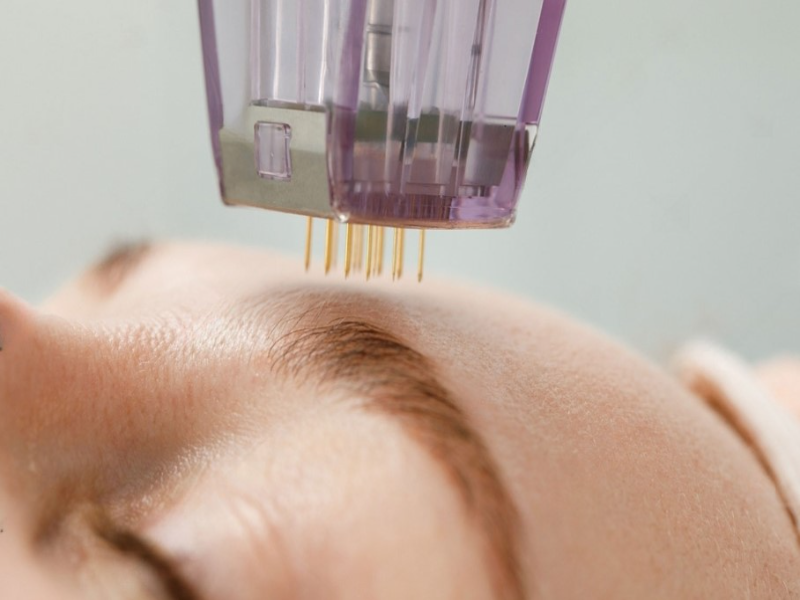

Radiofrequency microneedling, commonly referred to as “gold needle” treatment, is one of the procedures used to improve the appearance of selected acne scars and uneven skin texture.
The treatment combines controlled microneedling with radiofrequency energy delivered at predetermined depths within the skin. This controlled stimulation may support collagen remodelling and gradual improvement in skin texture.
Radiofrequency microneedling does not completely remove acne scars or permanently renew the skin. Its effectiveness depends on the scar type, depth, skin tone, treatment settings and individual healing response.
What Is Radiofrequency Microneedling for Acne Scars?
During radiofrequency microneedling, fine needles enter the skin at controlled depths and deliver radiofrequency energy into selected tissue layers.
This process creates temporary microchannels and controlled thermal stimulation. The body’s healing response may then support the production and reorganisation of collagen over time.
Some devices use gold-coated needles. However, the coating alone does not guarantee greater effectiveness or eliminate the possibility of allergy or irritation.
Safety depends on several factors, including:
-
Needle material
-
Sterile single-use cartridges
-
Device quality
-
Energy settings
-
Needle depth
-
Practitioner experience
-
Individual medical history
Radiofrequency microneedling is a minimally invasive procedure rather than a completely non-invasive treatment.
How Do Acne Scars Affect the Skin?
Acne scars may appear as depressions, raised areas, colour changes or uneven texture.
Common acne-scar types include:
-
Rolling scars
-
Boxcar scars
-
Ice-pick scars
-
Hypertrophic or raised scars
-
Post-inflammatory dark marks
-
Persistent redness after acne
Dark marks and redness are not true structural scars. They may require different treatment from depressed acne scars.
The psychological impact of acne scarring also varies. Some individuals may feel distressed by their skin, while others may not consider treatment necessary.
Treatment should be based on personal preferences and realistic expectations rather than the assumption that every scar must be corrected.
Which Acne Scars May Respond?
Radiofrequency microneedling may be considered for selected rolling and boxcar scars.
Deep ice-pick scars, tethered scars and raised scars may respond only partially or may require different procedures.
Possible additional treatments include:
-
Subcision
-
Chemical reconstruction techniques
-
Fractional laser treatment
-
Selected chemical peels
-
Surgical scar procedures
-
Combination treatment
No single procedure is suitable for every acne-scar pattern.
How Does the Treatment Support Skin Renewal?
The controlled micro-injury and radiofrequency energy may stimulate a wound-healing response.
During this process, collagen fibres may gradually reorganise. This may help improve:
-
Uneven texture
-
Selected depressed scars
-
Mild skin laxity
-
Fine lines
-
The appearance of enlarged pores
The treatment does not physically close pores or create permanently poreless skin.
Collagen remodelling develops gradually over weeks or months. Temporary swelling immediately after treatment should not be mistaken for the final result.
Does the Treatment Strengthen the Skin Barrier?
Radiofrequency microneedling temporarily disrupts the skin barrier.
During early recovery, the skin may become more sensitive to:
-
Sunlight
-
Heat
-
Friction
-
Active skincare products
-
Infection
-
Irritating ingredients
After the skin has healed, improvements in texture may occur. However, the procedure should not be described as automatically strengthening the barrier or making the skin resistant to external factors.
Appropriate aftercare is required while the barrier recovers.
Potential Benefits
In properly selected individuals, possible benefits may include:
-
Gradual reduction in the visibility of selected acne scars
-
Improvement in uneven texture
-
Smoother-looking skin
-
Improvement in selected fine lines
-
Reduction in the appearance of enlarged pores
-
Limited interruption to routine activities in some cases
These outcomes cannot be guaranteed.
Complete scar removal, permanent rejuvenation or a perfectly smooth complexion should not be promised.
Limitations of the Treatment
Radiofrequency microneedling may provide limited improvement when:
-
Scars are very deep
-
Scar tissue is tightly attached to deeper structures
-
Active acne remains uncontrolled
-
Raised scars are present
-
Pigmentation is the main concern
-
Expectations involve complete scar removal
Several treatment methods may need to be combined when multiple scar types are present.
How Is the Procedure Performed?
Before treatment, the skin and acne scars should be evaluated by an appropriately qualified healthcare professional.
The consultation should review:
-
Scar type and depth
-
Active acne
-
Skin tone
-
Previous pigmentation reactions
-
Medical history
-
Previous procedures
-
Current skincare products
-
Medication use
-
History of abnormal scarring
-
Treatment expectations
The skin is cleaned before treatment, and topical anaesthetic may be applied when appropriate.
The practitioner then selects the needle depth and radiofrequency settings according to the treatment area and scar characteristics.
The procedure may cause pressure, heat, stinging or discomfort despite anaesthetic cream.
Its duration depends on the size of the treatment area, device and treatment plan. A fixed duration of 30 to 60 minutes does not apply to everyone.
Possible Side Effects
Expected temporary reactions may include:
-
Redness
-
Swelling
-
Tenderness
-
Warmth
-
Pinpoint bleeding
-
Dryness
-
Mild crusting
-
Temporary sensitivity
Less common complications include:
-
Infection
-
Prolonged redness
-
Acne flare
-
Post-inflammatory hyperpigmentation
-
Temporary lightening
-
Scarring
-
Uneven texture
-
Persistent sensitivity
Individuals with darker skin tones may have a greater risk of post-inflammatory pigmentation after excessive heat or inflammation.
Recovery Process
Recovery varies according to the needle depth, energy level, treatment area and individual response.
Some individuals may experience mild redness that settles relatively quickly. More intensive treatments may cause swelling, dryness or crusting for several days or longer.
Immediate return to every routine activity cannot be guaranteed.
Temporary restrictions may include:
-
Strenuous exercise
-
Swimming
-
Saunas and steam rooms
-
Hot showers
-
Heavy make-up
-
Direct sun exposure
-
Retinoids and exfoliating acids
-
Rubbing or scratching the skin
The treated skin should be allowed to recover before another intensive procedure is performed.
Aftercare
Gentle Cleansing
The skin should be cleaned according to the practitioner’s instructions.
Hot water, harsh cleansers, brushes and abrasive scrubs should be avoided during early healing.
Moisturising
A suitable moisturiser may support the recovering skin barrier and reduce discomfort.
Products containing fragrance, essential oils or irritating active ingredients may need to be avoided.
Moisturising does not guarantee faster collagen production or a better final result.
Sun Protection
Sun protection may help reduce the risk of post-inflammatory pigmentation.
Freshly treated or irritated skin may initially require physical protection if sunscreen causes burning.
Once tolerated, broad-spectrum sunscreen may be used according to the practitioner’s instructions.
Make-Up
Make-up should not be applied to open, crusted or significantly irritated skin.
The timing for restarting make-up depends on the intensity of treatment and the condition of the skin.
Active Skincare Products
Retinoids, exfoliating acids, strong vitamin C products and abrasive formulations may need to be paused temporarily.
They should only be restarted after the skin has recovered adequately.
How Many Sessions May Be Required?
The required number of sessions varies.
Factors include:
-
Scar type
-
Scar depth
-
Number of scars
-
Skin tone
-
Device settings
-
Treatment intensity
-
Previous procedures
-
Individual healing response
-
Use of combination treatments
A standard course of three to six sessions should not be promised to every individual.
Some people may need fewer treatments, while others may require additional or alternative procedures.
When Do Results Become Visible?
Some temporary changes may be noticed shortly after treatment because of swelling or increased blood flow.
Meaningful collagen remodelling generally develops gradually.
Improvement may continue over several weeks or months.
A visible result after the first session cannot be guaranteed, and the final response should not be assessed immediately.
Who May Be a Suitable Candidate?
Radiofrequency microneedling may be considered for adults with selected depressed acne scars, uneven texture or mild skin laxity.
Suitability depends on the individual’s skin condition, medical history and expectations.
Treatment may need to be postponed or modified in the presence of:
-
Active acne infection
-
Open wounds
-
Active herpes
-
Uncontrolled eczema or dermatitis
-
Keloid tendency
-
Abnormal wound healing
-
Pregnancy or breastfeeding
-
Certain implanted electrical devices
-
Bleeding disorders
-
Use of selected medications
-
Recent intensive skin procedures
Prescription medication should not be stopped without approval from the prescribing physician.
Treatment at Ankara Laser
Ankara Laser or another qualified medical provider should assess the skin before recommending radiofrequency microneedling.
Important points include:
-
Practitioner qualifications
-
Device approval and maintenance
-
Sterile single-use needle cartridges
-
Appropriate treatment settings
-
Infection-control standards
-
Clear aftercare instructions
-
Availability of follow-up support
Treatment quality cannot be guaranteed solely by the clinic name, device brand or use of gold-coated needles.
Frequently Asked Questions
Is the Treatment Painful?
A topical anaesthetic may reduce discomfort, but pressure, heat or stinging may still be felt.
Pain tolerance varies between individuals.
How Long Does the Procedure Take?
The duration depends on the size of the treatment area, device and treatment plan.
There is no universal treatment time.
How Many Sessions Are Needed?
The number depends on scar type, severity and individual response.
A personalised plan should be created after assessment.
Are Results Visible After the First Session?
Some individuals may notice gradual improvement after one session, while others may not see a clear change until later.
A visible result after the first treatment cannot be guaranteed.
Does It Completely Remove Acne Scars?
No.
The aim is generally to reduce the visibility of selected scars and improve texture. Complete removal is not guaranteed.
Can Active Acne Be Treated at the Same Time?
Active inflammatory or infected acne may need to be controlled before scar treatment.
Applying microneedling directly over active cysts or pustules may increase irritation and infection risk.
Is the Result Permanent?
Collagen remodelling may produce long-lasting improvement in selected scars, but the skin continues to age.
New acne may also cause new scars. Ongoing acne control and skincare may therefore remain necessary.
In conclusion, radiofrequency microneedling may support gradual skin renewal by creating controlled micro-injury and thermal stimulation. It may improve selected acne scars and uneven texture, but it does not guarantee complete scar removal, rapid recovery or permanent rejuvenation. Careful scar assessment, personalised settings and appropriate aftercare are essential.
 Call
Call
 Whatsapp