


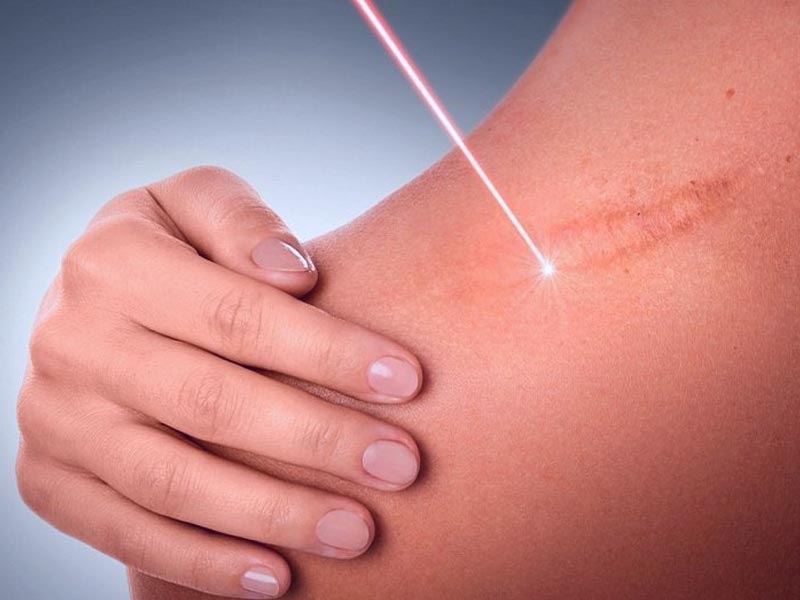

Laser scar treatment is used to reduce the visible appearance of selected scars, stretch marks, and other textural or pigment-related skin changes. Different laser technologies may create controlled effects in the skin that support resurfacing or tissue remodeling. Recovery varies considerably according to the laser system, treatment depth, skin type, and area being treated.
Definition of Laser Scar Treatment
Laser scar treatment may be used for selected Scars and Wound Scars. Different lasers target different components or depths of the skin, and treatment can involve ablative, non-ablative, fractional, vascular, or pigment-focused approaches. The appropriate system depends on the scar's type, color, thickness, age, and location.
Treatment is generally planned by a dermatologist, plastic surgeon, or another appropriately qualified professional. The number of sessions and treatment settings depend on individual skin characteristics and the scar being treated. Visible changes may develop gradually rather than according to a guaranteed number of sessions.
Laser procedures may also be considered for selected Stretch Marks and other textural or color irregularities. Their effect varies according to the specific condition and device. A laser that is suitable for one type of scar or pigmentation concern may not be appropriate for another.
Potential Advantages of Laser Scar Treatment
One potential advantage of laser procedures is that many can be performed without conventional surgical excision. However, this does not mean they are automatically lower risk in every case. Treatment intensity, anesthesia requirements, downtime, and possible complications depend on the laser technology and treatment area.
Visible improvement may develop after one or more sessions, but results are not necessarily rapid. Some treatments require several weeks or months for remodeling to become more apparent. Suitability also varies according to skin phototype and scar characteristics, and laser parameters must be adjusted carefully.
Temporary redness, swelling, sensitivity, dryness, crusting, or pigment changes can occur after laser treatment. Some procedures allow an early return to daily activities, while deeper resurfacing may require more substantial downtime. Appropriate aftercare is important for supporting recovery.
Recovery After Laser Scar Treatment
Recovery after laser treatment may be relatively short after mild procedures or considerably longer after more intensive resurfacing. Redness, warmth, swelling, or sensitivity may appear immediately after treatment. The duration depends on the device, treatment depth, treated area, and individual healing response.
Flaking or crusting may occur after certain laser procedures. These reactions can be part of the expected recovery process, but they should not be interpreted as proof that the treatment has been successful. The treated skin should generally not be picked or aggressively exfoliated, and aftercare should follow the clinician's instructions.
Visible changes in skin tone or scar appearance develop at different rates. Some changes may be noticed relatively early, while collagen remodeling may continue for longer. Following an appropriate skin-care routine can support normal recovery but cannot guarantee a specific result.
What Should Be Considered During Recovery?
Maintaining the skin barrier is important after many laser procedures. Depending on the treatment, an appropriate moisturizer or healing ointment may be recommended. The exact product should be selected according to the clinician's instructions rather than assuming that one moisturizer is suitable for every procedure.
Strong acids, retinoids, exfoliants, scrubs, alcohol-based products, or other potentially irritating ingredients may need to be temporarily avoided. Products marketed as “natural” are not automatically gentler or safer for recently treated skin. Rubbing, scratching, or picking at the treated area should also be avoided.
Ultraviolet protection is important after many laser procedures because recently treated skin may be more susceptible to irritation or pigment changes. Broad-spectrum sunscreen, protective clothing, and avoiding unnecessary direct sun exposure may therefore be recommended.
Skin Care After Laser Treatment
Appropriate aftercare can support recovery following laser treatment. Cool compresses may sometimes be used to reduce temporary warmth, redness, or swelling when advised by the treating professional. Fragrance-free or low-irritation products may also be preferable, but even products labeled hypoallergenic can cause reactions in some individuals.
Moisturization may help reduce dryness and support the skin barrier. The appropriate formulation varies according to the type of laser procedure and the condition of the skin. Heavy products are not necessarily required after every treatment, and products should be chosen according to professional guidance.
Gentle hygiene may also be important, but the timing of cleansing varies according to the procedure. Makeup may need to be avoided temporarily after some treatments. Rather than avoiding all “chemical” ingredients, the focus should be on avoiding unsuitable or irritating products while the skin is recovering.
Can Recovery Be Accelerated?
There is no single home method that reliably accelerates biological skin healing after laser treatment. Adequate hydration supports normal body function, but drinking extra water does not directly speed laser-induced scar remodeling.
Balanced nutrition provides nutrients required for normal tissue function. Protein, vitamins, minerals, fruits, vegetables, and other components of a varied diet support general health, but specific foods or supplements should not be expected to dramatically accelerate scar improvement.
Adequate sleep and stress management may support general well-being during recovery. Activities such as relaxation exercises can be helpful for stress, but they should not be presented as direct treatments that accelerate skin remodeling after laser therapy.
Frequently Asked Questions About Laser Scar Treatment
A common question is whether Laser Scar Treatment is painful. Discomfort varies considerably depending on the laser, treatment depth, area, and individual sensitivity. Topical anesthetic, local anesthesia, cooling, or other comfort measures may be used for selected procedures, but not every treatment requires the same approach.
Another question is whether scars disappear completely after laser treatment. Laser procedures may reduce the visible appearance of certain scars, but complete removal cannot be guaranteed. Results depend on scar type, depth, color, location, skin characteristics, and individual healing response.
Redness, swelling, warmth, sensitivity, or mild burning can occur after treatment. These reactions may be temporary, but their duration varies. Persistent or worsening pain, blistering, discharge, increasing swelling, or other unusual symptoms should be professionally evaluated.
 Call
Call
 Whatsapp