


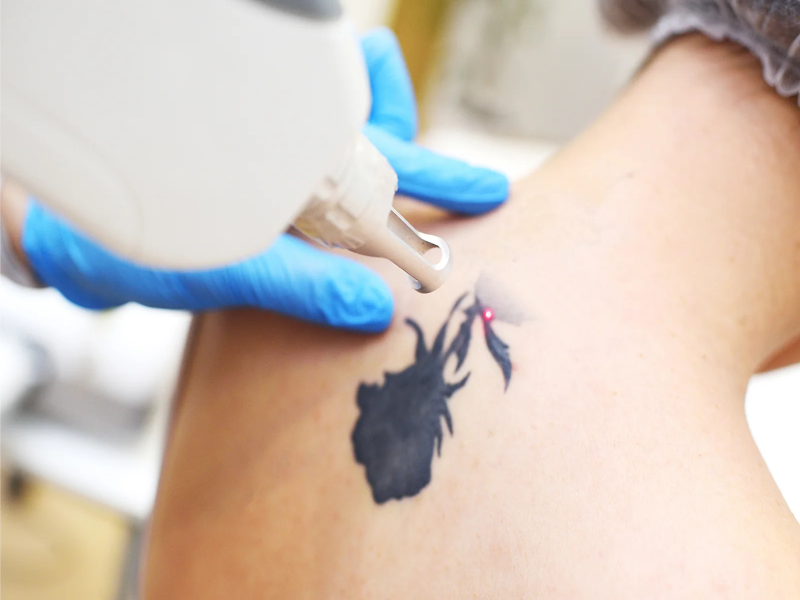

PicoSure is a picosecond laser system that may be used to reduce the appearance of selected tattoo pigments. It delivers extremely short pulses of laser energy intended to fragment ink particles within the skin.
The fragmented particles may then be gradually processed by the body over the weeks following treatment. Tattoo fading is therefore not immediate and usually develops progressively after a series of sessions.
PicoSure should not be described as a technology that removes every tattoo rapidly or without affecting the skin. Treatment response depends on the tattoo’s colour, ink composition, depth, density, age and location, as well as the individual’s skin tone, healing response and the wavelength available on the device.
What Is PicoSure Tattoo Removal?
PicoSure delivers laser pulses measured in picoseconds. These short pulses create a strong photoacoustic effect that may break selected tattoo pigments into smaller particles.
The treatment does not physically extract the ink during the appointment. The tattoo generally fades as the body gradually clears some of the fragmented pigment.
Several treatment sessions are commonly required. Complete removal cannot be guaranteed.
The device and its available wavelength may respond differently to individual tattoo colours. The name of the technology alone does not determine whether a particular tattoo can be removed successfully.
Is PicoSure Better Than Every Other Tattoo-Removal Laser?
Not necessarily.
Picosecond systems may offer advantages for selected pigments or tattoos that have responded poorly to previous treatment. However, treatment success also depends on:
-
Available wavelength
-
Ink colour
-
Chemical composition of the pigment
-
Tattoo depth
-
Pigment density
-
Spot size
-
Energy setting
-
Skin tone
-
Practitioner experience
-
Interval between sessions
A suitable Q-switched laser may produce effective fading in some tattoos, while a picosecond system may be useful for other pigments.
The most appropriate device should be selected according to the tattoo rather than the general popularity or age of the technology.
How Does the Fading Process Begin?
Immediately after the laser pulse, the treatment area may temporarily develop a white or frosted appearance. This reaction is caused by rapid changes within the treated tissue and does not mean that the tattoo has disappeared.
During the following hours or days, the area may develop:
-
Redness
-
Swelling
-
Tenderness
-
Warmth
-
Pinpoint bleeding
-
Blisters
-
Crusting
-
Itching
After the skin has healed, gradual fading may become more noticeable over the following weeks.
The degree of fading after each session is unpredictable. Some sessions may produce an obvious change, while others result in only subtle improvement.
Does Every Session Produce Visible Fading?
No.
The response may vary between sessions because different layers and colours of pigment may react differently.
A tattoo may initially fade quickly and then reach a slower phase. Previously hidden pigment may become visible as the darker upper layers lighten.
Cover-up tattoos may contain several colours and layers at different depths. As one layer fades, an older design or another pigment may appear underneath.
A lack of dramatic fading after one session does not automatically mean that the treatment has failed. However, the treatment plan should be reassessed when repeated sessions produce little change.
Which Tattoo Colours Respond Best?
Black and Dark Pigments
Black pigment often responds more predictably because it absorbs a broad range of laser wavelengths.
Dark blue pigments may also respond, although their chemical composition can affect the result.
Even black tattoos may require numerous sessions and may leave residual pigment.
Green and Blue Pigments
Some green and blue tattoos may respond to specific picosecond wavelengths.
However, not every PicoSure device configuration or pigment formulation responds equally well.
The practitioner should explain which wavelength will be used and whether it is appropriate for the tattoo colour.
Red and Orange Pigments
Red and orange inks may respond to selected wavelengths, but they are not always best treated with the same wavelength used for black or green pigment.
Certain red pigments may also be associated with allergic reactions. An inflamed or persistently itchy tattoo should be medically evaluated before laser treatment.
Yellow and Light-Coloured Pigments
Yellow, white, flesh-toned, pastel and fluorescent pigments may be difficult to treat because they absorb less laser energy.
Some light pigments contain titanium or iron compounds and may become grey, black or otherwise darker after laser exposure.
A test spot may be advisable before treating the entire tattoo.
Cosmetic Tattoos
Eyebrow, lip and other cosmetic tattoos may contain mixed pigments that behave unpredictably.
Colour darkening is a recognised possibility. Treatment close to the eyes also requires appropriate eye protection and detailed anatomical assessment.
Which Factors Affect the Rate of Fading?
Tattoo Size
Larger tattoos contain more pigment and require treatment over a wider area. This may affect session duration, recovery and the overall treatment course.
Pigment Density
Professionally applied tattoos often contain dense and evenly placed pigment. Dense tattoos may require more treatments.
Tattoo Depth
Pigment placed deeper in the skin may be more difficult to target and clear.
Uneven tattoo depth can cause different sections of the same design to fade at different rates.
Tattoo Age
Older tattoos may sometimes contain less dense pigment because natural fading has already occurred.
However, an old tattoo is not automatically easy to remove.
Body Location
Tattoos on the hands, feet, fingers, ankles and lower legs may fade more slowly than tattoos closer to the centre of the body.
Circulation, lymphatic drainage, friction and skin thickness may contribute to this difference.
Skin Tone
Melanin in the surrounding skin can also absorb laser energy.
Individuals with darker or recently tanned skin may have a greater risk of burns and temporary or persistent pigment changes.
Treatment may require conservative settings and longer intervals.
Smoking and General Health
The body’s immune response contributes to the gradual clearance of fragmented pigment.
Smoking, circulation problems and selected medical conditions may influence healing or fading, although individual response cannot be predicted precisely.
How Many Sessions Are Required?
There is no standard number of sessions suitable for every tattoo.
The number may be affected by:
-
Tattoo colour
-
Pigment density
-
Tattoo depth
-
Tattoo size
-
Professional or amateur application
-
Body location
-
Cover-up layers
-
Previous removal attempts
-
Skin tone
-
Laser wavelength
-
Treatment settings
-
Healing response
A range such as four to eight sessions should not be presented as a guaranteed treatment course.
Some tattoos may require fewer sessions, while others may require considerably more. Certain pigments may remain visible despite repeated treatment.
How Long Should There Be Between Sessions?
The skin and immune system need time to recover and process fragmented pigment.
Treatment intervals are generally measured in weeks, but there is no universal schedule.
The next session should be planned only after:
-
Redness has resolved
-
Blisters or crusts have healed
-
The skin barrier has recovered
-
Pigment changes have been evaluated
-
The response to the previous session has been assessed
Performing treatments too frequently may increase the risk of burns, scarring and pigment changes without necessarily accelerating tattoo removal.
Longer intervals may be appropriate after an intense reaction or when fading continues between sessions.
What Happens During a PicoSure Session?
Before treatment, the tattoo and surrounding skin should be examined.
The practitioner should evaluate:
-
Tattoo colours
-
Pigment density
-
Tattoo depth
-
Skin tone
-
Existing scars
-
Recent sun exposure
-
Previous laser treatment
-
Medication use
-
Medical history
-
Tendency to develop keloids
-
Previous reactions to tattoo ink
Protective eyewear is required during treatment.
The area is cleaned, and cooling, topical anaesthetic or another comfort method may be used when appropriate.
The laser is then applied to the selected portions of the tattoo.
The procedure duration varies according to tattoo size, complexity and number of colours. A fixed appointment length cannot be guaranteed.
Is PicoSure Tattoo Removal Painless?
No tattoo-removal procedure should be described as completely painless.
Individuals may experience:
-
Stinging
-
Snapping
-
Burning
-
Heat
-
A sensation similar to an elastic band hitting the skin
Pain levels vary according to tattoo location, treatment intensity and personal sensitivity.
Topical anaesthetic or cooling may reduce discomfort but may not eliminate it.
More sensitive areas, such as the ribs, ankles, fingers or areas close to bone, may feel more uncomfortable.
Does PicoSure Cause Less Skin Damage?
Picosecond lasers are designed to fragment pigment through very short pulses, which may limit unnecessary thermal exposure in selected circumstances.
However, the treatment still creates a controlled tissue response.
Possible complications include:
-
Blistering
-
Crusting
-
Infection
-
Temporary hyperpigmentation
-
Temporary or persistent hypopigmentation
-
Texture changes
-
Prolonged redness
-
Scarring
-
Allergic reactions to fragmented pigment
The risk is influenced by the tattoo, device settings, skin tone, healing process and aftercare.
The statement that PicoSure damages only the pigment and leaves the surrounding skin completely unaffected would be inaccurate.
Expected Results
The realistic aim is usually gradual fading rather than guaranteed complete removal.
Possible outcomes include:
-
Substantial fading
-
Partial clearance
-
Uneven fading
-
Residual colour
-
A visible outline
-
Exposure of an older tattoo underneath
-
Persistent texture change
-
Pigment darkening
The final result cannot be evaluated immediately after treatment.
Temporary swelling may make the area appear different, while crusting or pigment darkening can temporarily obscure the actual fading.
Recovery After Treatment
Recovery varies according to the treatment intensity and individual skin response.
Some individuals experience mild redness and swelling that improve within a few days. Others may develop blisters or crusting that require a longer healing period.
The recovery process should not be described as consistently rapid or free of complications.
Signs that require medical assessment include:
-
Increasing pain
-
Spreading redness
-
Pus or discharge
-
Fever
-
Foul odour
-
Severe swelling
-
Persistent bleeding
-
Significant colour change
-
An allergic reaction
Care After PicoSure Tattoo Removal
Keep the Area Clean
The area should be cleaned according to the treating professional’s instructions.
Vigorous scrubbing, hot water and harsh cleansers should be avoided.
The skin should be dried gently without rubbing.
Use Dressings as Directed
A clean, suitable dressing may be recommended for a limited period.
The dressing should be changed according to the provided instructions.
A dressing should not be left in place indefinitely or used in a way that traps excessive moisture.
Do Not Pick Blisters or Crusts
Blisters should not be deliberately opened unless a healthcare professional gives specific instructions.
Crusts should separate naturally.
Picking, scratching or peeling the skin may increase the risk of infection, pigment changes and scarring.
Avoid Friction
Tight clothing, footwear or repetitive movement may irritate the treatment area.
The area should be protected from unnecessary pressure and rubbing while it heals.
Should Moisturiser Be Used?
A blanket recommendation to moisturise every treated tattoo is not appropriate.
The correct wound-care plan depends on whether the skin is:
-
Intact
-
Red and swollen
-
Blistered
-
Crusted
-
Open or weeping
A thin layer of a recommended ointment may be suitable in some cases. Random cosmetic moisturisers should not be applied to open or blistered skin.
Fragranced products, essential oils and irritating ingredients should be avoided.
The practitioner’s instructions should take priority.
Sun Protection
Sun protection is important because ultraviolet exposure may increase the risk of pigment changes.
Freshly treated, open, blistered or crusted skin should initially be protected physically with suitable clothing or a clean covering.
Sunscreen should not be applied indiscriminately to damaged or actively weeping skin.
Once the surface has healed sufficiently, broad-spectrum sunscreen may be used according to professional instructions.
Additional precautions include:
-
Avoiding intentional tanning
-
Avoiding tanning beds
-
Staying in the shade
-
Covering the tattoo with clothing
-
Reapplying sunscreen when appropriate
Sun protection may reduce additional pigmentation risk but cannot guarantee scar-free healing.
Exercise and Daily Activities
Many individuals can continue light daily activities after treatment.
However, strenuous exercise may increase:
-
Body temperature
-
Sweating
-
Friction
-
Swelling
-
Discomfort
Exercise may need to be postponed while the area is blistered, open or significantly irritated.
Swimming, hot tubs, saunas and steam rooms should generally be avoided until the skin has healed adequately.
The timing of the return to normal activity should be determined according to the treated area and the skin reaction.
Can PicoSure Leave a Scar?
Scarring is not inevitable, but it is possible.
Risk factors include:
-
Excessive energy
-
Infection
-
Picking crusts
-
Premature repeat treatment
-
Existing scar tissue
-
Keloid tendency
-
Poor wound care
-
Repeated trauma
-
Inappropriate treatment settings
Tattooing itself may already have created scar tissue. As the ink fades, an existing scar can become more visible.
The area should therefore be examined and photographed before treatment.
Is Permanent Pigment Change Possible?
Temporary darkening or lightening can occur after laser treatment.
In some individuals, pigment changes may persist.
The risk may be greater in:
-
Darker skin tones
-
Recently tanned skin
-
Areas with previous inflammation
-
Aggressive treatment settings
-
Individuals with a history of pigment changes
Conservative planning and adequate healing intervals may reduce risk but cannot remove it completely.
PicoSure Tattoo Removal at Ankara Laser
Ankara Laser or another qualified medical provider should assess the tattoo before treatment.
The consultation should explain:
-
Which device and wavelength will be used
-
Which colours are likely to respond
-
Which colours may resist treatment
-
Whether a test spot is recommended
-
Risk of pigment darkening
-
Approximate session intervals
-
Possible complications
-
Expected aftercare
-
Possibility of incomplete removal
-
Estimated treatment cost
PicoSure should not be selected solely because it is promoted as newer, faster or more advanced.
Frequently Asked Questions
Does the Tattoo Become Lighter After Every Session?
Not always.
Some sessions may produce noticeable fading, while others result in subtle or delayed change.
Different areas of the tattoo may respond at different rates.
How Many Sessions Are Necessary?
The number cannot be predicted precisely before treatment.
A fixed range such as four to eight sessions does not apply to every tattoo.
Is the Procedure Painful?
Discomfort varies.
A snapping, stinging or burning sensation may occur. Cooling or anaesthetic cream may help reduce it.
Does Redness Disappear Within a Few Hours?
It may in some cases, but redness, swelling, blistering or crusting can last for several days or longer.
Can Every Colour Be Removed?
No.
Different colours require different wavelengths, and some light or cosmetic pigments may resist treatment or become darker.
Does PicoSure Completely Remove the Tattoo?
Complete removal cannot be guaranteed.
Residual pigment, an outline, colour change or pre-existing scar tissue may remain.
Are Permanent Side Effects Rare?
Serious permanent complications are not expected in most appropriately treated individuals, but scarring and persistent pigment changes remain recognised risks.
Can Sunscreen Be Applied Immediately?
Not necessarily.
Sunscreen should not be applied to open, blistered or actively weeping skin unless specifically instructed. Physical protection may be more appropriate during early healing.
In conclusion, fading with PicoSure tattoo removal develops gradually rather than immediately. The degree of improvement after each session depends on pigment colour, ink composition, tattoo depth, skin tone and the available wavelength. Some tattoos may fade substantially, while others remain partially visible. Careful assessment, adequate intervals and appropriate wound care are essential for reducing avoidable risks.
 Call
Call
 Whatsapp