


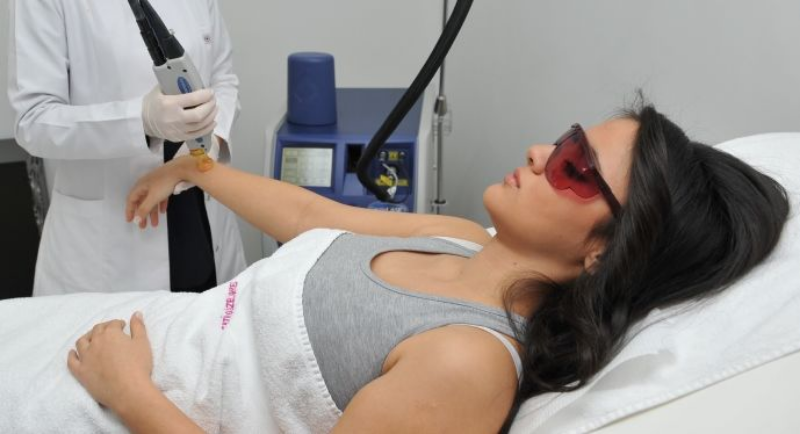

Ice laser hair removal is one of the hair-removal procedures in which laser energy is used to target hair follicles while the skin surface is cooled during treatment. The term “ice laser” is commonly used to describe certain laser systems equipped with cooling technology.
The laser energy aims to create controlled heat in the pigment within the follicles and gradually weaken their ability to produce new hair.
The cooling handpiece may help reduce warmth at the skin surface and support treatment comfort. However, the sensation experienced may vary according to pain threshold, hair density, treatment area and device settings.
The effect of ice laser hair removal may be influenced by skin tone, hair colour, hair thickness, hormonal characteristics, treatment area and regular attendance.
How Does Ice Laser Hair Removal Work?
Ice laser hair removal is based on the absorption of laser light by melanin pigment in the hair follicles. The resulting heat aims to affect the follicles in a controlled manner and reduce their ability to produce new hair.
Not all hairs are in the active growth phase at the same time. Laser energy may have a more noticeable effect on actively growing hairs. The procedure is therefore repeated at planned intervals rather than completed in one session.
In some systems, the handpiece is moved over the skin while the treatment area is heated gradually. The cooling system may help maintain comfort at the skin surface.
Settings should be selected according to skin tone, hair thickness and treatment area. The same energy level should not be used for everyone.
Advantages of Ice Laser Hair Removal
The advantages of ice laser hair removal vary according to the device and individual skin and hair characteristics.
Cooling Technology
Cooling handpieces may help reduce heat and stinging during the procedure. This feature may support comfort, particularly in sensitive areas.
Treatment of Large Areas
Areas such as the legs, arms, back and chest may be treated according to the device handpiece and operating system.
Assessment Across Different Skin Tones
Some systems can be adjusted for different skin tones. However, this does not mean that every device is automatically suitable for every skin type.
Long-Term Reduction in Hair Density
Following regular sessions, hair may become sparser, finer and slower to grow. The same reduction rate and duration cannot be guaranteed for everyone.
How Many Sessions Does Ice Laser Hair Removal Require?
The number of sessions required for ice laser hair removal to show an effect varies from person to person. It is not possible to provide one exact number for everyone.
Factors affecting the number of sessions include:
-
Skin tone
-
Hair colour
-
Hair thickness
-
Hair density
-
Treatment area
-
Hormonal characteristics
-
Device and energy settings
-
Hair-growth phase
-
Regular attendance
-
Previous hair-removal methods
Some people may notice shedding, reduced density or slower growth after the first treatments. Others may require more sessions before a noticeable change develops.
All hair should not be expected to disappear after the first session. Only some hairs in the active growth phase may respond noticeably during each treatment.
An estimated plan may be created after the initial assessment and updated according to the response.
How Do Skin and Hair Type Affect the Number of Sessions?
Hair Colour
Dark hair may contain more melanin and absorb laser energy more noticeably. White, grey, red and very light-coloured hair contains less pigment and may respond less effectively.
Hair Thickness
Thick, clearly visible hair may absorb more laser energy than very fine hair. Results may be more limited on fine hair.
Skin Tone
Melanin at the skin surface is important when selecting the device and settings. Treatment parameters should be chosen more carefully on dark or tanned skin.
Hormonal Characteristics
Hormonal changes may affect hair density, thickness and regrowth. Areas such as the face, chin, neck, back and chest may progress differently because they can be more strongly influenced by hormones.
Treatment Area
Hair-growth cycles differ across body areas. The face may require different intervals and may show a different response than the legs, underarms or bikini area.
How Are Session Intervals Determined?
Ice laser hair removal session intervals should be selected according to the hair-growth cycle and treatment area. The same interval may not be suitable for every area.
Facial hair may become noticeable again sooner, while the growth cycle on the legs, back or arms may be longer.
Performing sessions unnecessarily early may affect efficiency because an insufficient number of hairs may have reached the active growth phase. Delaying sessions for too long may disrupt the planned process.
The recommended intervals should be followed and adjusted according to the response.
What Can Be Expected After the First Session?
After the first ice laser hair removal session, all hair should not be expected to disappear immediately. Hairs affected by laser energy may shed over a period of time.
Some hairs may appear to continue growing. This may be associated with affected hairs moving toward the skin surface.
Possible changes after the first session include:
-
Shedding of some hairs
-
Slower growth
-
Reduced density in some areas
-
Finer hair in certain areas
-
Temporary patchy-looking spaces
The level of change varies from person to person. A limited visible response after the first session does not automatically mean that the procedure is ineffective.
How Does the Ice Laser Hair Removal Process Progress?
Initial Assessment
Skin tone, hair colour, hair thickness and treatment areas are assessed. Information is collected about medication, active skin conditions, recent sun exposure and previous laser experiences.
Preparation Before Treatment
Hair should not be removed from the root with waxing, tweezers or epilators. The follicle must remain in place to be targeted by the laser.
Shaving may be performed at the time recommended by the practitioner. Care should be taken not to cause cuts or irritation.
The skin should be clean and dry. Creams, oils, perfumes, deodorants and makeup may need to be removed.
Laser Application
The handpiece is moved over the treatment area. The cooling system may help control warmth at the skin surface.
Mild warmth, stinging or tingling may occur. The sensation varies according to pain threshold and treatment area.
After the Procedure
Temporary redness, warmth, mild swelling or small raised areas around the follicles may occur. These effects often decrease within a short period.
The treatment centre should be contacted if severe burning, prolonged redness, crusting, blistering or noticeable changes in skin colour occur.
How Long Does an Ice Laser Hair Removal Session Take?
The duration of an ice laser hair removal session varies according to treatment area, handpiece size, hair density and operating system.
Small areas such as the underarms or parts of the face may be completed more quickly. The legs, back, chest or full body may take longer.
A faster procedure is not automatically more effective. Controlled coverage of the entire area with suitable settings is more important.
Is Ice Laser Hair Removal Permanent?
Ice laser hair removal aims to provide a long-term reduction in hair density. Complete and lifelong removal of every hair should not be guaranteed.
Some hair may regrow. Regrowing hair may be finer, sparser or lighter.
Hormonal changes, age, medication and individual characteristics may affect new hair growth. Maintenance sessions may be needed in some people.
Which Areas Can Be Treated?
When skin and hair characteristics are suitable, ice laser hair removal may be considered for:
-
Legs
-
Arms
-
Underarms
-
Bikini area
-
Back
-
Chest
-
Shoulders
-
Suitable areas of the face
Laser is not applied around the eyes. Fine facial hair requires detailed assessment.
The same settings and session intervals should not be used for every area.
Points to Consider Before Ice Laser Hair Removal
-
Avoid intense sun exposure and tanning beds.
-
Disclose tanning or sunburn.
-
Do not use waxing, tweezers or epilators.
-
Disclose medications and skincare products.
-
The treatment area should be free from active infection and open wounds.
-
The skin should be clean and free from product residue.
-
Disclose medication that may increase light sensitivity.
Aftercare Following Ice Laser Hair Removal
Sun Protection
Sun protection after ice laser hair removal is important. A broad-spectrum sunscreen should be used on exposed areas and reapplied as needed.
Moisturising
Fragrance-free moisturisers without irritating ingredients may support the skin barrier.
Avoiding Heat
Very hot showers, saunas, Turkish baths, steam rooms and intense exercise may need to be postponed.
Avoiding Irritating Products
Scrubs, exfoliation, rough washcloths, alcohol-based products, retinoids and strong acids should not be used until sensitivity resolves.
Avoiding Root Hair Removal
Waxing, tweezers and epilators should not be used between sessions. Shaving may be performed according to the practitioner’s recommendation.
Who May Not Be Suitable?
Treatment may need to be postponed or assessed carefully in the following situations:
-
Active sunburn
-
Significant tanning
-
Open wounds or infection
-
Active skin disease
-
Medication that may increase light sensitivity
-
Pregnancy or breastfeeding
-
Hormonal hair-growth concerns
-
Very light-coloured or non-pigmented hair
Planning Ice Laser Hair Removal in Ankara
When planning ice laser hair removal in Ankara, the decision should not be based solely on the cooling feature. Skin tone, hair structure, treatment area, sun exposure and medication should be assessed together.
The actual laser technology, device maintenance, hygiene conditions, practitioner qualifications and quality of the initial assessment should be considered when selecting a centre.
An initial assessment at Ankara Lazer may help determine the device, session intervals and aftercare plan according to individual skin and hair characteristics.
 Call
Call
 Whatsapp