


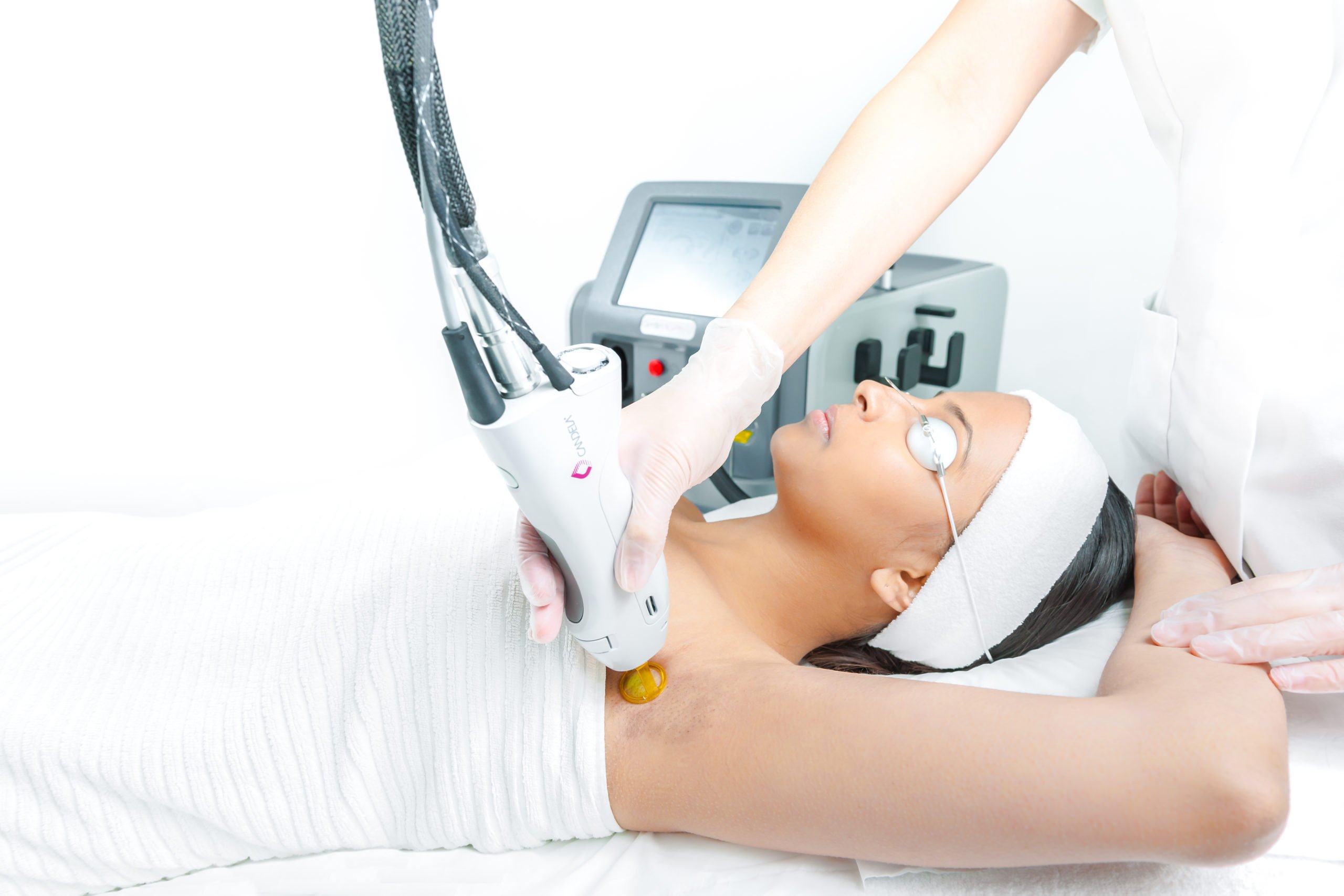

Laser hair removal is a method used to permanently remove unwanted hair. This process is carried out with specially designed laser beams. Laser beams focus on the roots of the hairs and heat them, thus preventing the hair from growing back. Laser hair removal safely and effectively removes hair from unwanted areas of the body.
Laser hair removal offers more permanent results compared to traditional hair removal methods. While other methods only remove hair temporarily, laser hair removal prevents hair from growing back. Therefore, laser hair removal is a more economical and time-saving option in the long run.
Laser hair removal is performed by specially trained specialists. During the procedure, the appropriate laser type is selected by taking into account the patient's skin tone and hair color. In this way, unwanted hair is targeted and damage to surrounding tissues is prevented.
Advantages of Laser Hair Removal
Laser hair removal offers many advantages. Here are some of its main advantages:
Permanent Results: Laser hair removal provides permanent hair removal. In this way, it offers the opportunity to get rid of unwanted hair for a long time.
Time Saving: Compared to traditional hair removal methods, laser hair removal takes less time. Once the procedure is completed, the hair is prevented from growing back, thus eliminating the need for regular hair removal.
Less Pain: Laser hair removal is less painful than other hair removal methods. In addition, cooling systems are used during the procedure to minimize discomfort.
Safe and Effective: Laser hair removal is an extremely safe and effective method when performed in specialized clinics. By using the appropriate laser type and settings, unwanted hair is targeted and damage to surrounding tissues is prevented.
Hygienic: Laser hair removal is performed in a hygienic environment. In this way, the risk of infection is minimized.
How is the Number of Laser Hair Removal Sessions Determined?
The number of sessions required for laser hair removal varies depending on individual factors. In general, the following factors play a role in determining the number of sessions:
Hair Color and Thickness: Dark and thick hair requires more sessions. Light and thin hair can be achieved with fewer sessions.
Body Area: Some body areas have more hair growth than others. These areas may require more sessions.
Hormonal Status: Hormonal changes can affect hair growth. Therefore, hormonal imbalances may require more sessions.
Metabolism Rate: People with fast metabolisms may have faster hair growth. This may require more sessions.
Age: Laser hair removal at a young age may require fewer sessions. As age increases, hair growth may increase and more sessions may be required.
A session count of 6 to 12 sessions is generally recommended for laser hair removal. However, this number may vary depending on the factors above. In specialist clinics, the condition is evaluated after the first session and the number of sessions required is determined.
Duration of Laser Hair Removal Sessions
The duration of laser hair removal sessions varies depending on the size of the body area to be treated and the density of the hair. In general, a session can last between 15 minutes and 1 hour.
For example, a session for the face area usually lasts between 15 and 30 minutes. For legs, the session duration can range from 45 minutes to 1 hour. Larger body areas require longer session times.
Session times can also vary depending on the person's skin tone, hair color and hair thickness. Dark and thick hair requires more energy, so the session time may be longer.
Although session times are determined in advance in specialist clinics, the time can be optimized by making the necessary adjustments during the procedure. The aim is to achieve an effective result in the shortest possible time.
Time Between Laser Epilation Sessions
The time between laser epilation sessions depends on the hair growth cycle. Hair grows in different phases and the time between these phases is variable.
Generally, there is a 4 to 8 week break between laser epilation sessions. This period is necessary for the hair to enter the growth phase. In this way, more hair can be targeted in the next session and permanent results can be achieved.
However, in some cases, the time between sessions can be shorter or longer. For example, the time between sessions can be kept shorter in people with rapid hair growth. For people with slow hair growth, the time between sessions can be extended.
In expert clinics, hair growth is monitored after the first session and the appropriate time for the next session is determined. In this way, the most effective results are obtained and unnecessary sessions are avoided.
What to Pay Attention to in Laser Epilation Sessions?
In laser epilation sessions, it is necessary to pay attention to some important points. Here are some of them:
A Reliable Clinic S
 Call
Call
 Whatsapp