


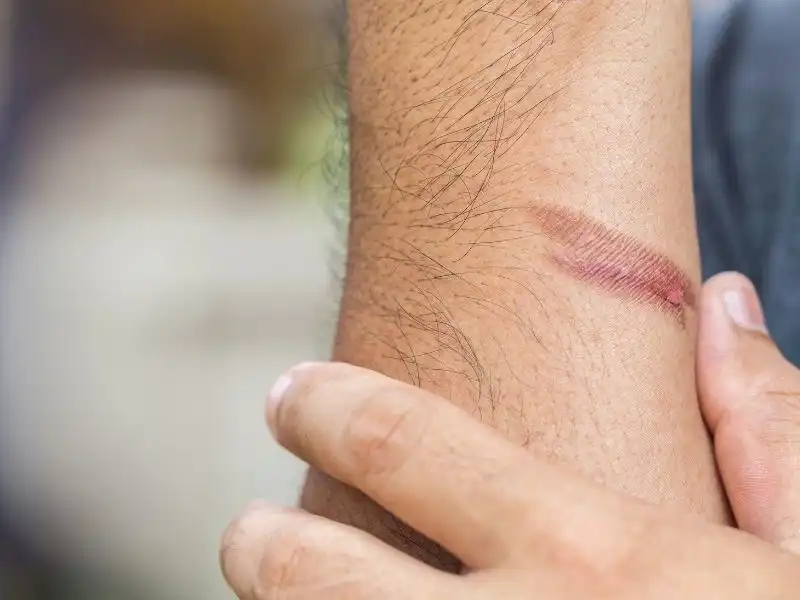

A scab scar can occur for a variety of reasons. It usually occurs due to skin damage, wound infection or skin diseases. Some people may be more prone to it and it may take longer for such wounds to heal.
Causes of Scab Scars
Scab scars can occur for a variety of reasons. The main ones are:
1. Skin Damage: Cuts, scrapes, burns or other skin injuries can cause scab scars.
2. Infection: Wound infections can contribute to the formation of scab scars.
3. Skin Diseases: Some skin diseases can cause scab scars. For example, conditions such as eczema, psoriasis or acne.
4. Immune System Problems: Scab scars can be seen more frequently in people with immune system problems.
5. Nutritional Deficiencies: Inadequate nutrition, especially protein, vitamin and mineral deficiencies, can slow down wound healing and cause scab scars to form.
6. Age: Old age can increase the risk of scabbing scars due to slower skin renewal.
Treatment of Scabbing Scars
Treatment of scabbing scars may vary depending on the cause. However, the following steps can generally be followed:
7. Cleaning the Wound: Keeping the wound clean regularly reduces the risk of infection and speeds up healing.
8. Moisturizing: Keeping the wound moist prevents scabbing and promotes healing.
9. Using a Protective Bandage: Protecting the wound area with a bandage speeds up scabbing and healing.
10. Topical Treatments: Applying topical creams, ointments or gels prescribed by a doctor can help scabbing scars heal.
11. Oral Supplements: Taking protein, vitamin and mineral supplements can support wound healing.
12. Physical Therapy: Massage or heat applications to the wound area can speed up healing by increasing blood circulation.
13. Surgical Intervention: In some cases, scabbing scars can be surgically removed.
Dermatologist Recommendations for Scabbing Scars
The following recommendations can be obtained from dermatologists regarding scabbing scars:
14. Early Intervention: It is important to see a doctor and apply appropriate treatment methods immediately after the wound is formed.
15. Cleaning and Moisturizing: Regular cleaning of the wound and keeping it moist accelerates healing.
16. Topical Treatments: Using creams, ointments or gels recommended by a doctor's prescription helps prevent scabbing.
17. Immune System Support: Measures that strengthen the immune system support wound healing.
18. Nutritional Assessment: In cases of inadequate nutrition, protein, vitamin and mineral supplements may be required.
19. Physical Activity: Physical activities that increase blood circulation in the wound area can accelerate healing.
20. Surgical Options: In some cases, scabbing scars can be surgically removed.
Early intervention, regular care and doctor follow-up are important for the healing of scabbing scars. These approaches can help reduce bothersome symptoms and prevent permanent damage.
 Call
Call
 Whatsapp