


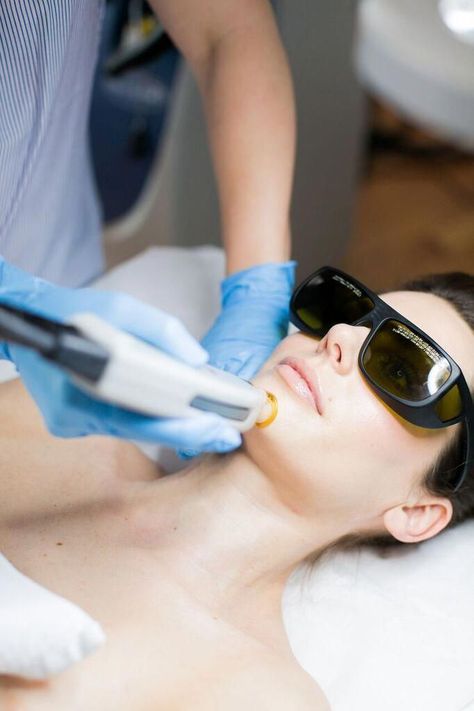

How to Perform Laser on the Face?
Laser epilation on the face requires a delicate application because the skin on the face is thinner and more sensitive than other parts of the body. It is an effective and reliable method especially for people who want to get rid of unwanted hair on the upper lip, chin, cheeks and sideburns. However, if the right techniques are not applied, side effects such as skin irritation or blemishes may occur. For this reason, there are some important points to consider when performing laser on the face.
1. Preparation Before Application
The skin should be clean before laser epilation and no cosmetic products (makeup, cream, perfume, etc.) should be applied to the area to be treated. Methods such as tweezers, waxing or epilators that can weaken the hair follicles should not be used approximately 4 weeks before the procedure. Instead, superficial hair removal can be done only with a razor.
Choosing the laser device suitable for skin tone and hair structure is also of great importance. Different systems such as Alexandrite, Nd:YAG and Diode lasers can generally be used. For people with fair skin, Alexandrite laser is preferred, for people with dark skin or sensitive skin, Diode or Nd:YAG laser is preferred.
2. Application Process
Skin Cleaning: Before the procedure, the face area is cleaned and oil is removed.
Usage of Protective Glasses: Special protective glasses are worn by the patient to prevent laser beams from damaging the eyes.
Skin Cooling: Some laser devices have cooling caps to relax the skin. If the device does not have this feature, cold air can be applied to the area before the procedure.
Laser Shots: The device is adjusted to the appropriate energy level for the targeted area and laser shots are applied. There may be a slight stinging sensation during the procedure, but this is at a tolerable level.
Usage of Moisturizer and Sunscreen: After the procedure is completed, moisturizers are applied to soothe the skin and sunscreen is recommended.
3. Things to Consider After the Procedure
A slight redness or sensitivity may occur on the skin after laser epilation. This is temporary and usually subsides within a few hours. However, to get the best results and protect the skin, the following points should be taken into consideration:
Protect from the Sun: The face is the area most exposed to the sun. Direct sunlight should be avoided for at least 1 week after the procedure and a high protection factor (SPF 50) sunscreen should be used.
Avoid Hot Showers and Steam: Hot water, saunas or steam baths should be avoided for the first 24 hours, as this can increase skin sensitivity.
Do Not Use Chemical Products: Peeling, alcohol-based tonics and harsh chemicals that can irritate the skin should be avoided for the first few days after the procedure.
Do Not Pluck Hairs: After the laser procedure, the hairs start to fall out on their own within 1-2 weeks. During this period, root removal procedures such as tweezing or waxing should be avoided.
4. Number of Sessions and Results
Hairs in the face area can usually be thin and light-colored. Therefore, it may require more sessions than on the body. On average, visible results are obtained after a process that varies between 6-10 sessions. Session intervals usually vary between 4-6 weeks on the face.
In some people, facial hair may grow back due to hormonal factors. In such cases, additional sessions or hormonal treatment should be considered under the supervision of a doctor.
In conclusion:
Laser epilation on the face is a safe and effective method when performed by the right device and experts. Using a laser device suitable for your skin structure during the procedure, following the rules of post-procedure care and continuing regular sessions will ensure you get the best results. If you are considering laser epilation on the face, it is recommended that you first consult a dermatologist or laser epilation specialist to determine the most appropriate method for your skin structure.
 Call
Call
 Whatsapp