



How to Remove Permanent Tattoos? The Most Effective Methods
Although getting a tattoo is a long-term decision, some people may want to remove their tattoos over time. Today, thanks to the developing tattoo removal technologies, tattoos can be largely or completely removed.
How Does Tattoo Removal Work?
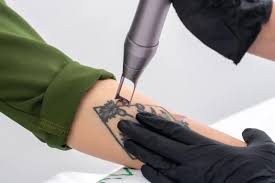
Since a tattoo is made by injecting ink into the lower layer of the skin called the dermis, it cannot be removed with simple superficial procedures. In order to remove a tattoo, the ink particles must be broken down and the body must naturally remove them. The most commonly used method for this is laser tattoo removal.
Tattoo Removal Methods
Different methods are used for tattoo removal. Although the most common and safe method is laser tattoo removal, there are also some alternative methods.
1. Laser Tattoo Removal (Most Effective Method)
Laser beams target and break down the tattoo ink, allowing it to be destroyed by the body's immune system over time.
✔ Pico Laser - It is one of the most advanced tattoo removal technologies, providing faster and more effective results by breaking the ink into very small pieces.
✔ Q-Switch Laser – It is one of the traditional laser systems and is quite successful in dark colored tattoos.
✔ Nd:YAG Laser – It is used to remove tattoos by minimizing pigment changes, especially in dark-skinned individuals.
Advantages:
✔ It breaks down the tattoo without damaging the skin surface.
✔ It is very effective in black and dark colored tattoos.
✔ When applied correctly, the risk of scarring is very low.
Disadvantages:
❌ It is not completely removed in a single session, it requires several sessions.
❌ The laser is less effective in light colored tattoos (yellow, green, light blue).
❌ A waiting period is required between sessions (usually 6-8 weeks).
How Many Sessions Does It Take to Remove?
It may take between 4 and 10 sessions depending on the size, color and skin structure of the tattoo.
2. Chemical Peeling Tattoo Removal
In the chemical peeling method, special solutions are applied that peel the upper layers of the skin. This method allows the tattoo to peel off from the upper layers and fade over time.
Advantages:
✔ It can sometimes be effective for small and superficial tattoos.
Disadvantages:
❌ It may be ineffective for large and deep tattoos.
❌ There is a risk of irritation, burns and permanent scarring on the skin.
3. Dermabrasion (Skin Sanding Method)
In this method, the area where the tattoo is located is abraded with a special device to remove the ink from the skin.
Advantages:
✔ It can be used for small and superficial tattoos.
Disadvantages:
❌ It is a painful method and the healing period is long.
❌ There is a high risk of irritation, scarring and scarring on the skin.
4. Surgical Tattoo Removal (Tattoo Removal by Cutting)
This method is done by surgically removing the skin area where the tattoo is located and stitching it.
Advantages:
✔ It is a definitive and fast solution for small tattoos.
Disadvantages:
❌ It cannot be applied to large tattoos.
❌ Incision scars can be permanent.
❌ Since it requires a surgical procedure, the healing process is longer.
Will There Be Any Scars After Tattoo Removal?
When laser tattoo removal is done correctly, it usually does not leave a scar. However, some factors can increase the risk of scarring:
???? Wrong laser selection or incorrect application - Lasers that are not suitable for the skin type can cause burns or pigment changes.
???? Improper care - Not protecting the skin from the sun or picking the crusts after the session can leave a scar.
???? Very deep or large tattoos - Sometimes, even if they do not disappear completely, a slight shadow may remain.
To prevent scarring:
✔ Avoid contact with water for the first 24 hours.
✔ Protect the area from the sun using SPF 50 sunscreen.
✔ Do not pick the crusts and do not irritate the skin.
✔ Use soothing and moisturizing creams recommended by your doctor.
✔ Stay away from the sea, pool and sauna for a while.
Is Tattoo Removal Painful?
A slight sting or burning sensation may be felt during the tattoo removal process. Most people describe this feeling as a rubber bump or a slight burning sensation. However, to reduce the pain:
✔ Local anesthetic creams can be used.
✔ Cooling systems can be used during the procedure.
✔ Applying ice after the procedure can reduce sensitivity.
Is Tattoo Removal Suitable for Everyone?
It is a safe procedure for most people, but caution should be exercised in some cases:
✔ It is not recommended for pregnant and breastfeeding women.
✔ Those with skin diseases should consult a doctor beforehand.
✔ There may be a risk of pigment changes in very dark skinned people.
Conclusion: It is possible to get rid of permanent tattoos!
Tattoo removal procedures are carried out with very advanced methods today. While laser technology stands out as the most effective method, other methods can be used in some special cases.
If you are considering removing your tattoo, it is important to get support from a specialist doctor or dermatologist to get the best results. With the right technology and good care, you can get rid of your tattoo healthily and safely!
 Call
Call
 Whatsapp