


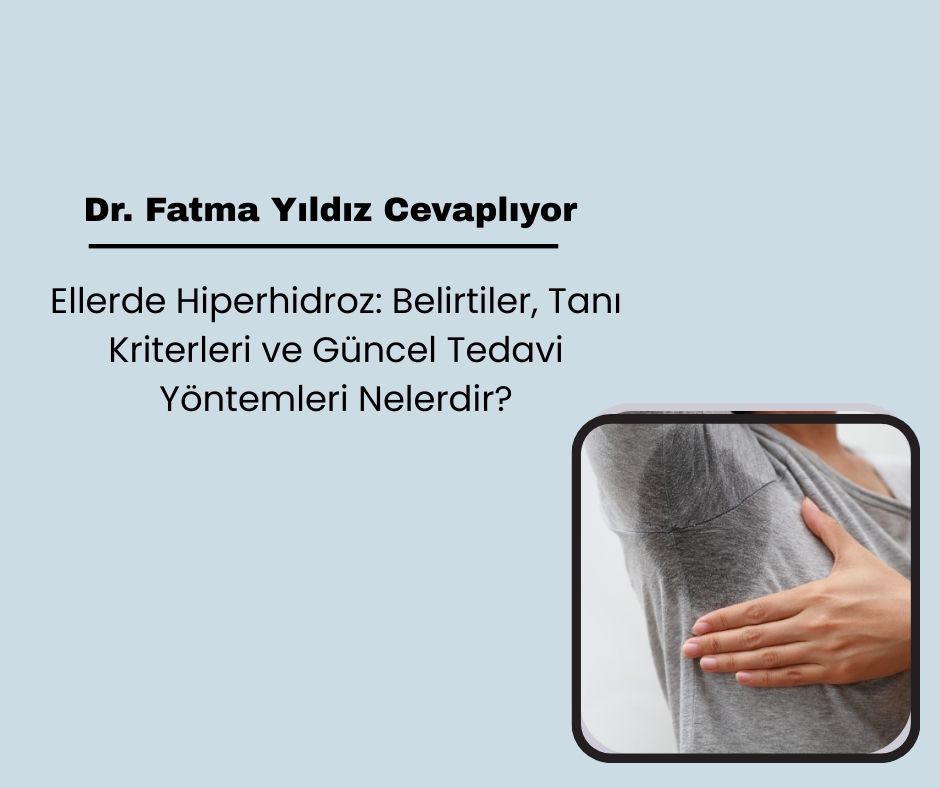

Hyperhidrosis in the Hands: What are the Symptoms, Diagnostic Criteria and Current Treatment Methods?
Hyperhidrosis in the hands is a dermatological condition characterized by excessive and uncontrolled sweating in the palms, which often seriously affects the quality of life. This condition, which is bilateral and symmetrical, usually occurs in the primary form and is triggered by emotional stress. However, secondary causes such as underlying systemic diseases or medications used must be excluded.
What is Primary Palmar Hyperhidrosis?
Primary hyperhidrosis usually begins in childhood or adolescence and continues into adulthood. Sweating usually increases while awake; it typically decreases during sleep. It can lead to serious difficulties in social and professional activities such as shaking hands and writing. In addition, prolonged moist skin can cause maceration and secondary bacterial, fungal or viral infections.
What are the Diagnostic Criteria?
Primary Focal Hyperhidrosis Diagnostic Criteria determined in 2004 are as follows:
Excessive sweating that has continued for at least 6 months and whose cause cannot be explained
Presence of at least 2 of the following criteria:
Bilateral and symmetrical sweating
Impairment in daily activities
At least 1 attack per week
Age of onset is younger than 25
Family history of hyperhidrosis
Decreased sweating during sleep
Pathogenesis
Excessive sympathetic activation of the autonomic nervous system is responsible for the development of the disease. During this process, emotional stimuli trigger the release of CRH and ACTH in the hypothalamus and excessive stimulation of the eccrine sweat glands is ensured by cholinergic sympathetic nerves. Although the number of eccrine glands is normal, hyperactivity develops as a result of increased neuronal stimulation. Since these glands are densely located in the palmar region, hyperhidrosis is most commonly seen in this region.
Severity Assessment: Hyperhidrosis Disease Severity Scale (HDSS)
The severity of the disease should be assessed before starting treatment. According to HDSS:
1–2 points: Mild-moderate hyperhidrosis
3–4 points: Severe hyperhidrosis
The score is determined according to the effect on the patient's daily life activities and the treatment plan is shaped accordingly.
Palmar Hyperhidrosis Treatment Options
The treatment approach should be planned according to the severity of the disease, the patient's expectations, accessibility and cost-effectiveness.
1. Topical Antiperspirants
Most commonly used agent: 20% Aluminum Chloride Hexahydrate
It works by blocking the sweat gland ducts.
Occlusion is not recommended to reduce the risk of irritation.
Alternative agent: Aluminum Zirconium Trichlorohydrex (more effective, less irritant)
2. Topical Anticholinergics
Products containing oxybutynin and glycopyrrolate
Systemic side effects (dry mouth, dizziness) may be seen in large area use.
3. Iontophoresis
Electric current is applied with water or liquids with anticholinergic agents added.
It is applied several times a week until the desired result is obtained.
It can be done at home or in a health center.
4. Botulinum Toxin Injections
Onabotulinum Toxin A is frequently preferred.
It is injected at 1 IU per 1 cm².
Duration of effect: Average 4–6 months
Sweating areas are determined with a starch-iodine test beforehand.
Conclusion
Palmar hyperhidrosis is a chronic disease that can seriously affect the social, psychological and professional life of the individual. It is possible to achieve effective results with the use of correct diagnostic criteria, clear determination of disease severity and an individualized treatment approach. Second-line treatments such as botulinum toxin injections and iontophoresis in particular offer very successful results in resistant cases.
 Call
Call
 Whatsapp