


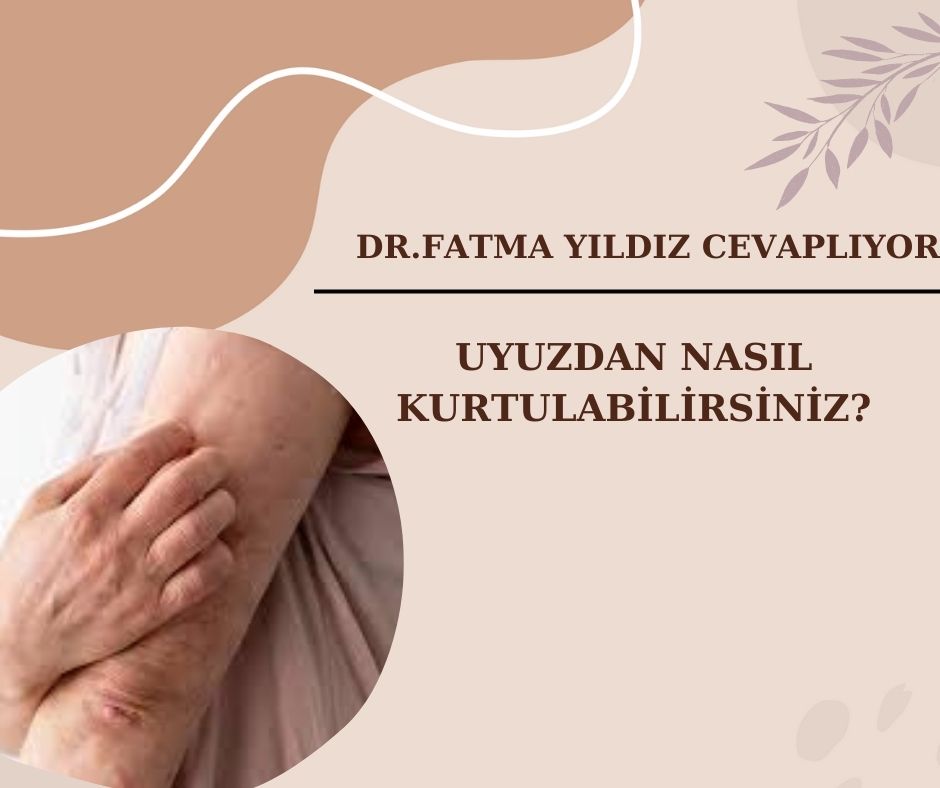

If You Wake Up with Itching at Night, Be Careful! How Can You Get Rid of Scabies?
Hello, I am Dr. [Name], a dermatologist. Today, I would like to give you information about scabies, which has been frequently encountered recently and is rapidly spreading in society. Scabies is a contagious skin disease caused by a parasite called Sarcoptes scabiei. If left untreated, it both reduces the person's quality of life and can quickly spread to the immediate environment.
How is Scabies Transmitted?
Scabies is transmitted through direct skin contact or shared use of personal items. The most common ways of transmission are:
Prolonged skin contact (such as holding hands, sleeping in the same bed)
Using shared clothing, towels, bedspreads or personal items
Staying in crowded living spaces (dormitories, military units, nursing homes) for a long time
Scabies mites can survive for up to 24-36 hours outside the human body. Therefore, shared items, especially clothes and bedding, are an important factor in transmission.
What are the Symptoms of Scabies?
The most common symptoms of scabies are:
Intense itching that increases at night
Rashes between the fingers, wrists, armpits, waist area and genital area
Red blisters and fine lines on the skin (tunnels formed by mites)
Skin thickening due to irritation, wound and itching on the skin
Itching usually becomes more severe at night and patients notice that their sleep quality decreases.
How is Scabies Treated?
Scabies treatment requires both the patient and the individuals living in the same environment to be treated together. The points to be considered during the treatment process are as follows:
1. Creams and Lotions
Permethrin Cream (5%): It is the most commonly used drug in the treatment of scabies. It should be applied to the entire body from the neck down, left on overnight and washed in the morning. It should be applied a second time after a week.
Benzyl Benzoate Lotion (10-25%): It is an alternative treatment option, but should be used with caution as it can cause skin irritation.
Sulfur Ointments (5-10%): A safe treatment option for pregnant women and children.
2. Oral Medications
Ivermectin: Can be used in resistant or widespread scabies cases. It is taken as a single dose and repeated doses are applied within 7-14 days if necessary.
3. Environmental Cleaning Measures
All clothes, towels and bed linens should be washed and ironed at 60°C.
Items that cannot be washed should be kept in a closed bag for 72 hours.
House cleaning should be done regularly and frequently used items should be disinfected.
What Should You Do If Your Itching Does Not Go Away Despite Treatment?
Some patients may notice that the itching continues even after starting treatment. There may be several reasons for this:
Incomplete or incorrect application of treatment
Failure to treat people in close contact
Scabies mites developing resistance to medications
In these cases, additional treatments can be started under the supervision of a doctor. Using permethrin cream and Ivermectin together may be more effective.
Ways to Protect Yourself from Scabies
Avoid prolonged skin contact with sick people.
Do not share your personal belongings with others.
Be careful in crowded and unhygienic environments.
Conclusion
Scabies is a treatable disease, but it is necessary to be patient and follow the doctor's recommendations completely. If your itching does not go away or your symptoms persist, definitely consult a dermatologist.
I wish you healthy days!
 Call
Call
 Whatsapp