


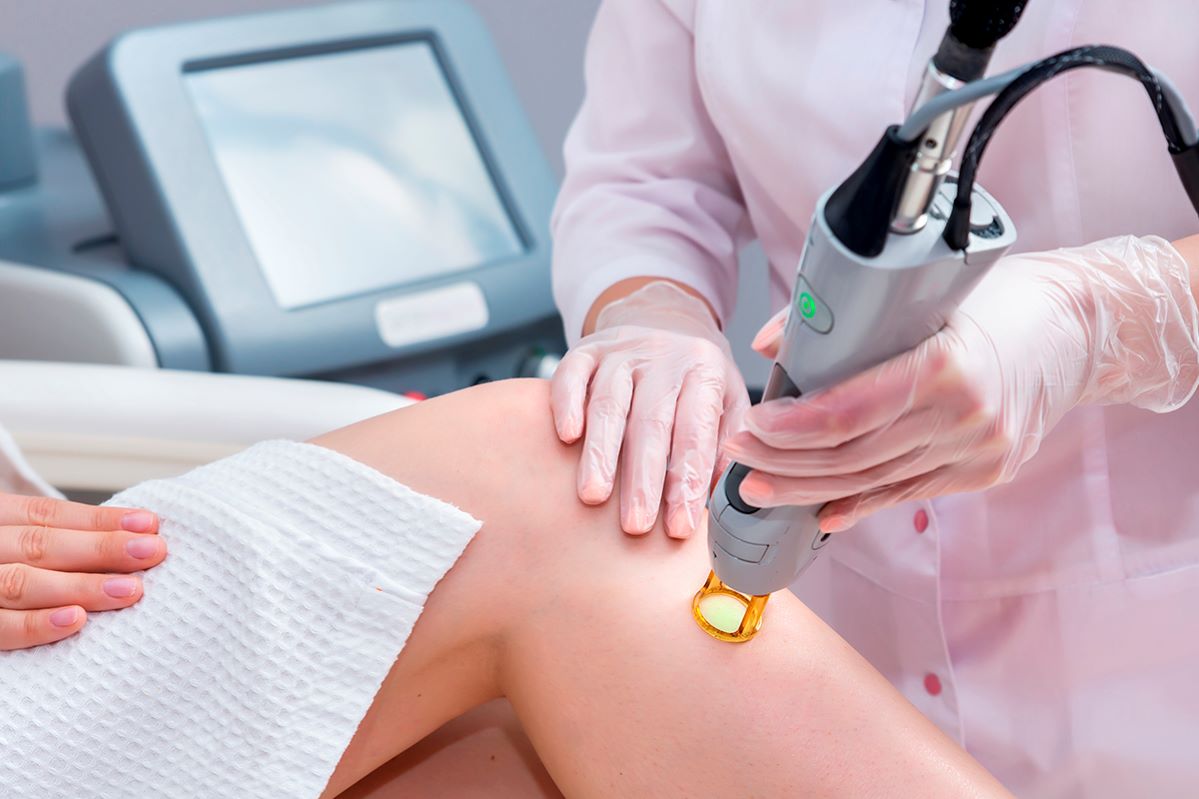

Laser hair removal has many advantages. First of all, it offers permanent results and prevents hair from growing back. It is also faster and less painful than other traditional methods. Laser hair removal can be applied to almost all parts of the body and is suitable for every skin tone.
However, the success of laser hair removal depends on choosing the right type of laser, using the appropriate technique, and the patient's skin tone and hair color. In addition, some side effects may occur during the procedure, but they are usually temporary and mild.
Formation of Ingrown Hairs in Laser
In some cases, ingrown hairs may occur during laser hair removal. Ingrown hairs occur when the hair follicle moves away from the surface and remains under the skin. This occurs when the laser beam does not fully reach the hair follicle or when the hair follicle is damaged.
Ingrown hairs usually manifest themselves with unpleasant symptoms such as redness, itching, and inflammation. They can also increase the risk of infection. Therefore, it is important to treat ingrown hairs in a timely manner.
Factors that cause ingrown hairs include:
Incorrect laser settings
Inadequate skin cleansing
Skin type incompatibility
Hair pigmentation differences
Hormonal imbalances
. An expert clinician will take these factors into consideration and perform laser hair removal in a way that minimizes the formation of ingrown hairs.
How Many Laser Sessions Does It Take for Ingrown Hairs to Start to Decrease?
The reduction in ingrown hairs can vary from person to person and from area to area. However, a decrease in the number of ingrown hairs usually begins after the third or fourth session.
In the first session, the laser beams target the hair follicles and begin to disable these follicles. However, some hairs may still remain under the skin. In the second session, the remaining hair follicles are targeted and a slight decrease in the number of ingrown hairs can be seen.
In the third and fourth sessions, the effect of the laser beams becomes more pronounced and most of the ingrown hairs disappear. At this point, the skin's surface becomes smoother and cleaner.
However, some resistant ingrown hairs may continue until the fifth or sixth session. In this case, additional treatments or different types of lasers may be applied.
How Many Sessions Does It Take to Finish Laser Ingrown Hairs?
There is no definitive answer to the question of how many sessions does it take to finish laser ingrown hairs, as this varies from person to person and from area to area. However, it has been observed that most ingrown hairs are generally eliminated by the fifth or sixth session.
The fifth session is one of the final stages of the laser hair removal process. At this point, the laser beams re-target the hair follicles that were previously targeted and disabled. In this way, resistant ingrown hairs are also eliminated.
The sixth session is usually the last session and this session targets any remaining ingrown hairs or newly emerging hair follicles. After this stage, the skin is seen to be completely clear of ingrown hairs.
However, in some exceptional cases, a seventh or eighth session may be needed. This is usually the case when new hair follicles are forming due to hormonal imbalances or other factors.
 Call
Call
 Whatsapp