


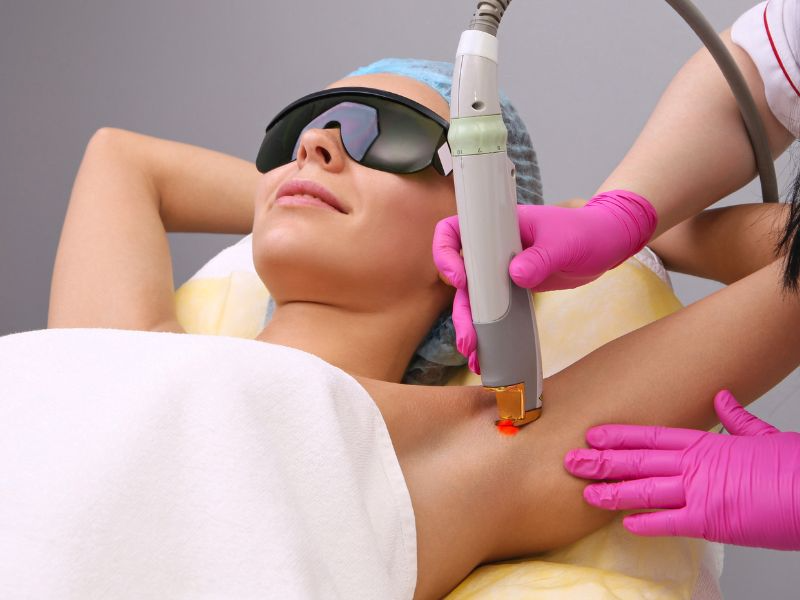

Alexandrite laser hair removal is an effective way to get rid of unwanted hair. This method eliminates hair roots by targeting the melanin pigment under the skin. It is a very ideal option especially for fair skin and dark-colored hair. One of the most important features that distinguishes Alexandrite laser from others is that it offers fast and painless treatment.
The wavelength of this laser is around 755 nm, and therefore it is absorbed very well by melanin. During the application, it performs a deep procedure by causing minimal damage to the skin surface. This shortens the healing process after the procedure and makes its use more attractive.
Alexandrite laser can be used on different body areas and offers permanent results for most people. However, more than one session is needed to achieve the best results. The success of the procedure may vary depending on factors such as the person’s skin tone, hair color, and thickness.
How Is Alexandrite Laser Planning Done During the Summer Period?
If you are considering having Alexandrite laser hair removal during the summer months, proper planning is very important. First of all, you should not ignore sun protection precautions before and after the procedure. Exposure to the sun may increase skin sensitivity and lead to unwanted side effects.
If you are planning to schedule the hair removal procedure during the summer period, you may prefer to have your sessions early in the morning or late in the evening. This minimizes your skin’s exposure to sun rays. In addition, sunscreen use and appropriate clothing choices also play an important role in protecting your skin.
Adjusting the intervals between sessions well is also an issue that should be considered during the summer months. By allowing your skin enough rest time, you can ensure that it is prepared for the next sessions. Keeping your skin moisturized and drinking plenty of water during this period also supports skin health.
What Should Be Considered for Alexandrite Laser on Tanned Skin?
Having Alexandrite laser hair removal on tanned skin is an issue that requires attention. Tanned skin absorbs laser beams more, and this may lead to unwanted side effects. In order not to encounter problems such as burns, spots, and irritation on the skin, it is best to wait until the tan has completely faded.
If you need to have laser hair removal with tanned skin, it is important to consult a specialist dermatologist or laser therapist. These professionals can make adjustments suitable for your skin type and minimize the risks that may occur during the procedure. In addition, pre- and post-procedure care instructions should be followed carefully.
After the laser procedure, the sensitivity of your skin may increase. Therefore, you should protect yourself from the sun for at least two weeks after the procedure and use a high-factor sunscreen. When any side effect is observed on the skin, it is important to consult a specialist immediately.
Why Is Sun Protection Important After the Procedure?
After laser hair removal, the skin becomes more sensitive to the sun. Therefore, sun protection after the procedure is critically important. After Alexandrite laser hair removal, exposure to direct sunlight may cause burns on the skin as well as permanent spots.
To provide sun protection, it is necessary to use high-factor sunscreens after the procedure. Applying sunscreen intensively to the treated area and repeating this application regularly protects your skin from harmful UV rays. In addition, wearing wide hats and long-sleeved clothing on sunny days also provides additional protection.
Sun protection also has a positive effect on the healing process of the skin. It prevents the skin from becoming irritated and provides a healthy healing process. During this process, applying moisturizer to your skin and drinking plenty of water are also important. In this way, you can help strengthen your skin barrier.
How Are Session Intervals Arranged During the Summer Months?
Arranging Alexandrite laser hair removal session intervals during the summer months is important for the health of your skin. Leaving enough time between sessions helps the skin renew itself and prevents possible irritation. Generally, session intervals should be between 4 and 6 weeks, but this period may vary depending on your skin type and the area where laser is applied.
When planning the time between sessions, it is important to pay attention to your skin and allow more rest time when necessary. During this period, it will be useful to observe sensitivities that may occur on the skin and consult a specialist when necessary. In addition, drinking plenty of water and using moisturizers also help prevent the skin from drying out during the summer months.
Paying attention to skin care between sessions increases the effectiveness of the following sessions. Determining a care routine suitable for your skin both improves the results of laser hair removal and protects your skin health. During this process, avoiding abrasive products and harsh chemicals is important in terms of preserving the natural structure of the skin.
Frequently Asked Questions About Alexandrite Laser Hair Removal
Clarifying the frequently wondered topics about Alexandrite laser hair removal will be useful for those who prefer this method. Here are some frequently asked questions and answers on this subject:
1. Does Alexandrite laser hair removal hurt?
No, it generally does not cause pain. During the procedure, you may feel a slight warmth or tingling sensation, but this sensation is generally at a tolerable level. In some cases, a local anesthesia cream may be applied before the procedure.
2. In which areas can it be applied?
Alexandrite laser hair removal can be used on various body areas such as the face, legs, arms, bikini area, and back. However, it is important to evaluate whether it is suitable for each area by consulting a specialist.
3. What are the side effects of laser hair removal?
Generally, temporary side effects such as mild redness and swelling may be seen. Although rarely, permanent spots or burns may occur. Such side effects can generally be prevented when the right precautions are taken.
 Call
Call
 Whatsapp