


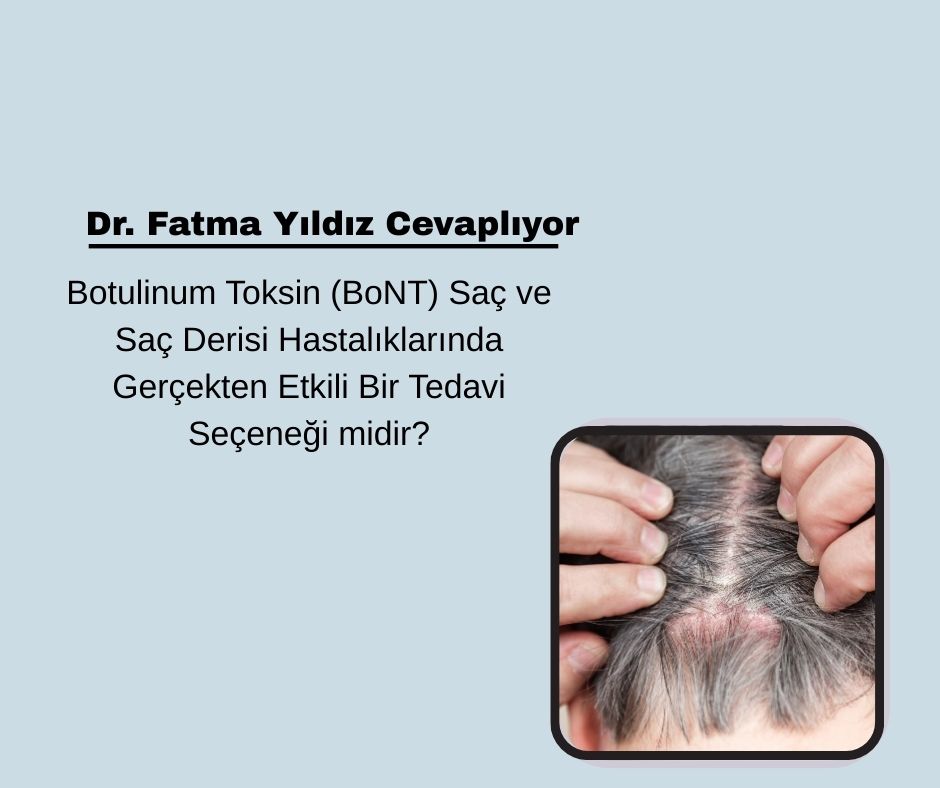

Is Botulinum Toxin (BoNT) a Truly Effective Treatment Option for Hair and Scalp Diseases?
While botulinum toxin (BoNT) has been known for years as an agent used in cosmetic dermatology for wrinkle treatment, in recent years it has also begun to be investigated as a therapeutic agent in dermatology and hair diseases. The potential role of BoNT in hair and scalp conditions such as androgenetic alopecia (AGA), alopecia areata, telogen effluvium, seborrheic dermatitis, hyperhidrosis, and folliculitis decalvans has been extensively discussed in scientific articles.
So, is BoNT truly effective in hair and scalp diseases?
How Successful is BoNT in the Treatment of Androgenetic Alopecia (AGA)?
AGA is the most common type of hair loss in men and is associated with DHT (dihydrotestosterone)-induced follicle miniaturization. Standard treatments such as minoxidil and finasteride have long been used.
The effect of BoNT in AGA is attributed to three mechanisms:
Increasing blood flow in the scalp by inhibiting muscle contraction
Oxygenating the hair follicle by reducing hypoxia
Preventing the development of fibrosis by suppressing TGF-β1 and inflammatory cytokines
Some studies have reported that BoNT increases hair density after just a few sessions. However, other randomized controlled trials have found no significant difference compared to placebo.
Conclusion: BoNT is promising in AGA but is not yet a viable replacement for standard treatments.
Can BoNT Be Used in Alopecia Areata and Other Hair Loss Conditions?
Alopecia areata (AA): This condition develops when the immune system attacks the hair follicles. BoNT has been shown to reduce inflammation by inhibiting the JAK/STAT pathway.
Telogen effluvium (TE): This condition develops when the hair cycle shifts to the telogen phase. The blood flow-increasing effect of BoNT may be beneficial in this situation.
Cephalgic alopecia: In this rare condition, hair loss is accompanied by scalp pain. BoNT can reduce pain by inhibiting the release of substance P and CGRP.
Evidence in these areas is limited and based mostly on case reports.
Is BoNT Safe for Craniofacial Hyperhidrosis?
Craniofacial hyperhidrosis is characterized by excessive sweating on the face and scalp. It can significantly disrupt social life.
BoNT significantly reduces sweating by inhibiting the stimulation of sweat glands.
In clinical studies, patients have shown a significant improvement in quality of life after BoNT injections.
The most commonly reported side effects are forehead stiffness and temporary muscle weakness.
While the FDA has approved the use of BoNT for axillary hyperhidrosis, it is not yet officially approved for craniofacial hyperhidrosis.
Does BoNT Have a Use in Seborrheic Dermatitis and Oily Hair?
Sebum production can lead to oily scalp, dandruff, and acne.
Studies have shown that BoNT can reduce sebum production in the scalp.
Injections into the forehead have resulted in oil reduction for up to 16 weeks.
This may make BoNT a supportive option for the treatment of oily skin and seborrheic dermatitis.
However, clinical evidence is limited, and larger studies are needed.
Can BoNT be Effective in Folliculitis Decalvans and Scarring Alopecia?
Folliculitis decalvans is an inflammatory and scarring hair disease that can be resistant to antibiotics and steroids. Small series have reported that BoNT treatment reduces scalp inflammation and increases hair growth.
BoNT has also been reported to provide cosmetic benefits by increasing blood flow in rare alopecias such as linear scleroderma (en coup de sabre).
While the data in these areas are promising, the evidence base is weak.
Is BoNT a Safe Procedure?
In a systematic review of 40 studies, the following side effects were reported after BoNT applications:
Scalp irritation (12.5%)
Headache (1.5–31%)
Redness and edema at the injection site (3–5%)
Drowsiness of the eyebrows, dry mouth, and forehead stiffness were more common with BoNT-B applications.
Most side effects are temporary, making the treatment considered safe.
Conclusion: Could BoNT Be the Future Treatment for Scalp Diseases?
Scientific data suggests that BoNT may provide multifaceted effects on hair and scalp conditions:
It increases blood flow and oxygenates the hair follicle.
It suppresses inflammation and reduces fibroblast activity.
It reduces pain and itching by inhibiting the release of acetylcholine and neuropeptides.
It improves quality of life by controlling sweating and sebum production.
However, clinical efficacy results in diffuse hair loss such as AGA are conflicting. Therefore, BoNT can be considered a supportive treatment for now. Multicenter, large-scale randomized studies are needed for stronger evidence.
Dr. Fatma Yıldız – Dermatology Specialist
Ankara Life Polyclinic
 Call
Call
 Whatsapp