


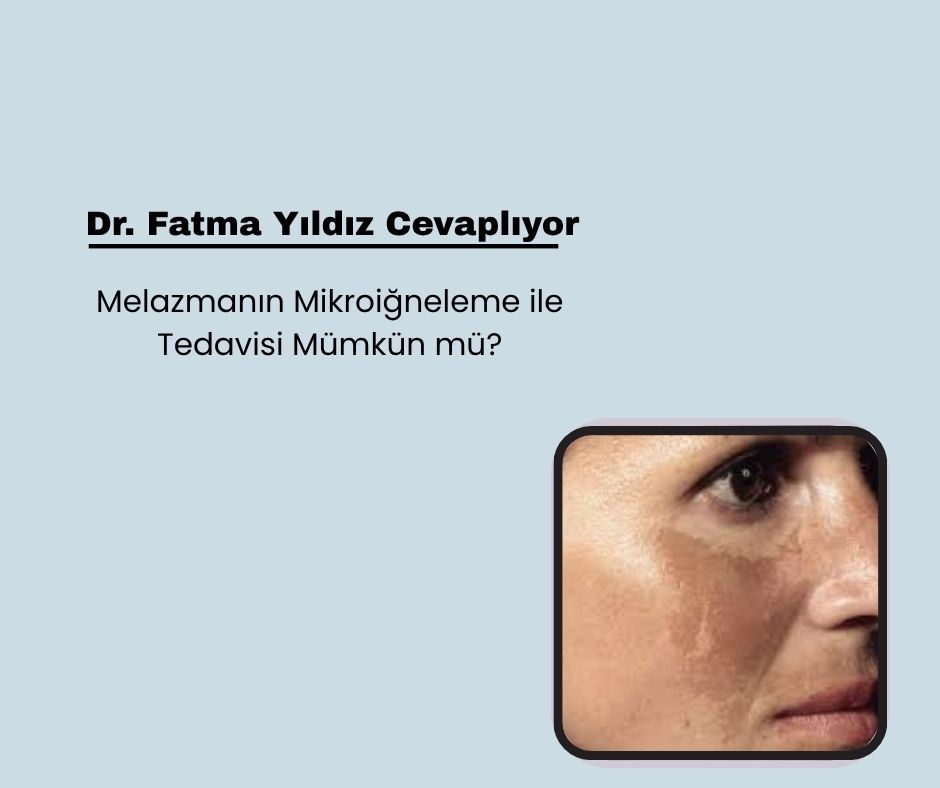

Is It Possible to Treat Melasma with Microneedling?
Melasma is a pigmentation disorder characterized by irregular dark patches on the skin, particularly common in women. It is associated with numerous factors, including hormonal changes, sun exposure, genetic factors, and skin barrier disruptions. Treating this complex skin condition has long been one of the most challenging areas of medicine. However, microneedling, which has gained popularity in recent years, has emerged as a promising treatment option for melasma.
What is Microneedling and What Devices Are Used?
Microneedling is a treatment method that triggers healing mechanisms by creating tiny channels on the skin's surface with microneedles. The devices used in this technique are divided into three main groups:
Dermaroller (manual and easy to use)
Dermapen (motorized and for more precise applications)
Combined systems (radiofrequency, LED-assisted, and drug-delivery microneedling devices)
Dermaroller, in particular, is widely preferred due to its low cost and ease of use at home, while professional treatments generally use Dermapen or radiofrequency microneedling systems.
What is the Mechanism of Action of Microneedling in Melasma?
During microneedling, controlled micro-damage is inflicted on the skin. This microdamage initiates the skin's self-healing process. Furthermore, because the needles temporarily puncture the skin barrier, they increase the transdermal absorption of topical medications. This mechanism:
Melanin accumulation is reduced.
Baseline membrane structure is strengthened.
Collagen and elastin production is stimulated.
The skin surface is rejuvenated, and the appearance of blemishes is reduced.
Applications, particularly with 1.5 mm needles, have been clinically shown to provide significant improvement in melasma symptoms in as little as 8–12 weeks.
Is Microneedling Effective in Melasma Alone?
Yes. Even when used alone, microneedling can produce significant results in melasma. It has effects such as skin tissue restructuring, melanin elimination, and melanin production suppression. However, because this method is invasive, it can carry the risk of short-term skin sensitivity, dehydration (TEWL), and inflammation. These temporary side effects usually resolve within a week.
Are Microneedling Drug Combinations Effective?
While microneedling can be effective alone, its therapeutic effect is significantly enhanced when combined with various drugs and bioactive compounds. The most commonly used combinations are:
Hydroquinone (2-4%): Considered the gold standard treatment.
Tranexamic Acid (TA): It is an anti-inflammatory and tyrosinase inhibitor and is quite safe.
Vitamin C (Ascorbic Acid): When used at a concentration of up to 20%, it brightens skin tone with its powerful antioxidant effect.
PRP, Stem Cell Exosomes, Hyaluronic Acid, and Polynucleotides: These bioactive substances support skin regeneration and pigmentation reduction.
These combinations are transported directly to the epidermis and dermis through the micro-channels created by the microneedles, enhancing their effects.
What Other Treatments Can Microneedling Be Combined With?
To increase the effectiveness of microneedling, it is recommended to combine it with other treatments such as laser and chemical peels:
Qs-Nd:YAG Laser + Vitamin C Microneedling: Intensifies the effect with thermal effects and increased transdermal absorption.
CO2 Laser + Tranexamic Acid Microneedling: Effective on both the epidermal and dermal layers.
25% TCA Peel + Microneedling: Peeling and tissue regeneration are carried out simultaneously, removing melanin.
These combinations both lighten spots in the short term and reduce the recurrence rate, resulting in long-term results.
Is Microneedling a Truly Effective Solution for Melasma?
Clinical studies demonstrate that microneedling is both an effective and safe option for the treatment of melasma. Its advantages include:
It acts without disrupting the skin barrier.
It can be easily combined with other treatments.
It provides high patient comfort with minimal side effects.
It reduces the risk of recurrence in the long term.
However, clinical studies with larger samples are still needed. The optimal needle length, treatment duration, and combination protocols have not yet been standardized.
Conclusion: Is Microneedling Opening a New Era in the Fight Against Melasma?
Yes. Current findings suggest that microneedling could be a revolutionary method in the treatment of melasma. Especially when used in conjunction with medications, PRP, and lasers, significant reductions in spot appearance and increased patient satisfaction are achieved.
Microneedling is a promising tool for the management of melasma, both as monotherapy and in combination. Personalized treatment plans and the use of appropriate agents will further enhance its success.
 Call
Call
 Whatsapp