


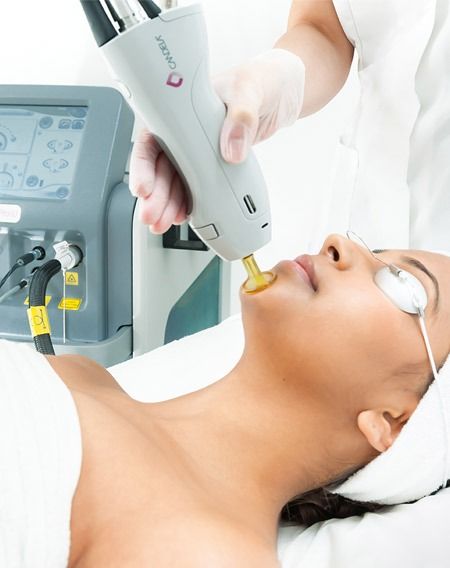

Is Laser Epilation Permanent?
Laser epilation is a method that targets hair follicles, weakening them and causing them to disappear over time. However, whether this process is completely permanent or not varies depending on personal factors, the technology used, and the application protocol. For most people, laser epilation prevents most of the hair from growing for a long time, while some thin hairs may grow back over time.
Working Principle of Laser Epilation
Laser epilation targets the melanin pigment in the hair follicles, weakening the root with heat energy and trying to prevent it from growing again. This process works as follows:
Laser light is absorbed by melanin.
The light that turns into heat damages the hair follicle.
The damaged hair follicle loses its function over time.
In order for this method to be successful, the hair must be in the active growth phase (anagen phase). Because only in this phase can laser energy reach the hair follicle and render it ineffective. Since the hairs in our body enter the growth phase at different times, a single session is not enough to eliminate all hairs. For this reason, laser epilation is applied in sessions.
Does Laser Epilation Give Permanent Results?
Laser epilation is a method that provides long-term and largely permanent reduction, but it may not give exactly the same results for every individual. This depends on the following factors:
1. Hair and Skin Type
Laser epilation gives the best results on people with light skin and dark hair.
Laser effect may be lower on thin and light-colored hair.
2. Type of Laser Used
Alexandrite Laser: Suitable for light skin-dark hair combination.
Nd:YAG Laser: Can be used on dark skin, but is effective for a longer time.
Diode Laser: Can be effective on both light and dark skin and can target deeper hair follicles.
3. Hormonal Factors
Hormonal imbalances (polycystic ovary syndrome, thyroid disorders, etc.) can cause hair to grow back.
Hormonal changes such as pregnancy and menopause can trigger hair growth.
4. Number and Order of Sessions
Laser epilation usually requires 6-10 sessions to be successful.
Depending on the hair structure and the area, this number can go up to 12-15 sessions.
After the sessions are completed, having a protection session 1-2 times a year can prevent the hair from growing back.
In Which Cases Can Hair Come Back?
The possibility of hair coming back after laser epilation depends on the following:
✔ Hormonal changes (pregnancy, menopause, PCOS, etc.)
✔ Wrong laser device selection or insufficient energy use
✔ Irregular or incomplete session applications
If all sessions are completed and protection sessions are done regularly, most of the hair may not grow back for years and the ones that do grow back will be quite thin and weak.
In Conclusion
Laser epilation is a method that provides permanent reduction to a very large extent, but it would not be right to guarantee that the hair will disappear completely and for a lifetime. If hormones or external factors do not cause the hair to grow back, laser epilation provides long-term smoothness. This effect can be made permanent with regular maintenance sessions.
In summary:
✅ It eliminates hair to a large extent.
✅ Its permanence increases with the right technique and regular sessions.
✅ Hormonal changes and external factors can cause hair to come back.
✅ Permanence can be achieved with 1-2 maintenance sessions per year.
 Call
Call
 Whatsapp