



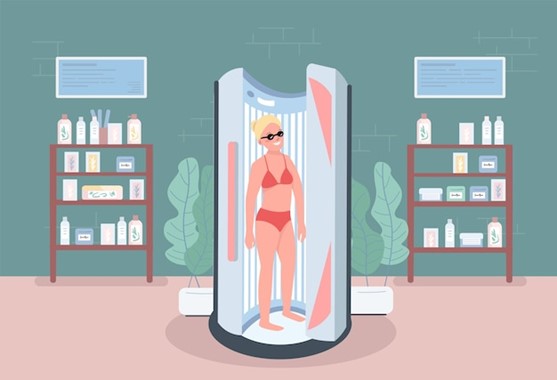
Solariums are artificial light sources used to tan the skin. They are usually found in the form of a tanning bed or tanning cabin. These devices affect the skin by emitting ultraviolet (UV) light. There are two types of tanning beds: bed tanning beds and standing tanning beds. Bed-type solariums allow people to tan while lying down. Standing tanning beds allow people to tan while standing.
How does solarium work?
Tanning beds use ultraviolet rays, specifically called UV-A and UV-B. These rays penetrate the lower layers of the skin and stimulate the production of melanin. Melanin is a pigment that provides pigmentation in the skin. This process causes the skin to turn a darker color and tan. However, this tanning process can also cause harmful effects on the skin.
Risks of solarium use
Tanning beds have several risk factors that can increase the risk of skin cancer. The first of these is the potential for UV rays to damage the skin. The risk of skin cancer increases, especially in cases of intense and continuous exposure. A second risk factor is not taking adequate glasses, protective cream or other precautions when using solariums. This can cause damage to the eyes, skin and other body parts.
Other risks of solarium use include premature aging, wrinkles, blemishes, skin burns and the risk of sunburn. UV rays can also weaken the immune system and reduce collagen production in the skin. This can cause the skin to lose its elasticity and show signs of aging.
Health effects of solarium use
Solarium use can cause many health problems, especially skin cancer. Skin cancer is a disease that occurs as a result of abnormal growth and division of skin cells. UV rays can contribute to skin cancer by causing DNA damage in skin cells. In particular, the most aggressive type of skin cancer, called melanoma, has been linked to tanning bed use.
Other health problems of solarium use include premature aging, skin blemishes, sunburn, wrinkles, eye disorders and immune system weakness. Therefore, it is important to avoid tanning bed use or develop healthy sunbathing habits along with it.
Dangers of solarium use
Solariums can present many dangers to their users. These dangers include the risk of burns, eye damage, skin cancer, and even death. Skin burns are a common problem when using tanning beds. A solarium session that is not particularly suitable for your skin type can cause serious burns. Additionally, exposure of the eyes to UV rays can lead to corneal burns and long-term vision loss.
Tanning beds may increase the risk of skin cancer. Long-term use of solariums, especially at a young age, significantly increases the risk of developing skin cancer. Considering the dangers and risks of tanning bed use, it is best to avoid using these devices.
Regulations and guidelines for solarium use
Many countries and regions have laws and guidelines regulating the use of tanning beds. These regulations were created to limit tanning bed use and protect their users. For example, in some countries, people under the age of 18 are prohibited from using solariums. There may also be limitations for solarium use, such as maximum times and sessions.
In addition to legal regulations, there are some precautions that must be taken when using a solarium. For example, it is important to use glasses and protective creams when using the solarium. It is also important to limit the duration of tanning sessions and consult your doctor for regular check-ups.
Alternatives to solariums
For those who do not want to use a solarium, there are alternatives away from the sun. The safest way to tan is to protect yourself from the harmful effects of the sun and use sunscreen products. Additionally, tanning sprays and lotions are also popular alternatives for providing sunless tanning. These products create a tanning effect without harming your skin.
Tips for staying safe in the sun
Here are some tips for staying safe in the sun:
1. Use sunscreen: It is important to use sunscreen every day. Choose a sunscreen with a minimum SPF 30 and reapply regularly.
2. Stay in shaded areas: Stay in shaded areas and avoid direct sun exposure, especially during peak sun hours.
3. Dress and accessorise: Protect your skin from the harmful effects of the sun by wearing accessories such as long sleeves, hats and sunglasses.
4. Drink water often: Drink water often and keep your body hydrated when you are in the sun.
5. Protect children: Children are more sensitive to the harmful effects of the sun. It is important to dress them in appropriate clothing and use sunscreen to protect them from the sun.
Is solarium harmful?
Free Information,
Consultation and Appointment Request
 Call
Call
 Whatsapp