


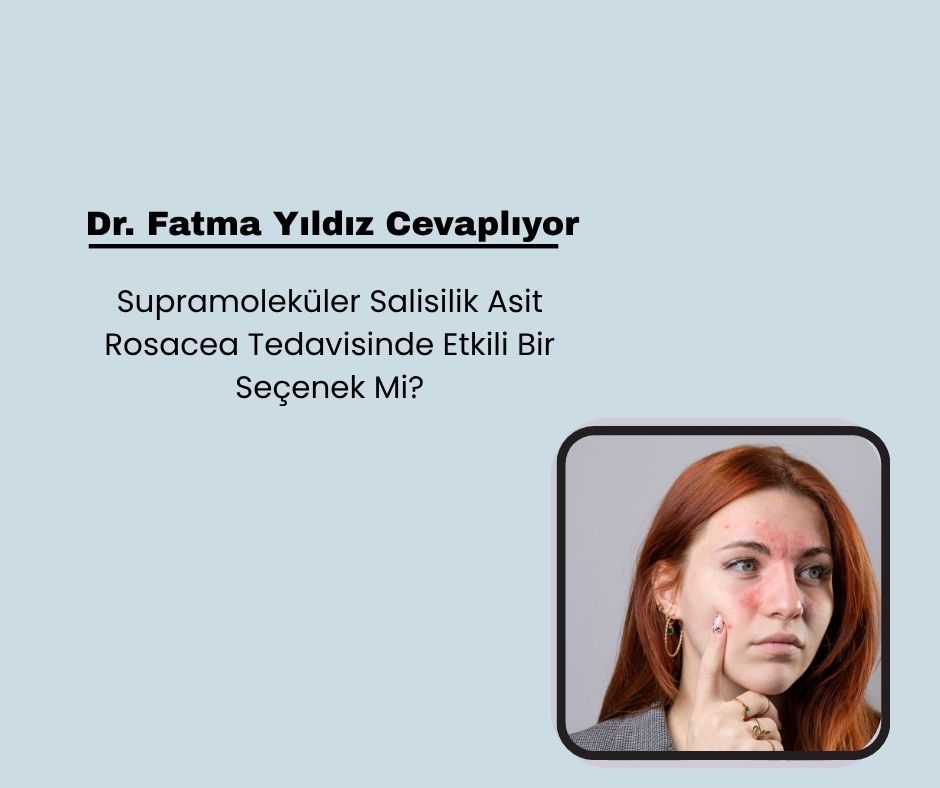

Is Supramolecular Salicylic Acid an Effective Option for Treating Rosacea?
What is rosacea, and what are its most common symptoms?
Rosacea is a chronic, inflammatory skin condition that primarily affects the central areas of the face. It manifests with symptoms such as persistent redness (erythema), telangiectasias, increased warmth, and a burning and stinging sensation. Because it causes both aesthetic and physical discomfort, rosacea can significantly impact the quality of life of its patients. It is divided into four main subtypes: erythematotelangiectatic, papulopustular, phymatous, and ocular rosacea. Of these, papulopustular rosacea (PPR) is the most common form and is often associated with an impaired skin barrier.
Why is the skin barrier important, and how is it related to rosacea?
The skin barrier acts as a protective shield between us and the external environment. It prevents transepidermal water loss (TEWL), balances skin moisture, and prevents the entry of irritants and microbes. In rosacea, this barrier is often disrupted, contributing to worsening symptoms. Therefore, treatments aimed at restoring the skin barrier are the cornerstone of rosacea treatment.
What are the limitations of traditional methods used in rosacea treatment?
Conventional treatments such as topical and oral antibiotics, retinoids, and beta-blockers are widely used to relieve rosacea symptoms. However, these treatments can be associated with side effects such as allergic reactions, gastrointestinal upset, and liver problems. While laser treatments and chemical peels also play a role in rosacea treatment, they are costly and not suitable for everyone.
What is the difference between salicylic acid and its supramolecular form?
Salicylic acid (SA) is a beta-hydroxy acid with anti-inflammatory and antimicrobial properties. Its ability to remove dead skin cells and purify pores makes it useful for many dermatological conditions, including rosacea. However, pure salicylic acid is low in solubility and can cause irritation upon application. Supramolecular salicylic acid (SSA), on the other hand, is a water-soluble and more stable form developed by forming covalent bonds with poloxamer 407. This formulation may have a gentler, more effective, and more controlled effect on the skin.
How was the effect of 30% SSA on papulopustular rosacea evaluated?
In a clinical study conducted at China Medical University, 34 patients diagnosed with PPR were randomly divided into two groups: one group received 30% SSA, the other a placebo. The treatment was administered every two weeks for a total of four sessions.
The effects on the skin were monitored with the VISIA skin analysis system; TEWL, sebum levels, stratum corneum hydration, and pH values were measured. The procedures were performed in a controlled environment and followed the same protocol for each session. 30% SSA was applied to the patients' faces using a brush, followed by sedation with a cold compress.
Who was included and who was excluded from the study?
The study included individuals aged 18-60 who were diagnosed with PPR according to the 2017 National Rosacea Society criteria. However, those with other skin conditions such as melasma or seborrheic dermatitis, those who had recently used retinoids or antibiotics, those who were pregnant or breastfeeding, those with immune system problems, and those who had undergone a chemical peel within the past month were excluded.
How was the effectiveness of the 30% SSA treatment measured?
Four main criteria were used for efficacy assessment:
Lesion Reduction Rate: A percentage was calculated based on the difference in papule and pustule counts before and after treatment.
≥90% reduction: Complete improvement
60–90%: Significant improvement
20–60%: Partial improvement
<20%: No improvement
Overall Efficacy Rate: The proportion of patients experiencing significant or complete improvement was calculated.
ISA Score (Investigator Severity Assessment): This score was graded from 0 (none) to 4 (severe) based on the intensity of erythema and papules/pustules.
VISIA Red Area Score: The percentage improvement in redness scores obtained from the VISIA system was determined.
How did SSA treatment affect skin barrier functions?
Measurements taken after SSA application showed decreased transepidermal water loss, increased stratum corneum hydration, balanced skin pH, and normalized sebum levels. These results demonstrated that SSA not only reduced lesions but also strengthened the skin barrier.
What did the statistical results of the study show?
Data were analyzed using GraphPad Prism 8.0 software. The findings revealed significant differences in post-treatment measurements (p < 0.05 was considered significant, and p < 0.01 was considered highly significant). A significant improvement in both lesion reduction and VISIA scores was reported in the experimental group.
In conclusion, does 30% SSA offer promise in the treatment of rosacea?
Yes. This study demonstrates that a 30% supramolecular salicylic acid formulation can be an effective treatment for rosacea, even on its own.
 Call
Call
 Whatsapp