



Is Supramolecular Salicylic Acid Effective in the Treatment of Papulopustular Rosacea?
Who is affected by papulopustular rosacea, and why is it important?
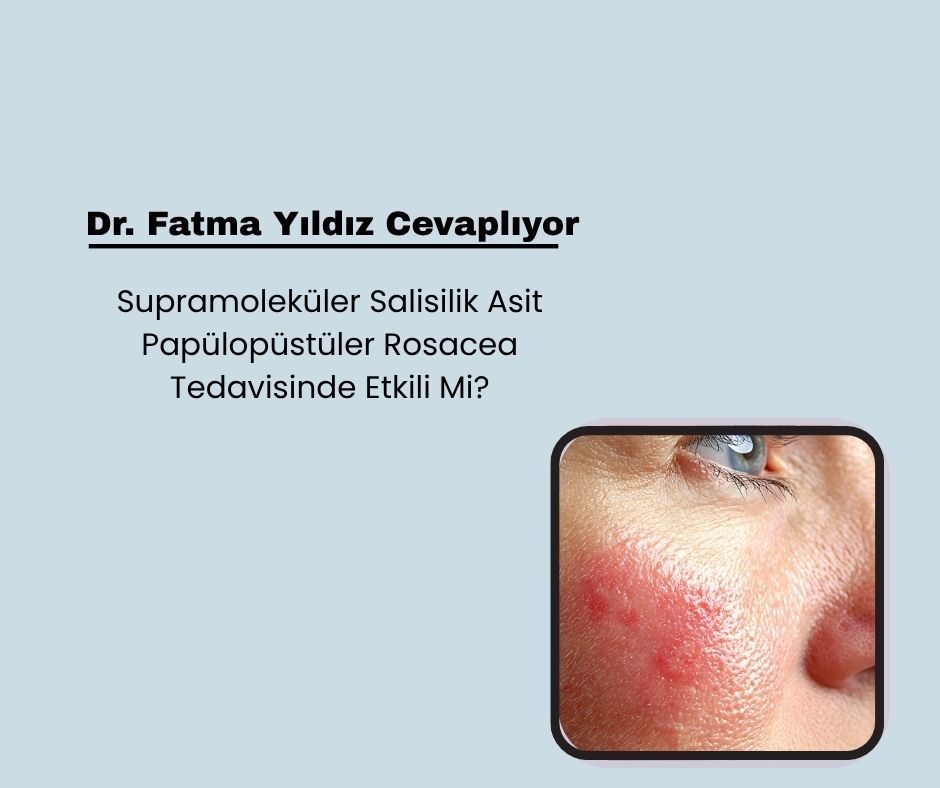
Rosacea is a chronic inflammatory skin disease affecting primarily the face, affecting up to 5.5% of the population globally and 3.84% in China. It particularly affects oil-rich areas, manifesting with symptoms such as redness (erythema), papules, pustules, and telangiectasias. This condition negatively impacts patients' quality of life, not only physically but also psychosocially.
Why is the skin barrier disrupted in rosacea, and what are its consequences?
A disrupted skin barrier is a key factor in the pathophysiology of the disease. Increased transepidermal water loss (TEWL), decreased stratum corneum hydration, and elevated skin pH trigger the inflammatory cycle. These changes not only worsen skin lesions but also create a vicious cycle that perpetuates chronic inflammation. Therefore, the primary strategy in rosacea treatment is to both control inflammation and repair the skin barrier.
Why is salicylic acid used in rosacea treatment?
Thanks to its lipophilic and keratolytic properties, salicylic acid (SA) penetrates the skin, dissolves excess sebum, and regulates keratinocyte differentiation. Its anti-inflammatory properties make it widely preferred for inflammatory skin conditions such as acne, seborrheic dermatitis, and rosacea. However, because SA's keratolytic nature can cause irritation in sensitive skin, it should be applied with caution.
What is supramolecular salicylic acid (SSA) and what are its advantages?
SSA is a next-generation formulation developed by linking SA to poloxamer 407. This structure makes SA more stable and water-soluble. Its slow and controlled release mechanism increases efficacy while reducing the risk of irritation. It is a promising option, especially for rosacea patients with sensitive skin.
How was the study designed and who was involved?
Between July and December 2020, 34 patients diagnosed with PPR were enrolled in the study. Three patients withdrew from the study, leaving 16 patients in the experimental group and 15 in the control group. There was no difference in age or baseline ISA score between the groups (p > 0.7). This demonstrated that the two groups were comparable at baseline.
How was the 30% SSA application performed and how was it evaluated?
The experimental group received 30% SSA every 2 weeks for 4 sessions. The control group received a placebo, which was the carrier matrix of SSA but contained no active ingredient.
At each session, skin analyses were performed with VISIA, and TEWL, sebum, skin hydration, and pH measurements were taken. Papule and pustule counts were recorded by physicians. Lesion reduction, VISIA red area scores, and Investigator Severity Assessment (ISA) scores were also compared.
What results were achieved with the SSA application?
In the experimental group, one patient experienced complete improvement, 10 patients experienced significant improvement, and 5 patients experienced moderate improvement. The efficacy rate was calculated as 68.75%. No patients in the control group showed significant improvement. This difference was statistically highly significant (p < 0.01). This suggests that SSA alone can be an effective treatment for rosacea.
When did SSA treatment take effect?
The reduction in the number of lesions became apparent after the second session. This delayed effect was attributed to the exfoliating agents' primary targeting of the surface keratin layer. The effects on deep inflammatory papules develop over time. Therefore, it is important for patients to be patient and to manage their expectations well early in the treatment process.
How did SSA affect the skin barrier?
A significant decrease in sebum levels was observed, particularly on the cheeks and forehead. No statistically significant changes were observed in TEWL and pH values. However, significant increases in stratum corneum hydration were noted, especially after the second session. This suggests that SSA supports keratinocyte function.
What are the limitations and technical challenges of SSA application?
Because the skin around the nose is more sensitive, Vaseline had to be applied to this area, limiting the effective spread of SSA. Furthermore, the application method, which requires the doctor to massage with a glove, created difficulties in anatomically narrow areas. This highlights the need for improved application technique.
What are the side effects and safety profile?
SSA treatment is generally safe. However, there is a risk of systemic absorption when applied in high concentrations or over large areas. This can, although rare, cause symptoms such as dizziness, nausea, and tinnitus. Local side effects such as allergic reactions, burning, or itching may occur during treatment. Caution should be exercised in patients taking aspirin or other salicylate-containing medications.
What are the limitations of this study, and what should be done in the future?
The follow-up period in the study was only 2 weeks. Given the recurring nature of rosacea, long-term effects need to be evaluated. Biopsy and serum samples were also performed for in-depth analysis of inflammation.
 Call
Call
 Whatsapp