


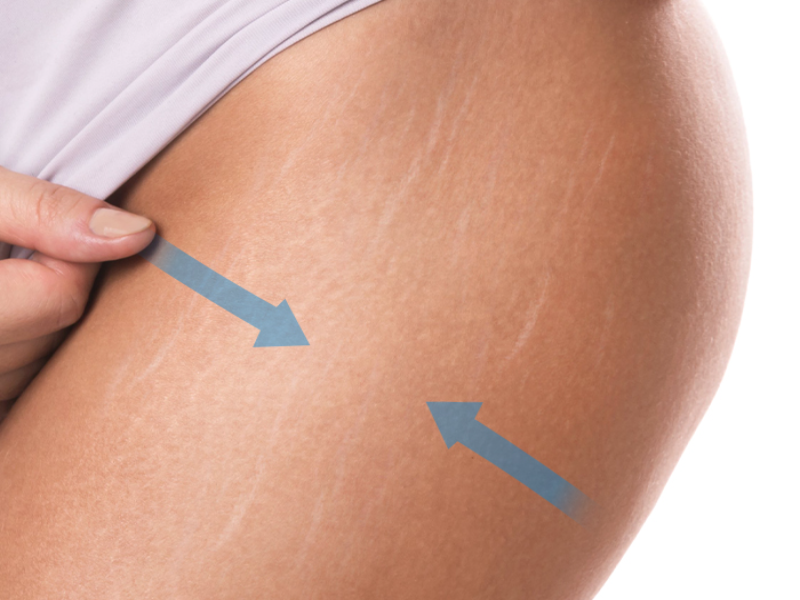

Stretch Mark Treatment in Ankara includes different procedures intended to reduce the visible appearance of striae. Stretch marks commonly develop during rapid growth, pregnancy, or substantial changes in body size and are associated with structural changes in dermal connective tissue.
Different treatment options are available in Ankara. Ankara Laser procedures, microneedling, radiofrequency, and selected other techniques may be considered. Chemical peels have a more limited role in many established structural stretch marks.
The goal is generally to make stretch marks less noticeable rather than remove them completely. Any effect on confidence is individual and should not be considered a guaranteed outcome.
Importance of Treatment Differences Between New and Old Stretch Marks
Newer stretch marks often appear red, pink, or purple and are referred to as striae rubrae. Their vascular and inflammatory characteristics differ from mature stretch marks, which can influence treatment selection. They may respond differently to certain therapies, but faster or better results cannot be guaranteed.
Older stretch marks are usually lighter or white and are described as striae albae. Their structural characteristics differ from earlier lesions, which may make certain treatment goals more challenging. However, visible improvement may still be possible with appropriately selected procedures.
Professional assessment is useful for both early and mature stretch marks. Treatment should consider skin phototype, color, width, location, previous procedures, and individual expectations.
Treatment Methods for New Stretch Marks
Selected laser technologies may be considered for early red or purple stretch marks. Some systems target vascular or pigment-related characteristics, while others create controlled remodeling effects. No single laser is universally effective for new stretch marks.
Microneedling may also be used in selected cases. Controlled micro-injuries can stimulate a remodeling response, but the degree of improvement varies.
Chemical peels may alter superficial pigmentation or texture but generally do not directly rebuild the full dermal structural change responsible for stretch marks.
Treatment Methods for Older Stretch Marks
Older white stretch marks can also be evaluated for treatment. Fractional Laser systems may be considered in selected cases to promote controlled remodeling, but results vary according to the device and individual skin response.
PRP (Platelet-Rich Plasma) is sometimes used alone or in combination with other procedures. PRP is prepared from the individual's blood and contains platelets and biological mediators, but its effectiveness for mature stretch marks is variable and should not be guaranteed.
Dermaroller treatment is a manual form of microneedling that creates controlled microchannels in the skin. It may be considered for selected stretch marks but should not be expected to restore normal skin completely.
Technologies Used in Stretch Mark Treatment
Different Ankara Laser technologies can target various aspects of stretch marks. Their suitability depends on the stage of the stretch marks, skin phototype, treatment area, and device settings. Laser treatment is not always associated with minimal downtime.
Microneedling devices may support controlled tissue remodeling. Improvement develops gradually and does not necessarily produce younger-looking skin.
PRP, chemical peeling, radiofrequency, and other approaches may be combined in selected treatment plans, but combination therapy does not automatically produce superior results.
Expectations Before and After Stretch Mark Treatment
Professional evaluation before Stretch Mark Treatment can help determine which technique may be appropriate. Stretch mark stage, skin characteristics, medical history, and expectations should all be considered.
Treatment aims to reduce visible contrast or textural irregularity rather than eliminate stretch marks completely. Results vary according to the method and individual response.
Aftercare may include gentle skin care, moisturization, and ultraviolet protection when relevant. These measures can support recovery but cannot guarantee faster or more effective remodeling. Balanced nutrition and hydration support general health but are not direct treatments for stretch marks.
Frequently Asked Questions About Stretch Mark Treatment
1. Is stretch mark treatment painful?
Discomfort varies according to the method and settings. Laser and microneedling may cause warmth, stinging, or tenderness, and topical anesthesia may sometimes be used.
2. Do stretch marks completely disappear after treatment?
The goal is generally to make them less noticeable rather than remove them completely. The amount of improvement varies.
3. How long does recovery take?
Recovery depends on the procedure. Some mild treatments may involve short-lived redness or sensitivity, while more intensive laser or resurfacing treatments may require a longer period. Visible remodeling may continue over weeks or months.
 Call
Call
 Whatsapp